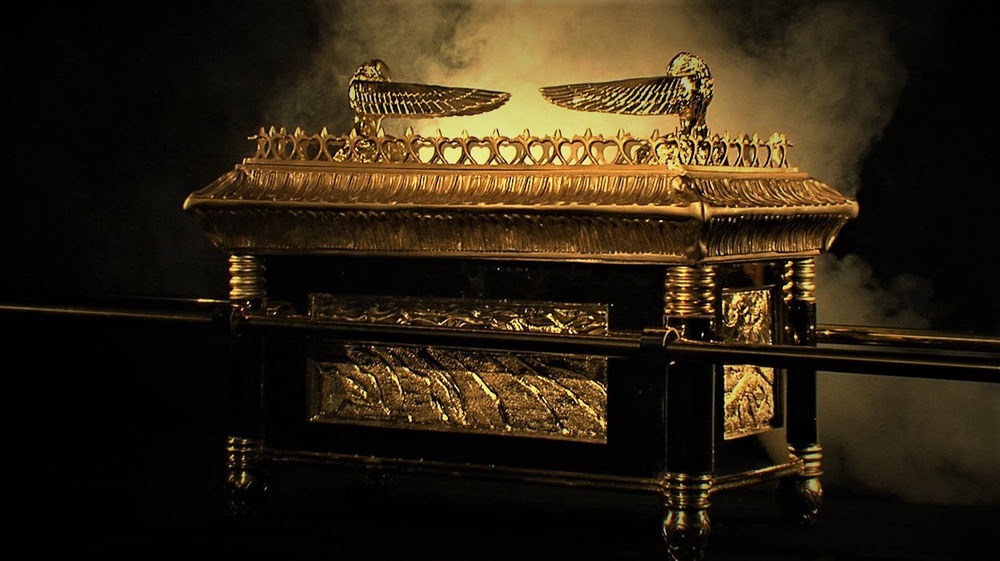
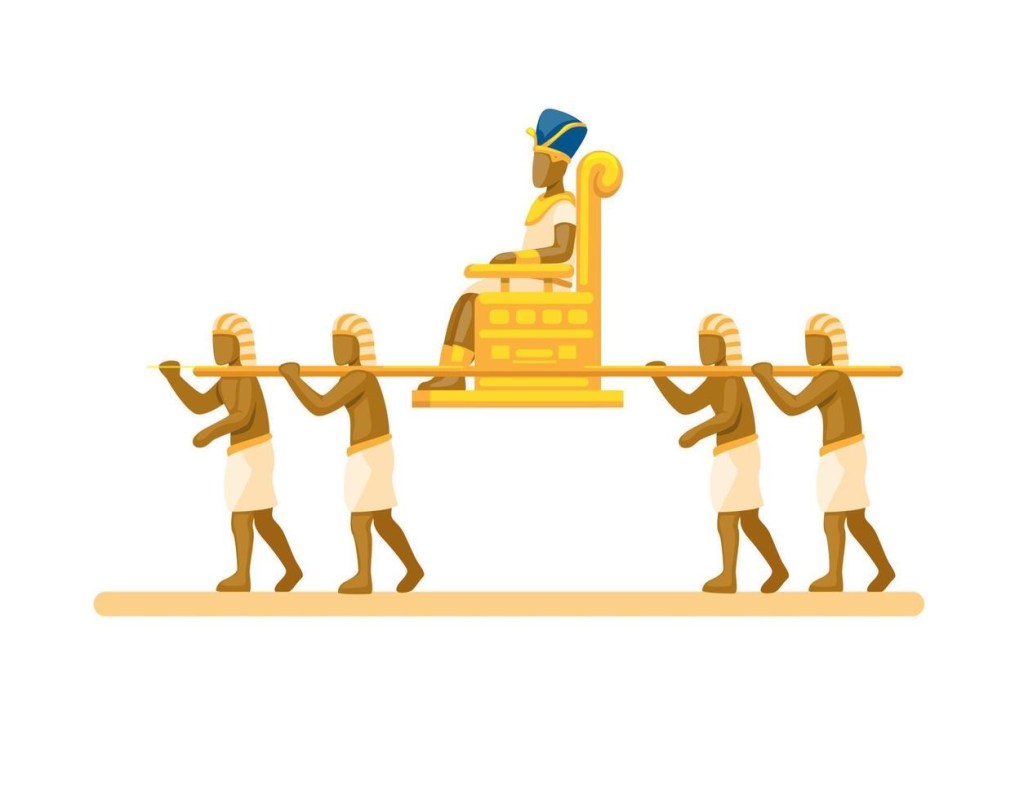
The Ark of the Covenant. That mysterious face-melting golden box. There are a few interesting theories about its whereabouts. We may get into those in the future.
For the present we should know that:
- It’s a copy of the real throne of God in Heaven. Only this one is for Earth-use and is portable.
- God “sits” in the place where atonement is made.
- It’s the only object that will be placed in the Holy of Holies (also called The Most Holy Place) which is essentially a tiny 10×10 golden throne room.
- The next time you hear some doofus say that the God of the Bible is an egomaniac, kindly point out that if He was, He would’ve demanded a MUCH bigger throne room.
- No one actually knows what the cherubim looked like. Most art imagines them as kneeling humanoid figures with a pair of eagle-like wings. But we don’t actually know that. They could’ve looked like a Lammasu or had more than one set of wings like other biblical descriptions of cherubim.
- The face-melting is real but probably not directly associated with the ark. See Zechariah 14:12.
The Furniture in the Holy Place
This room is lined floor to ceiling in solid gold. The furniture is solid gold. It’s kinda like Donald Trump’s dream living room. 😏
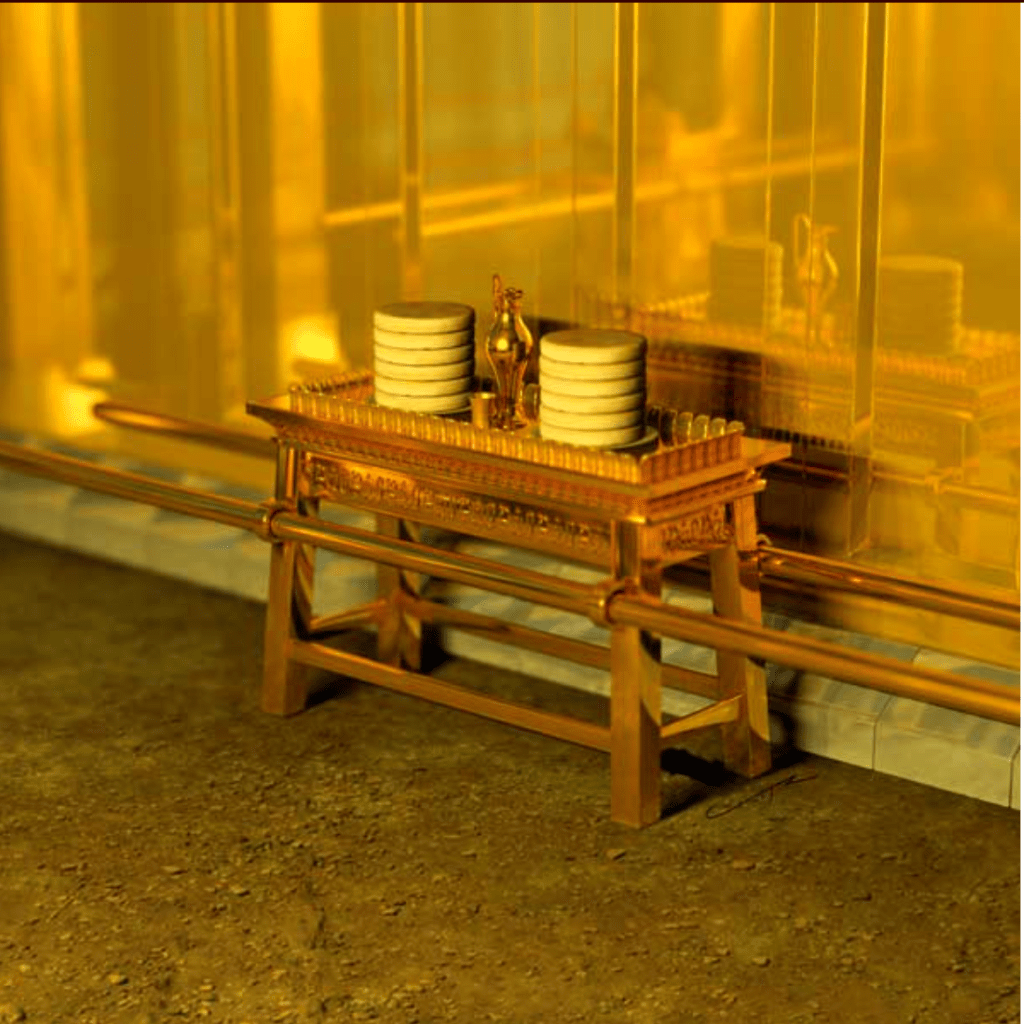
The Table – this will hold the consecrated bread and the wine for drink offerings. Yes- it’s a Communion Table.
When we get to the description of the bread and later when we get to Solomon’s Temple, we can talk about how it was stacked and the shape of the loaves. For now: It’s a golden Communion Table.
The Menorah – it’s not a candlestick and technically not a lamp stand but a big lamp. No candles on it. It’s an oil lamp sculpted to look like a stylized golden almond tree.
The word menorah is the feminine form of the word manowr which meant a yoke for plowing or the frame of a loom. It comes from a root word that means to make furrows or til up the soil. If you look at the menorah, you kinda see an upside down yoke or furrows in a field.
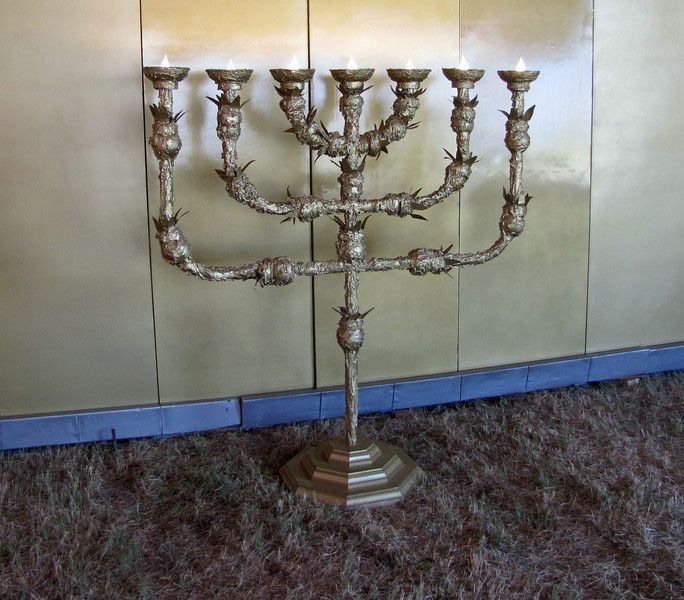
As always, this is an artist rendering. The description here doesn’t say if the branches are squarish as in the picture, rounded like half circles or they extend out like the letter Y or V on the sides.
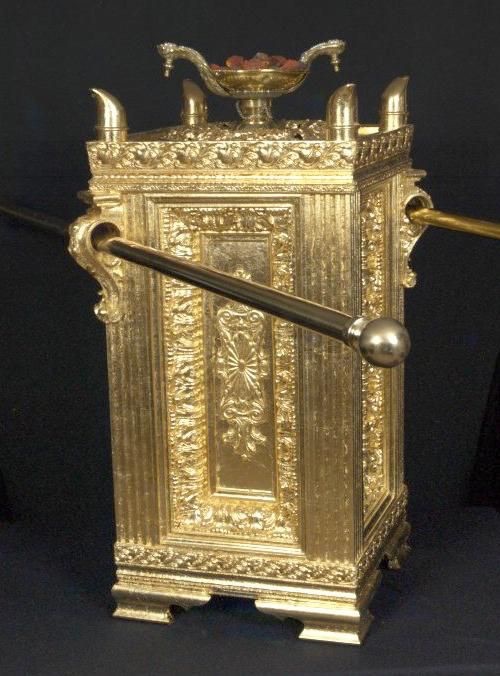
The Incense Altar – most images online got the number of rings wrong. There weren’t 4. There were only 2. It seems likely that the incense may have been burned in a dish of coals that sat on top. We already talked in detail about the incense in an earlier post.
The Furniture in the Court
These pieces were outside the tent but still inside the 8ft tall linen “privacy fence” that surrounded it.
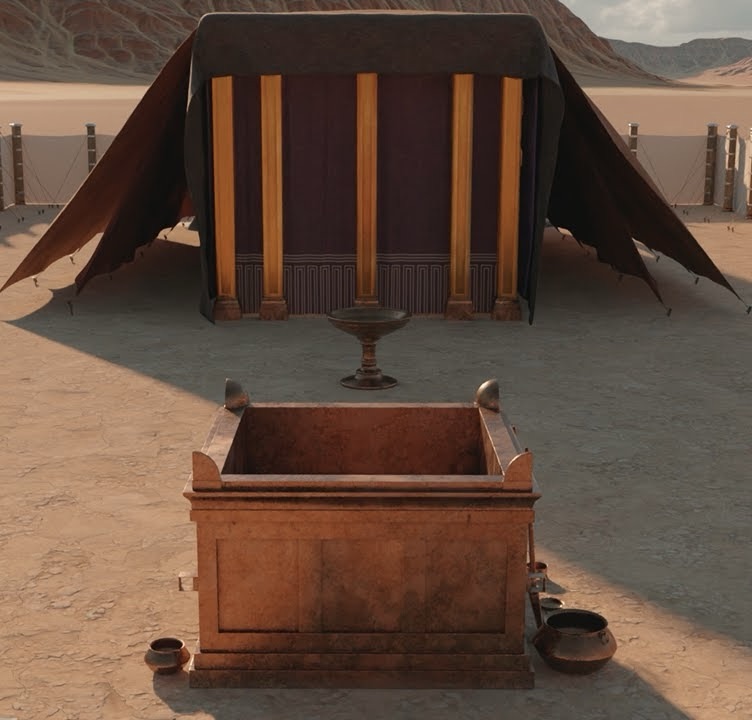
The Brazen Altar – it’s basically God’s personal BBQ grill. I don’t mean to be irreverent but that’s essentially what they did on it. Only God got the pieces cooked (burnt) on His grill. The parts of meat the priests were allowed to eat were generally boiled in pots- presumably on separate fires.
The furnishings inside the Holy Place and Most Holy Place are all gold. Out here, you see Bronze. The Brazen Altar is all bronze (hence its name). All of its BBQ tools and pans and accessories are also made only of bronze. You thought a claw-foot bathtub was heavy. That acacia (shittim) wood must’ve been some kind of strong to not break under the weight of this thing.
The whole tabernacle is like Olympic medals. Bronze is good. Silver is even better. But the gold is the best.
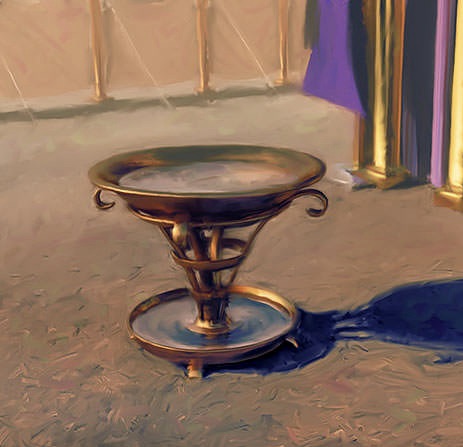
The Laver or Basin – this one has the least information so ideas as to its appearance vary widely. Even the size is unknown.
I think there must be some poetic meaning in the fact that it was made from the ladies’ mirrors. In ancient times mirrors were made of polished black obsidian then later out of polished metals like copper and bronze. This basin was for washing. What do you have hanging above your bathroom sink right now? A mirror. Washing and being able to see yourself go hand in hand. We’re going to drill more into this in chapter 40.
It might’ve looked something like this- rather birdbath-like I think. But practical for washing both hands and feet:
All this is surrounded by a privacy fence made of curtains.
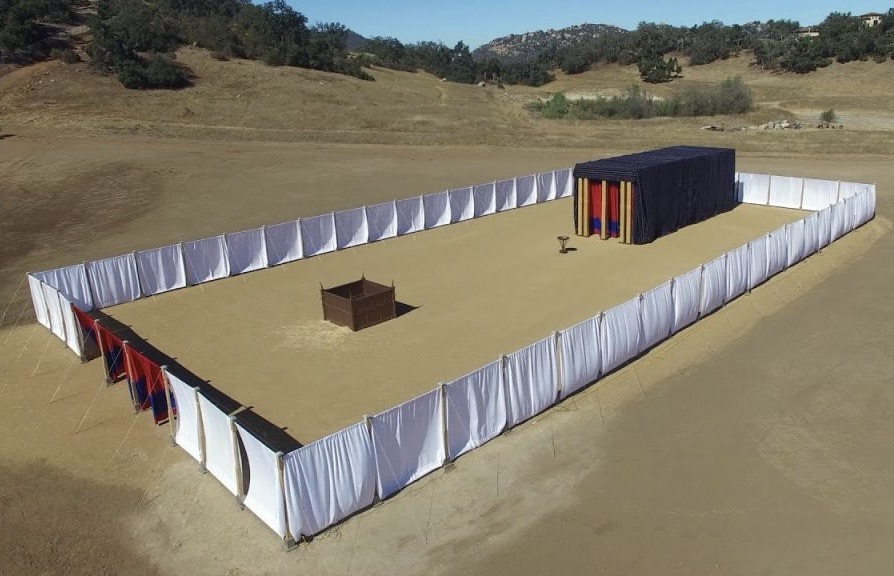
If you’ve never visited a life-size mockup of the tabernacle, it’s super helpful. You get to walk around in the space and feel how big things are. There’s one in Eureka Springs, Arkansas at The Great Passion Play which would make for a fantastic part of a Branson, Missouri area vacation. It’s not the only one in the world so do a little Googling and see if there is one near you.
Now that we have had a good refresher on what all the tabernacle pieces are, we’ll start to look at what they may mean in the final 2 chapters of Exodus.
 To The Reader