Oil, Bread, and Blasphemy.
I’m working on a bonus post about the Menorah. 🕎 I’ll get it posted as soon as I can.
I want to share a brain-bending picture. We all have some idea of what the “showbread” or “bread of the presence” looked like. I always pictured something like Naan bread or Pitas. (Y’all, Naan is SO delicious. And a warm Pita with hummus… yum!). But when I read the text closely, I realize I’m not thinking big enough.
In Israel there is an educational organization called The Temple Institute. They have recreated the furniture (except for the ark) and clothing of the temple and priesthood. The men in the school trace their lineage to the tribe of Levi (or so they say). They have even done a burnt offering or two- all overseen by humane societies to make sure the animal was treated with care. It’s pretty interesting stuff. You can find videos on YouTube and articles online.
They also recreated the sacred bread. Here in Leviticus 24 it says,
“You must bake twelve flat loaves of bread from choice flour, using four quarts of flour for each loaf. Place the bread before the Lord on the pure gold table, and arrange the loaves in two stacks, with six loaves in each stack.” Leviticus 24:5-6 NLT
That’s a LOT of flour and they are HUGE loaves; about 13.5lbs each.
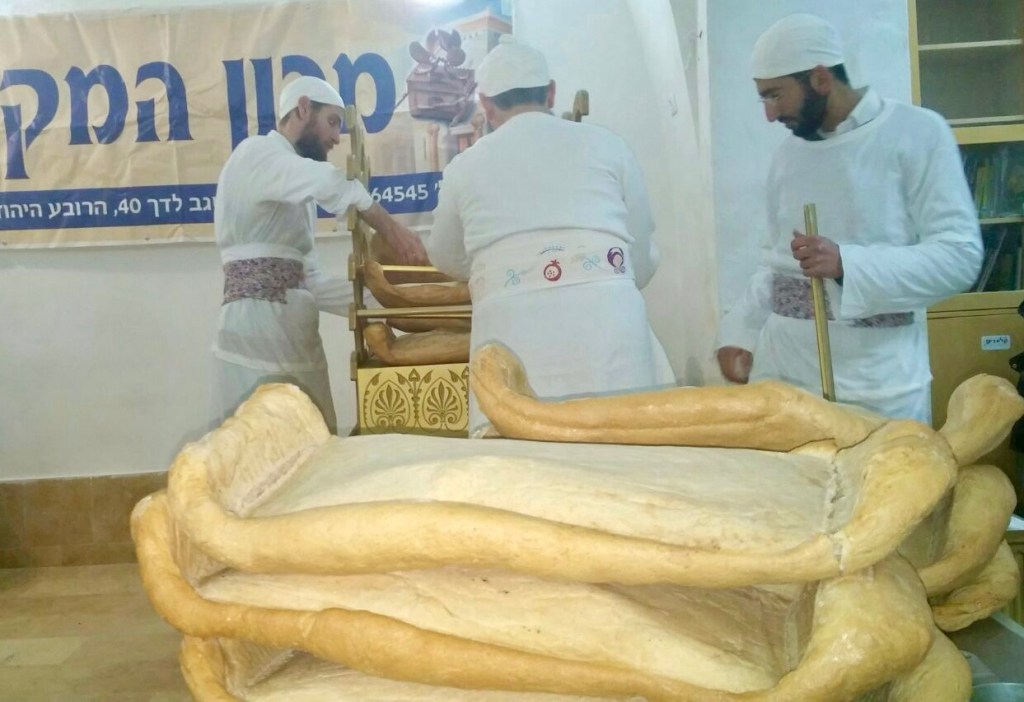
The Hebrew for “shewbread” is paniym lechem (pawneem lek-hem) and it literally means “faces bread.” It is the bread that sits before the faces (plural) of Yahweh. To be “before the face” of someone is a way of saying you are in their presence. So it’s also correct to call it “The Bread of the Presence.”
Because of the wording of “faces”, the rabbis believe the bread was to have multiple “faces,” facets or sides. So that’s how they got to the unusual shape in the picture above. We don’t know for certain if that’s how Aaron shaped it. But no matter the shape, it was still HUGE bread.
And since the word lechem is used and not motzot (matzah), it’s likely that this bread was leavened. The text is very careful to specify when bread is to be unleavened, and here it says nothing about it being unleavened. So leaven probably doesn’t represent sin or pride in every case. It could hint at the idea of the humble (flour) being lifted up (raised).
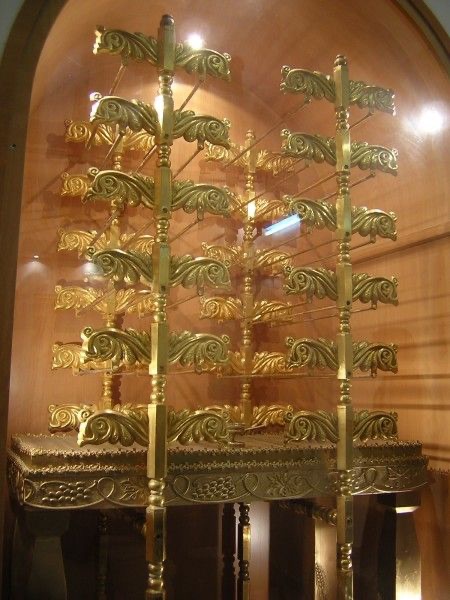
I found this online about the rack: Declares The Odyssey of the Third Temple, by Rabbi Yisrael Ariel, the twelve loaves were baked in specific pans, in a specific fashion, and rested one on top of another with golden shelves separating one loaf from another to prevent their breaking. The table itself was of acacia wood, overlaid with gold, and weighed several “talents” — each talent being about fifty kilograms, or one hundred twenty pounds. Thus the table itself weighed several hundred pounds, perhaps about four-five hundred pounds!
😲
And it looks very tree-like; similar to how the Menorah looks like a tree. The Edenic tree-imagery is everywhere. 🌳🌴🌳🌴
There are some fun (possibly embellished) stories about the bread in Jewish writings. One story said the bread was as hot and fresh after 7 days as when it came out of the oven. Another said that sometimes there were so many priests sharing the bread that they each only got a bite the size of a bean but that it filled them up and satisfied them as if they had eaten a whole meal.
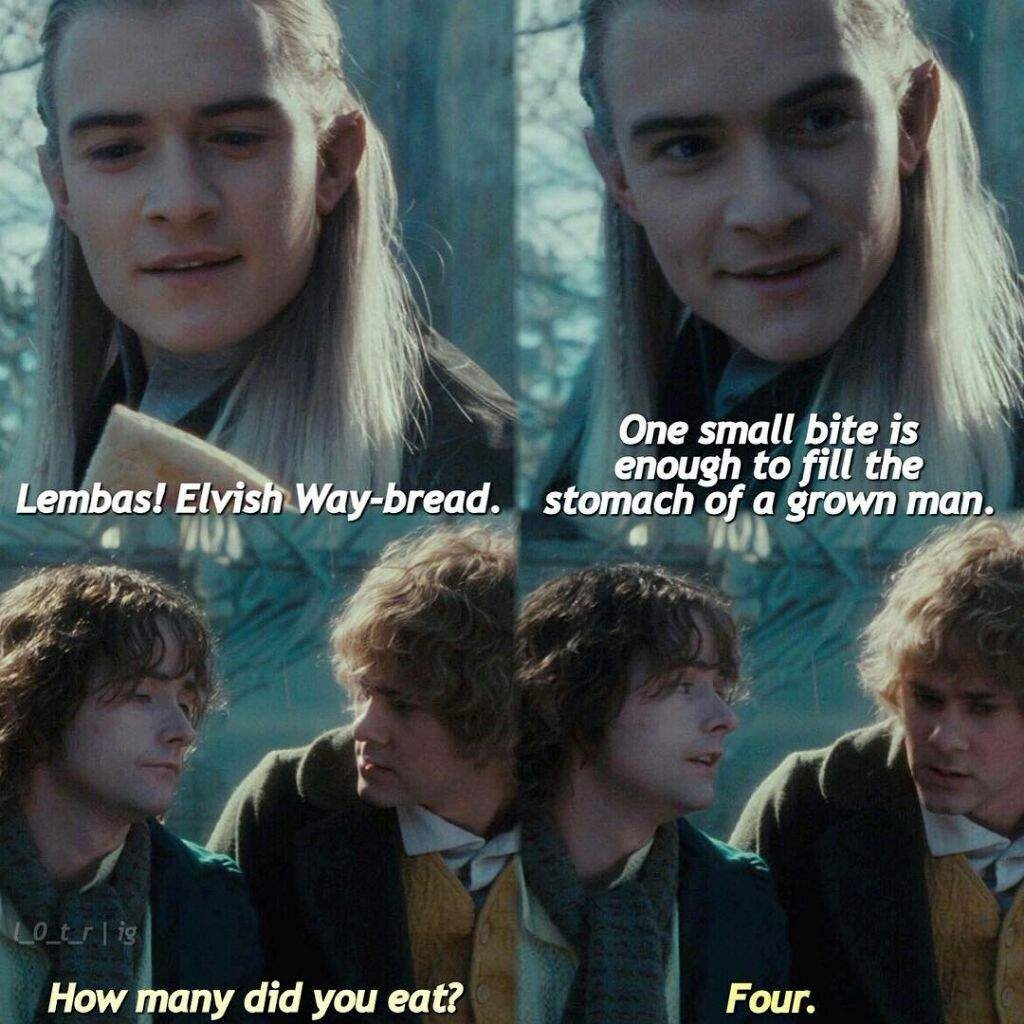
So I’m thinking that since the tabernacle is a model of what is in heaven – there’s some pretty magnificent bread there. And we – the priests – get to eat it. Hot, delicious bread.
That makes me very happy. 😌
This chapter ends with the first account of capital punishment being carried out. A half-Jewish man “blasphemed the name of the LORD with a curse.”
Let’s look at the Hebrew words:
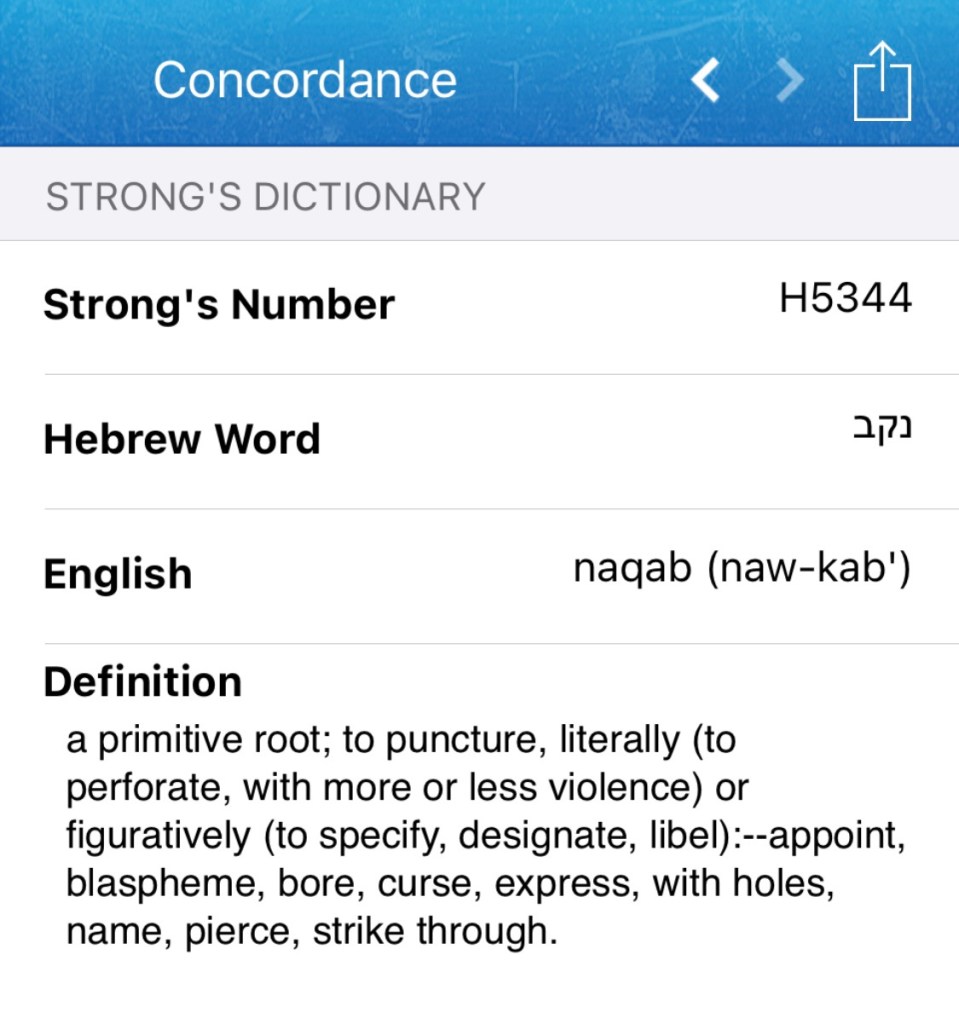
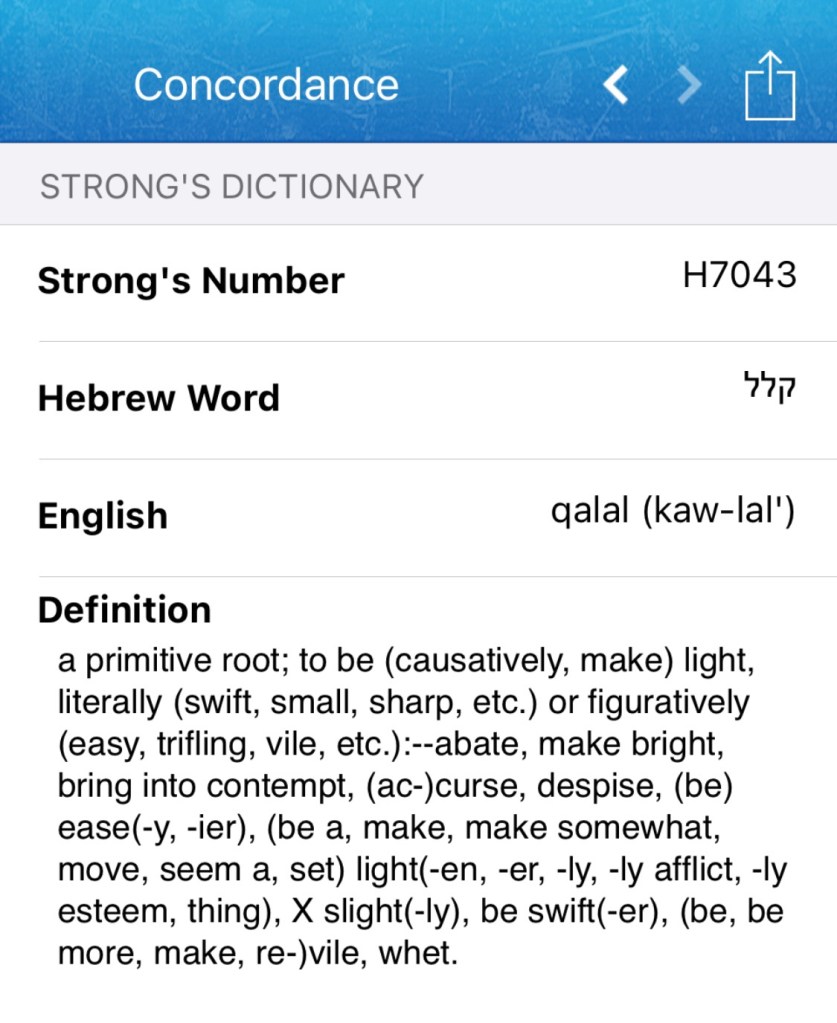
So this guy – who is both Jew and Gentile in one body – pierced/punctured-with-violence the NAME of the LORD with contempt and despised the Lord.
Hmmmmm.
Are you thinking what I’m thinking?
I can’t seem to look up anything in Hebrew without running smack-dab into an incredible picture of Jesus.
Let me break it down for anyone who hasn’t caught on yet… (first, go back and read the Strongs entries and the last couple paragraphs again really slowly…)
Jews and Gentiles teamed up to pierce the body of Jesus. Jesus is the embodied Name (presence) of Yahweh. Jesus was despised and rejected and treated with contempt. He bore the curse of sin for us.
The guy who blasphemed was sentenced to death by stoning. All sinners are under the death penalty too.
Interestingly, the very last judgement (the 7th bowl) that falls upon the earth ties back in to this story.
“And large hailstones, weighing about a hundred pounds, came down from the sky upon people, and the people blasphemed God because of the plague of hail, because the plague of it was very great.”
Revelation 16:21 LEB
The blasphemers are given the same sentence: stoned to death with ice boulders hurled from the heavens.
Like the convicted man, Jesus was also taken outside the camp and executed by the whole congregation. He bore the death penalty so we don’t have to.
Wow. I did NOT expect to find something so amazing in this story about the first person sentenced to death in Israel but I shouldn’t be surprised at this point. Every nook and cranny of scripture is bursting with foreshadowing of Jesus and the great work He will do.
There’s no way this is coincidence. The LORD knows the end from the beginning. And everything in between.
Speaking of which – chapter 25 has the instructions about the Year of Jubilee. If the Dead Sea Scroll Calendar is right, then a Jubilee year just started and Donald Trump announced it to the world (probably without knowing it). Can’t wait to tell ya about it!
 To The Reader