We come to one of Samson’s big victories. There is a bunch of word-play here that isn’t evident in English. Though I am still a rookie Hebrew scholar I’ll do my best to point it out so we can all appreciate God’s sense of humor.
First we get the impetuous Samson deciding he’d like to have his wife after all but when he finds that she has been given to his buddy he decides to set the Philistine’s fields on fire in a creative way.
I’m not sure what Samson expected. Abandon your new bride on her honeymoon and just not show up for months? What did he think a bunch of Philistines would do? But he gets mad anyway. And somehow ties 150 pairs of foxes 🦊 together by their tails and ties a lamp or torch of some kind between them. 🔥
Enquiring minds want to know…
- How long did it take to catch 300 foxes?
- How on earth did he get anything tied to a fox’s tail without getting bit?
- Getting a couple foxes tied together is one thing, but 300?!?!
- Suppose you GOT 300 foxes, AND managed somehow get their tails tied together. How do you keep a pair of angry foxes still long enough to light a torch between them?!?
🧐 Uh… ya know- the Bible doesn’t say that he set all 300 loose at once. He could’ve done it incrementally over several days or weeks.
😳 Woah. I never thought of that. I always imagined… well… 300 foxes running crazy in a field with their tails on fire.
🧐 I bet you went to Sunday school, didn’t you?
😳 Yes.
🧐 Flannel graph?
😑 Yup.
🧐 That old, huh?
🤨 Hey- let’s stick to Samson, alright?
🧐 Sunday school storybooks and flan… uh… illustrations – often show a fiery field full of foxes in broad daylight. But it’s more likely that Samson used them at night in a stealthy way a few at a time. Foxes are active at night. The 300 could be a total number. Why dump all your foxes in 1 field when you could sneak about and hit many fields in a whole region?
😳 I’ve never thought of that. Ever. But it makes complete sense.
🧐 Yeah. Those early Sunday school impressions can really get your mind stuck in one way of thinking.
🤨 Maybe I’ll start a campaign: Saints for Accuracy in Sunday School.
🧐 SASS?
😳 Oh. Well, maybe the name needs work.
In return for burning up their harvest, the Philistines burn up Samson’s wife and father-in-law.
Samson counter-attacks.
The KJV rendering is rather poetic. “He smote them hip and thigh with a great slaughter.” That’s a very polite way of saying he kicked the Philistines in the groin. I’m not kidding. The Hebrew word translated “thigh” is a euphemism for “the generative parts” according to Strong’s. We don’t know how many Samson killed but it must’ve been significant.
Then Samson goes off to Hawkland Fortress. It’s a natural stronghold in a rocky crag. (That’s what “the rock of Etam” means). And he’s holed-up there until 3000 men of Judah show up to get him because the Philistines have amassed a small army on their border.
Most of us have no concept of what it would be like to live under the rule of a foreign government. You have no vote. No freedom. No power. If you poke a stick in the eye of the powers that be, you and everyone around you will suffer. Samson has caused trouble. The men of Judah are there to get the troublemaker.
But being bound and handed over to the Philistines is a great way to get deep into their camp to strike another blow. So maybe the next time you find yourself surrounded by the enemy, instead of feeling outnumbered, you could think of it as the perfect opportunity to strike a blow deep in enemy territory.
So… here’s where the word-play starts.
The Philistines take Samson prisoner. They shout in victory as he is paraded into their camp. And like the chains of Paul & Silas falling off, the new ropes that bind Samson become like ash and fall from him.
Oddly, there is a “new” or “fresh” lehi (cheek/jaw) of a donkey laying nearby which Samson grabs to use as a weapon.
Most artwork shows Samson with an clean, sun-bleached jawbone. Like this:
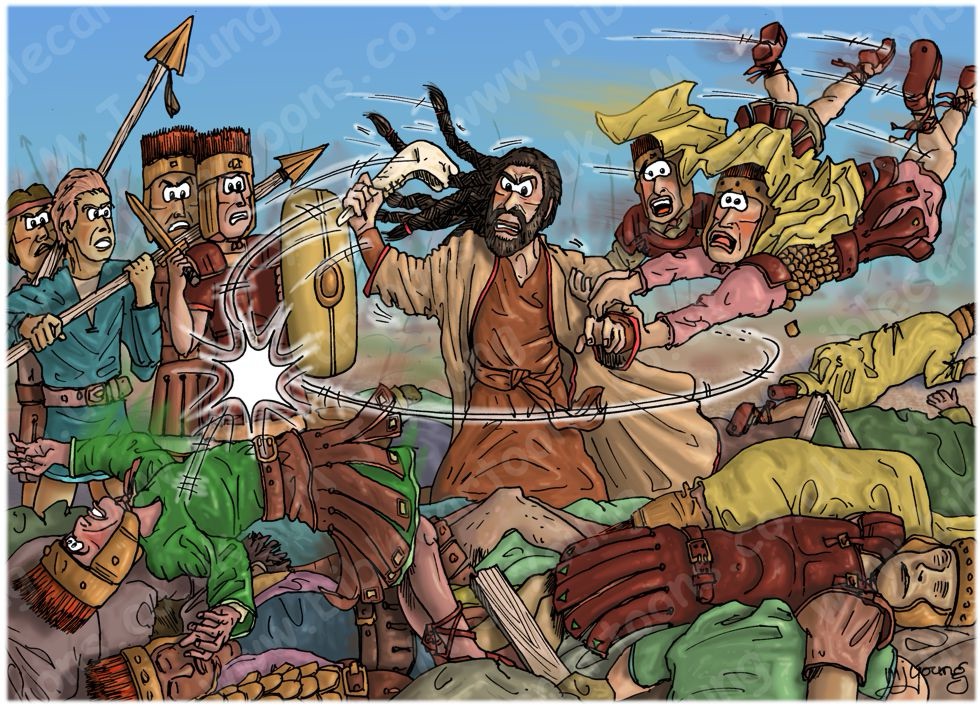
But the word for “new” actually means “moist,” or “dripping.” There are only 2 conditions I can think of that fit that description: 1) the donkey was very recently slaughtered or 2) the donkey head is in a drippy state of decomposition. 🤢
This is an unusual word. It only occurs here and in Isaiah 1:6 where it describes an open wound; so it could go either way- bloody or oozing putrefaction.
Whichever it was, in Samson’s hand, with God’s power, it becomes a deadly weapon.
Then when the dust settles, a whole camp of Philistines lies dead, Samson makes up a little pun-filled ditty to celebrate.
Lehi chamowr, chamorah chamorah
Lehi chamowr, nakah eleph iyesh
The words chamowr (donkey) and chamorah (heaps) share the same root: chamar, which means to boil up, be red/redness, to ferment, to glow with redness.
🤔 What does a donkey have to do with any of that?
😐 Well, technically, we’re not really talking about a grey donkey as we think of it. We’re uh, talking about, uh…. well… a wild ass.
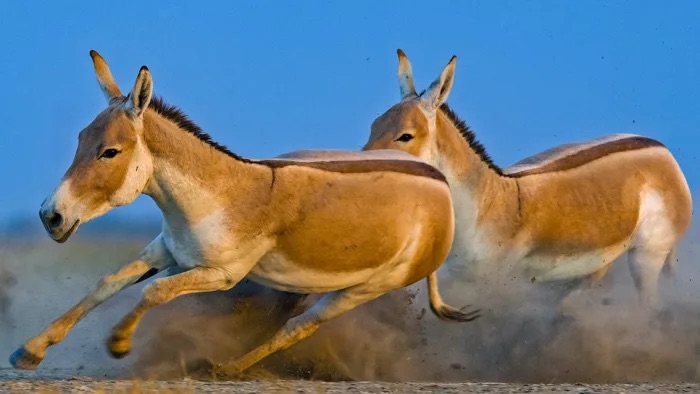
Chamar is related to chemar, which is the Biblical Hebrew word for this stuff:
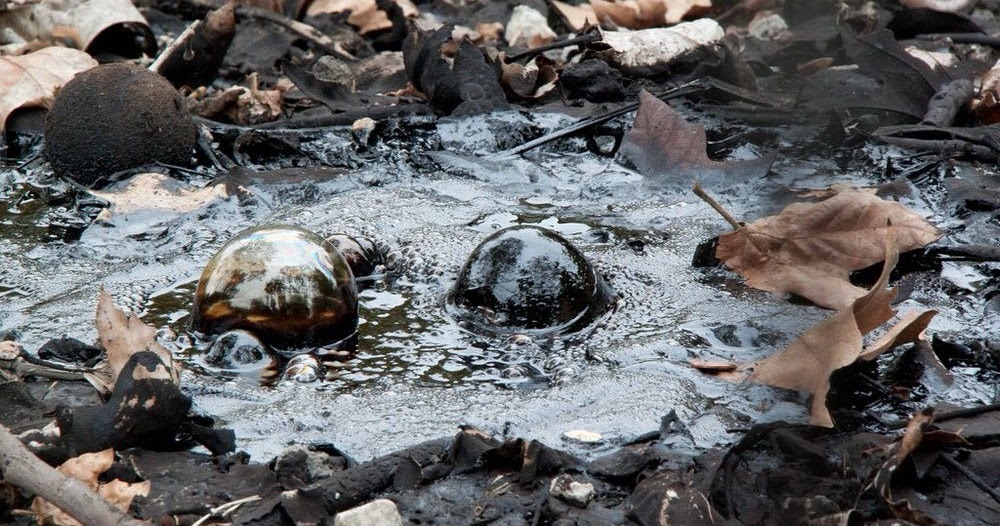
Chamorah means heap. Like a bubble.
A blister is a great illustration of the confluence of these ideas. It bubbles up and it’s red and angry.
So Samson is making a punny little song pulling together the ideas of the bloody red jawbone of a red ass to the piles of bloodied (red) bodies piled in little heaps on the ground like so many blisters. And all this happens at a location called Lehi (jaw/jawbone). Josephus said this name was given after this event to commemorate what happened there and that it had no particular name before.
Then Samson throws down the jawbone and names the place jawbone hill or cheek hill. Again the reference to hill/heap/pile/bubble. This whole narrative is a pun layer cake.
🤔 All the people who like to make puns are gonna have a great time in heaven I guess.
🤓 Yes. God seems to really get a kick out puns. He uses them more often than we realize.
Samson is thirsty after all that fighting so he prays for help and God made a spring but it’s also a play on words.
“So God caused water to gush out of a hollow in the ground at Lehi, and Samson was revived as he drank. Then he named that place “The Spring of the One Who Cried Out,” and it is still in Lehi to this day.”
Judges 15:19 NLT
The Hebrew says that Yahweh broke open a maktesh Lehi. If we were to take it literally (which I don’t think is the intended meaning), it would be something like: God made water come from a tooth socket in the jawbone. I suppose God could’ve turned the jawbone into a water fountain but I think it’s more likely a pun. The word maktesh means hollow spot. Like when you lose a tooth and there’s a little hole. It seems there was a hollow spot where God brought forth water like He did from the rock in the wilderness.
Maktesh an unusual word. The only other place it’s used is here:
“Though you pound the fool in a mortar with a pestle along with crushed grain, His foolishness still will not leave him.”
Proverbs 27:22 NASB2020
A mortar is a little hollow dish.

And since I can’t say the word “pestle” without thinking of Danny Kaye in The Court Jester, here ya go… 😆
See you tomorrow.
 To The Reader