“Pride goeth before destruction and a haughty spirit before a fall.” Prov. 16:18
Guess who was boasting a couple days ago about having done 6 months of blogging without missing a single post.
😒
Uh huh. Me. 😑
And it’s not that I didn’t have time to write the post for this morning last night. I did. But my brain was particularly fried… for… reasons. I did get my dishes washed though.
So yay… clean dishes. 🍽️
I’m sorry, friends. But I also know that many of you will not even know that this post is late because you don’t read it first thing in the morning. 😏
No matter. I humble myself and repent in dust and ashes…
Now… on to 1 Samuel 4-5.
First – an important point about a particular place name in this section and something to note about place names (toponymns) in general:
Ebenezer.
Most of us read that and all we can think of is Ebenezer Scrooge.

“Oh! But he was a tight-fisted hand at the grindstone, Scrooge! a squeezing, wrenching, grasping, scraping, clutching, covetous old sinner! Hard and sharp as flint, from which no steel had ever struck out generous fire; secret, and self-contained, and solitary as an oyster.” – A Christmas Carol
We have Charles Dickens to thank for ruining the name Ebenezer.
Ebenezer is the name of the place where the army of Israel camps when they go to fight the Philistines. Only… it doesn’t actually get named Ebenezer until chapter 7. When we get to chapter 7, we’ll break down the Hebrew name and what it means.
🤔 So, if that place isn’t named Ebenezer until chapter 7, why are they calling it Ebenezer here in chapter 4?
🤓 Everybody reading this history (in the future) will know the place by the name Ebenezer. And as (presumably) Samuel is recording it, these events are in his past and everyone knows the location by the name Ebenezer.
☝🏼🤓 Did you know that Austin, Texas used to be called Waterloo? When it was chosen to be the capitol of the Republic of Texas it was renamed for Stephen F. Austin who was instrumental in the early settlement of the area. If you called it “Waterloo, TX” no one would know what you were talking about. The later name is the one that stuck.
Same here with Ebenezer.
I think it’s interesting that the God of Israel is famous in the ancient world. The Philistines know the stories of the plagues of Egypt and the parting of the sea. They know about the defeat of the giant kings Og and Sihon. Those things happened over 300 years before this. But when they hear that the Ark of Yahweh has come into the camp, these battle-hardened warriors are terrified.
And they know what is on the line. They know that if they lose, the tables will be turned and the people they’ve been oppressing will now be in charge. Israel will be out for their blood.
⚔️ So they fight like men with everything to lose and they win; even capturing the Ark.
Y’all, don’t think for a moment that Yahweh on His Ark is just bouncing around the battlefield like a football getting intercepted by the other team. If He had wanted, He could’ve gone off like a nuclear bomb and leveled everyone for a 20 mile radius.
He did not. What does that imply? 🤔
Ichabod.
(What is with chapter 4 and the odd names?)
Here is another name with strong, unbiblical associations.

Ichabod is pronounced ee-khah-bode. It’s a compound word. Iy (no/not) + kabowd (weight/glory/splendor).
And indeed, the glory had departed from Israel. God had executed His forewarned judgment on the house of Eli. Hophni and Phinehas were dead and the blind and elderly Eli died upon hearing the news.
If you read all the genealogies you will not find Eli, Hophni, Phinehas or Ichabod. (And believe me, I spent a LOT of time looking.) There are lists of the descent of the priesthood from Aaron down to the time of David and no mention of these guys. God truly wiped their names out of the priestly line.
Josephus says that Eli was not a descendant of Eleazar, but of Ithamar, Aaron’s youngest son. But after this event where Hophni and Phinehas are killed, the succession of the priesthood switches back to the family line descended from Eleazar. Mostly.
Now, I can’t quite figure out all the details, (and I DID try. HARD 🤨), but something happened with little baby Ichabod that has something to do with this pivot in the priestly succession.
“Among Saul’s men was Ahijah (or Ahiah) the priest, who was wearing the ephod, the priestly vest. Ahijah was the son of Ichabod’s brother Ahitub, son of Phinehas, son of Eli, the priest of the Lord who had served at Shiloh.”
1 Samuel 14:3 NLT
Now, if you look up Ahitub (who is the father of the famous priest Zadok under King David), he is consistently identified as the son of Amariah, not Phinehas. Bear in mind that “brother” in Hebrew is broader than biological brother. It can mean half-sibling or possibly even cousin or what we would call a step-brother.
Or, there could be more than one Ahitub. But the timing is pretty spot-on, and he IS from a priestly family… 🧐
I just think that the wording is weird. “The son of Ichabod’s brother…” It would’ve been easier to say “son of Phinehas” unless, Ahitub is NOT the son of Phinehas. Here’s my best guess:
Phinehas dies. ⚰️ His wife dies from complications of childbirth. ⚰️ Ichabod is now an orphan. 👶🏽 His uncle is dead. ⚰️ His grandfather is dead. ⚰️ I think he may have been adopted by a Levite named Amariah who took up the role of High Priest upon the death of Eli and sons. Amariah adopts Ichabod and raises him as a son alongside his own son Ahitub. Or something like that. I dont’t know, ya’ll. I’ve spent WAY too much time 🕰️ trying to tease this out and it’s about as clear as mud. I’ve drawn family trees and looked up all the instances of all the names til I’m cross eyed 🤪😖 and I REALLY need to go mow my yard. 🌾🌾🌾 It all pivots around Ahitub. That’s all I know.
The priesthood is going to figure largely into the Saul and David narratives coming up so this won’t be the last of this puzzle. 🧩
So the Ark gets taken to Ashdod and put in the temple of Dagon.
Taking the image or “seat” of one god and putting in the temple of another was a common practice in the ancient world. It was basically a way to brag that “My god is more powerful than yours.”
Only, the next morning the Philistines find their god in a posture of worship before the throne of Yahweh.
If you don’t think the LORD has a sense of humor I can’t help you. THIS is funny! Yahweh is absolutely messing with the Philistines. They set their statue back up but the next morning, not only is Dagon back on his face before Yahweh, his head and hands are broken off.
Ok – THAT is powerful symbolism not to be overlooked. The hand is a symbol of power even today. ✊🏼 To have the hands cut off is saying that Dagon has no power. The head is the symbol of authority and leadership; 🤴🏽being in charge, “the head honcho.” Dagon is decapitated. His authority is removed.
(Makes me think of the most famous Philistine in history who will have his head cut off…)
And not only were the head and hands cut off, they weren’t lying where they should’ve been if the statue had just fallen over naturally and they broke off and rolled a bit. No, they were placed – probably lined up – on the threshold of the temple door. Talk about spooky! 👀 Yahweh was sending a “strongly worded letter” to the priests of Dagon: “I’m in charge here, even in Dagon’s own house.”
While this is going on in Dagon’s temple, there is a mysterious plague afoot outside.
I cannot find a consensus on what the tumors or “emerods” were. Here’s what we know:
- The Hebrew word means swelling.
- The disease seems to target men.
- The disease is associated with rats.
- The disease causes “destruction” and the men are dying.
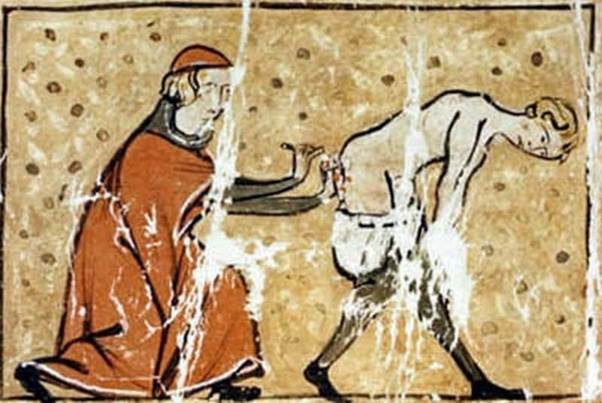
Some translations use the word “tumors,” some “boils,” or even “hemorrhoids.” There are STDs that might fit this description. I doubt anyone is dying of hemorrhoids, even if there isn’t any Preparation H around. 😏Some have suggested the Bubonic Plague. And I think that may be a strong contender.
Again, the Philistines KNEW about the plagues of Egypt. Maybe they were thinking that if this outbreak was the first of 10, they were all doomed!
Whatever it was, the Philistines in Ashdod knew that it was because they had the Ark. So they send it to Gath, hometown of Goliath. Same problems there. Gath passes the hot potato over to Ekron, and whatever this plague is, it hits the men and boys of Ekron next. These towns are all within 10 miles of each other.
The Philistines are starting to think that taking that golden box wasn’t worth it. When they “captured” the God of Israel, they got a roaring lion by the tail. Bad move.
If there had been social media back then:
 To The Reader