Psalms of Asaph
There is more than one Asaph in the OT. I will point them out as we go. And there is possibly more than one psalmist using that name. We won’t get to those other-Asaph psalms until December and April.
The name Asaph means “collector” or “gatherer.” So it could be that besides the man we can positively identify as Asaph son of Berechiah of the Levitical family of Gershom, someone later wrote or “collected” and published some psalms under his name. We’ll dig more into all that when we get to those particular psalms in the future. I just wanted to put it on our radars for now.
Psalms 73 and 77 were written by the Levitical singer-musician-prophet, Asaph. He lived during the time of David and Solomon and was one of Israel’s main worship leaders.
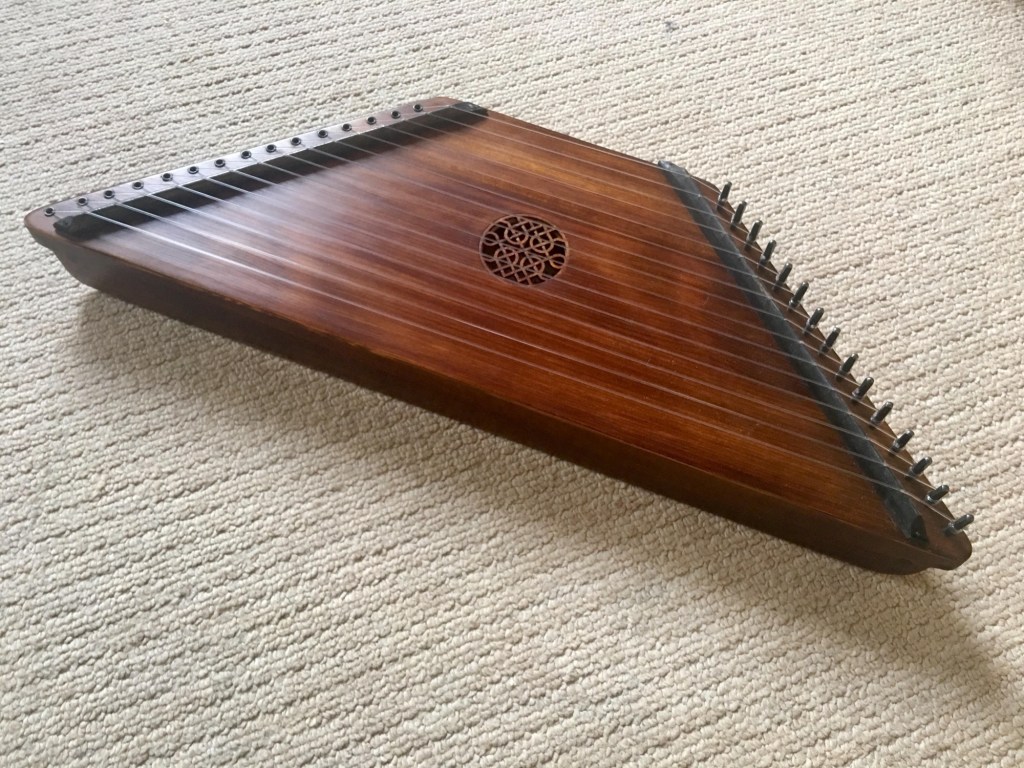
We have yet to get to the texts that describe Asaph so let me give you a quick sketch of him. Asaph was skilled on both the harp psaltery.
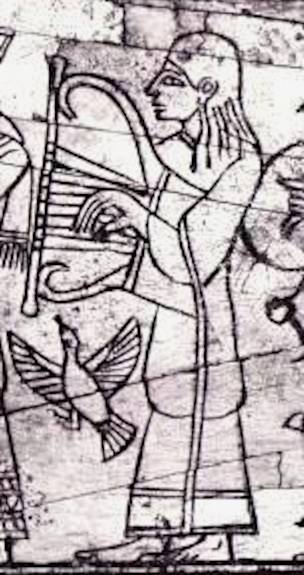
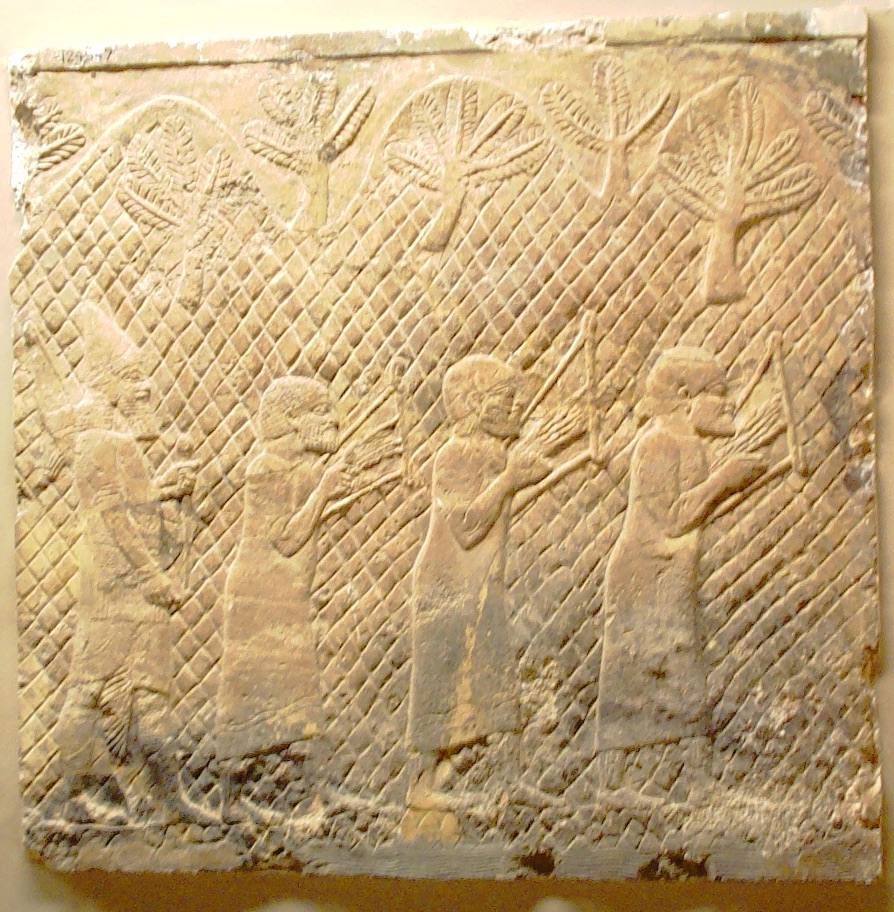
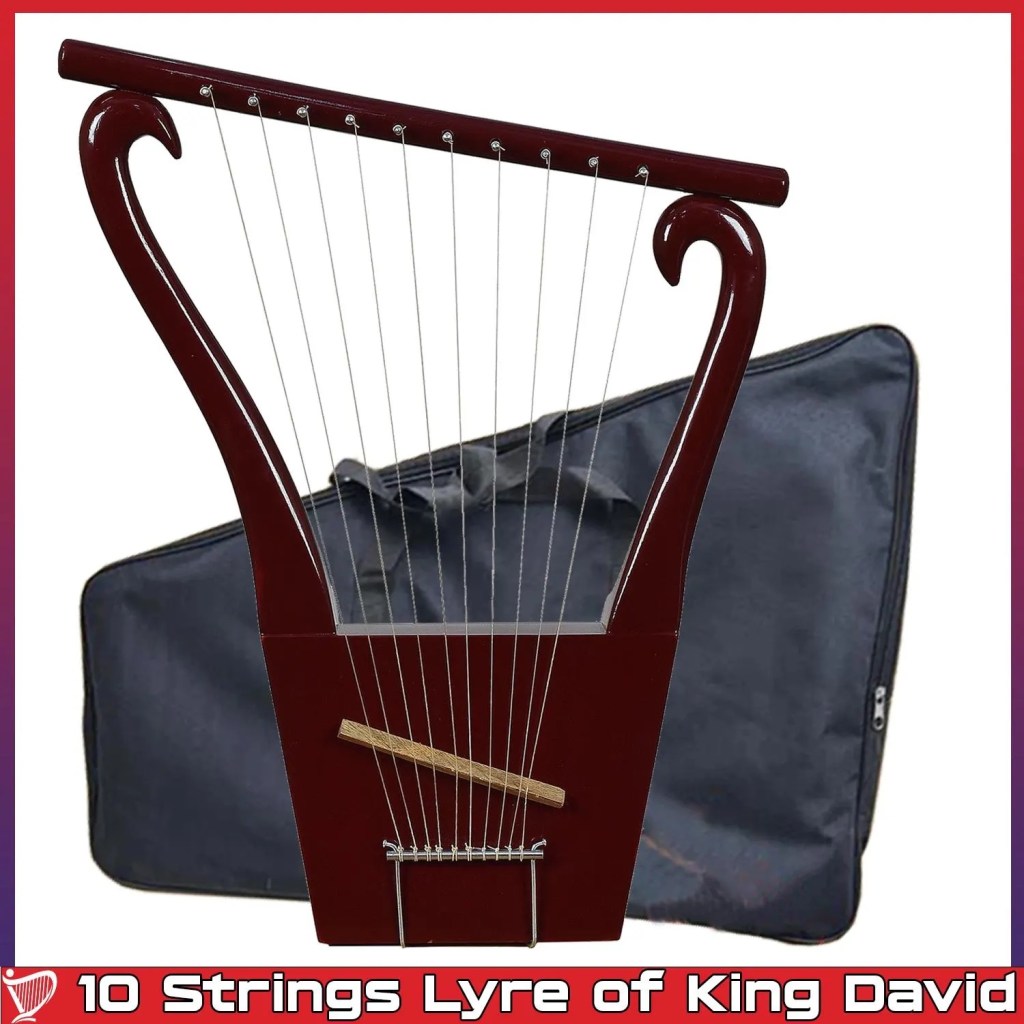
People sell them on Etsy!
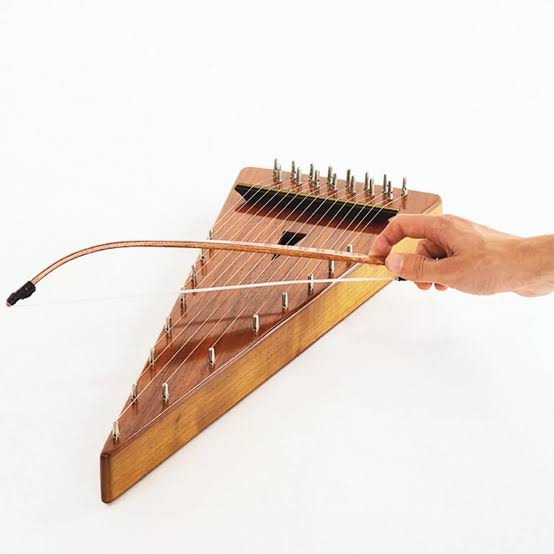
Asaph was also a singer, songwriter, music teacher, and choir director. But his main thing seems to have been percussion.
🤓 Multiple instruments, singer, songwriter, music minister? He sounds like he could be your twin.
I know! I usually tell people that my main instrument is piano, and that is technically true. I have more developed skill and knowledge there than any other instrument. But someone once told me they thought that I was a drummer at heart.
🤓 You play drums??
Yeah. But not like a real drummer who has drilled on paradiddles and pedal technique. I play mostly by feel.
🤓 Girl-drummers are pretty cool.
I guess so. The best drumming compliment I ever got was when someone told me, “You play drums like a man!” At least, I took it as a compliment.
🤓 Well… No one wants to be told that they “throw like a girl.” So is it an insult to be told “You play drums like a girl”?
I suppose it doesn’t matter as long as you stay on beat, play with sensitivity, serve the song and the other musicians, and don’t get in the way.
🤓 So was Asaph was a drummer too?
Percussionist. We get several verses talking about him playing cymbals – finger cymbals to be precise. Like these:
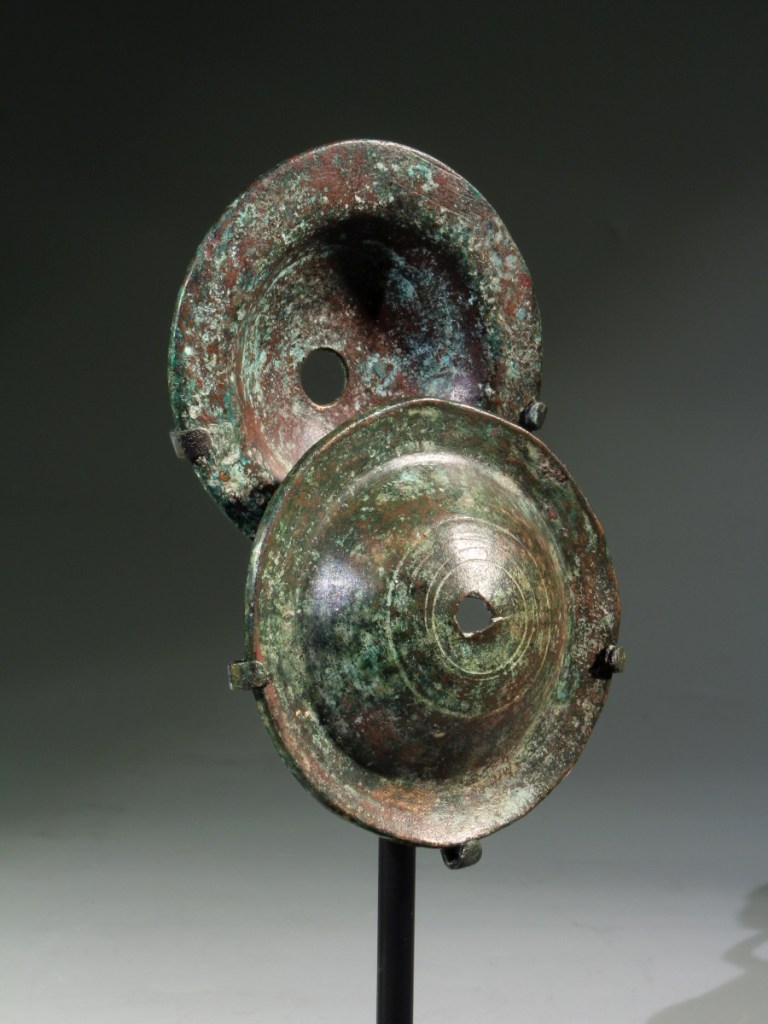

This is one instrument that hasn’t changed in thousands of years.
Now that we know a bit about Asaph, let’s look at two of the 12 psalms that bear his name.
PSALM 73
This psalm has 4 sections.
- Asaph’s profession of faith and confession of his mistake (v 1-3)
- The prosperity of the wicked (v4-12)
- Asaph’s initial response (v 13-16)
- Asaph’s response after his encounter with God (v 17-28)
I appreciate Asaph’s honesty with himself. The problem of comparing ourselves to worldly people is nothing new. With social media, it’s easier than ever to find ourselves “slipping” into envy of those who prosper in this world.
We can look at the beautiful people with perfect skin, flawless hair and sculpted bodies, or scroll down to see the happy couple on a perfect vacation, or scroll some more to see the successful business owner launching some new venture, or the smiling retired couple in a fancy RV or…
🤓 Scroll scroll scroll… 3 hours later?
Exactly. And we wonder, “What about me, God? What am I, chopped liver? How come all these other people are so fit and gorgeous and happy and blessed? Some of them don’t even serve you at all. And here I am trying to be a faithful follower and I can barely keep my nose above water.”
Anytime we start to get – as Asaph put it in verse 2 – swept off our feet by the tide of comparison that would pull us out to sea, the solution is to do what Asaph did.
🤔 What did he do?
He went into God’s sanctuary.
🤔 How did that fix anything?
Well, it helps to know what he meant.
🤔 Doesn’t it mean that he went into the Tabernacle or the Temple?
Possibly. But we actually have scripture that describes a unique situation where Asaph had access to the Ark.
😲 THE ark? As in don’t-look-at-it-Indy-or-your-face-will-melt ark?
Yes. That ark.
😲 How did he do that? Was he the High Priest?
No.
🤔 But I thought only the high priest could see the ark? Once a year.
That is mostly true. Except for that time when David had the ark in his back yard in a tent.
🤯 He what?!
“And they brought in the ark of God and set it inside the tent that David had pitched for it, and they offered burnt offerings and peace offerings before God. And when David had finished offering the burnt offerings and the peace offerings, he blessed the people in the name of the Lord and distributed to all Israel, both men and women, to each a loaf of bread, a portion of meat, and a cake of raisins. Then he appointed some of the Levites as ministers before the ark of the Lord, to invoke, to thank, and to praise the Lord, the God of Israel. Asaph was the chief, and second to him were Zechariah, Jeiel, Shemiramoth, Jehiel, Mattithiah, Eliab, Benaiah, Obed-edom, and Jeiel, who were to play harps and lyres; Asaph was to sound the cymbals, and Benaiah and Jahaziel the priests were to blow trumpets regularly before the ark of the covenant of God. Then on that day David first appointed that thanksgiving be sung to the Lord by Asaph and his brothers.”
1 Chronicles 16:1-7 ESV
😲 So let me get this straight… David brings the ark to Jerusalem after it sat in that one guy’s house for like 20 years, and he puts it in a tent and assigns Asaph and his buddies to sing and make music to God right there in the tent with the ark??
Yes. It was called “The Tabernacle of David” and it was completely unique in the OT. We’ll be talking about it more as we get further into 1st Chronicles.
🤔 So when Asaph talks about visiting God in the “sanctuary,” he actually means he’s close to the Ark and the presence of God, not just out in a courtyard somewhere?
Exactly. And when we encounter the eternal presence of the Almighty, and we are wrapped in His peace and calmed by His power and control, it gives us a different perspective on life. When the inner desire of the heart is filled – which is something that no amount of riches or beauty or excitement can do – the prosperity of the world suddenly isn’t as important.
Not only that, but in the presence of the Lord there is illumination and revelation. Asaph realizes what the eternal destiny of the godless will be. They will lose everything that they temporarily enjoy while the children of God will not only be guided in this life but “received into glory” when it is over (v23-24).
The options are:
- Prosperity for a brief window followed by eternal emptiness and destruction
- Short-term inferiority in the world followed by an eternity of perfect life with riches and honor.
😏 When you put it like that it’s a no-brainer! I guess Asaph felt like a silly goose for ever envying the people who chose option one.
Silly goose? I didn’t see that in the text.
😌 He called himself a “beast” in verse 22. A goose is a beast. I rest my case.
Well, it makes me think of passage in Jane Austen’s Pride and Prejudice. And since I believe everyone needs more Jane Austen in their lives, I’m going to quote from the part when Elizabeth Bennet discovers that her opinions of both Mr. Wickham and Mr. Darcy were completely wrong…
“She grew absolutely ashamed of herself. Of neither Darcy nor Wickham could she think, without feeling that she had been blind, partial, prejudiced, absurd. ‘How despicably have I acted!’ she cried. ‘I, who have prided myself on my discernment! – I, who have valued myself on my abilities! Who have often disdained the generous candor of my sister, and gratified my vanity, in useless or blameable distrust. How humiliating this discovery! – Yet, how just a humiliation! – Had I been in love, I could not have been more wretchedly blind. But vanity, not love, has been my folly. Pleased with the preference of one, and offended by the neglect of the other, on the very beginning of our acquaintance, I have courted prepossession and ignorance, and driven reason away, where either were concerned. Till this moment, I never knew myself.’ ”
When Truth brings the right perspective, it may be uncomfortable to realize just how wrong we have been, but “how just a humiliation” and how helpful!
We don’t need to envy the wicked – even if they have a gorgeous physique, a hot spouse, AND a yacht. Compared to eternal life in God’s glorious presence, there really isn’t anything on earth that can compare. This is Asaph’s conclusion.
“Whom have I in heaven but you? And there is nothing on earth that I desire besides you. My flesh and my heart may fail, but God is the strength of my heart and my portion forever.”
Psalm 73:25-26 ESV
PSALM 77
This psalm of Asaph is similar to 73. Asaph is experiencing some kind of “affliction.” And even though he has prayed and sought the Lord about it “day and night” it hasn’t gone away. He’s even losing sleep over it.
I think many of us can identify with Asaph and his ponderous questions in the dark of night, (v7-9):
- Has the Lord rejected me forever?
- Will he never again be kind to me?
- Is his unfailing love gone forever?
- Have his promises permanently failed?
- Has God forgotten to be gracious?
- Has he slammed the door on his compassion?
Ever asked these questions before? (The answers to all of them are “No,” by the way.) If you have seriously walked with God for more than a few years, you’ve probably been through at least one season like this.
I think we can take comfort knowing that God’s prophet, Asaph, was there at one time too.
In Psalm 73 his solution was to be in the presence of the Lord. In this one, his solution is meditation on the works of the Lord. He does this in verses 13-20. And in that section, Asaph refers twice to God’s “way.”
The first is in verse 13. Many translations have it as God’s way is holy. And that is true, but both the KJV and the Septuagint agree that the text is saying that God’s way is IN the holy place or sanctuary.
The second is verse 19 where God’s way is said to be “in the sea” and “in the mighty waters.” The context is the parting of the Red Sea for Israel to escape Egypt.
When we are walking through affliction – particularly the kind that keeps us up at night – we would do well to remember that God’s way is in the Sanctuary AND in the Stormy Sea. Those are two of the places God meets His people – in Prayer and in Pressure.
We prefer to escape the pressure and the “mighty waters.” We would rather meet with God “beside still waters.” And He does meet with us in those peaceful green pastures. But, if you want to really know the Lord, you can’t just know Him in the Sanctuary. You have to know Him in the Storm too.
“…that I may know Him and the power of His resurrection and the fellowship of His sufferings, being conformed to His death;”
Philippians 3:10 NASB2020
There are TWO aspects in which to know the Lord, and I don’t believe we really know Him until we’ve walked in BOTH. In the sanctuary, in the holy place, we experience the powerful living presence of God and we know Him to be our overcoming Savior. But in the dark of a night we didn’t deserve, scraping through the only available thread of escape, between impossible walls of water looming overhead – THAT is where we know Him in the fellowship of His sufferings. And if we will embrace meeting Him there, it turns that dark night into the glorious Exodus from bondage that will be recounted to future generations.
Here’s a song that speaks to this experience of standing in the storm and embracing the wind and rain: Stand by Susan Ashton.
If you are facing affliction, let it strengthen you. You are not standing alone.
 To The Reader