📣 Ladies and Gentlemen, now for the moment you’ve all been waiting for…
That’s kind of how it feels to finally reach the moment where David becomes King of Israel.
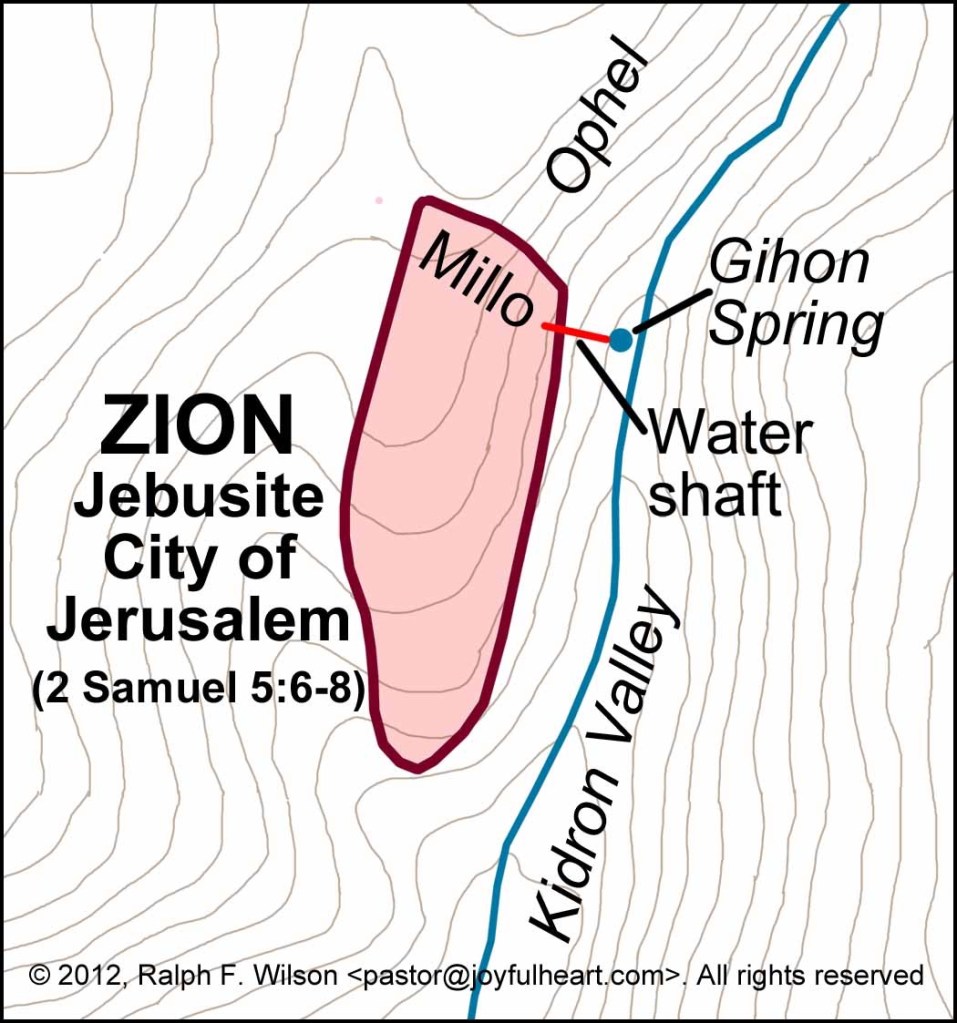
The text of 1st Chronicles 11:1-9 is nearly an exact copy of 2 Samuel 5:1-10. We get just a few different details in each account of how David captured Jebus (the Jebusite city) and claimed it for his capital which he renamed The City of David. This is Jerusalem.
From 1st Chronicles 11:6 we learn that David offered the position of Commander to the man who would lead the attack. Joab, David’s nephew did so.
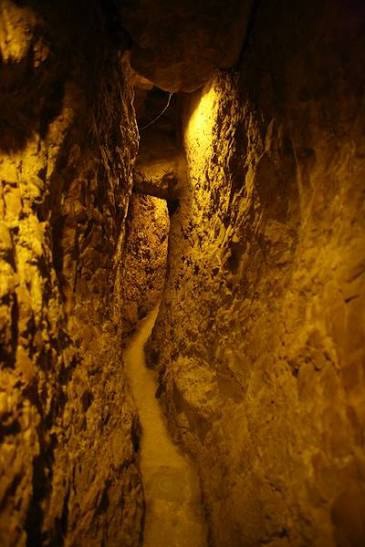
From 2 Samuel 5:8 we get the detail of how they got in to this Alcatraz-like stronghold. They crawled in through the water supply tunnel.
I had the wonderful opportunity to walk in parts of this tunnel system myself and stick my hand into the water of the Gihon Spring. It was amazing. These places are REAL.

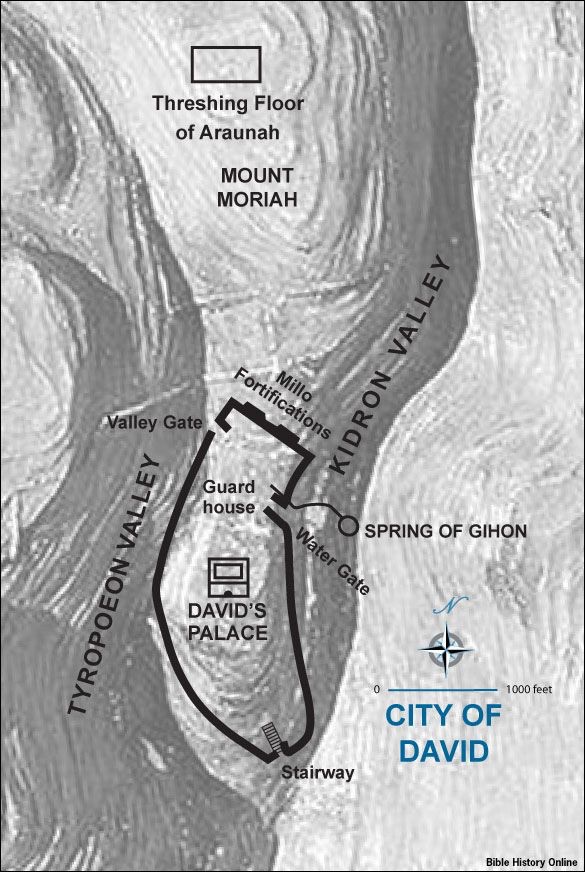
Did David know that Mount Moriah was where Father Abraham had taken Isaac? I don’t know. It seems likely.
Next we get a list in 1st Chronicles 11 of David’s Mighty Men. To get the full picture though, we need to combine it with the list in 2 Samuel 23:8-39 and info in 1 Chron. 27.
Y’all, this must’ve been quite a unit to behold. David had 30 elite warriors led by his nephew Abishai. Any one of these men could probably wipe the floor with the average fighter today.
And then there was “The Three.” These were the elite of the elite. Any one of them could probably hold their own against a squad of Navy Seals. These epic-level men should be remembered:
- Jashobeam the Hacmonite – THE most elite hand-to-hand combat warrior probably to walk the earth and most of us don’t know his name.
- Weapon: spear
- Achievements:
- 800 men in 1 battle
- 300 men in 1 battle
- Broke through (twice!) an armed Philistine battle line with the rest of “The Three” just to get David water from the well of Bethlehem.
- Division Commander of 24k men
- Commander of The Three
- Eleazer son of Dodai – Loyal to death. Brilliant in 2-man team fighting.
- Weapon: sword
- Achievements:
- Stood his ground back-to-back with David with no cover in an open barley field. The entire army of Israel fled, except for David and Eleazar. Together they fought back the entire Philistine army until bodies were stacked around them and Eleazar’s hand could not release its grip on the sword.
- Also participated in the death-defying water-fetching incident.
- His father was another Division Commander of 24k men.
- Shammah son of Agee of Harar – utterly fearless and clear-headed in the face of death and overwhelming odds.
- Weapon: unknown, sword likely
- Achievements:
- Single-handedly beat an entire Philistine troop in a field of lentils. The rest of Israelite army fled an Shammah took on and defeated the Philistines alone.
- Participated in the death-defying water-fetching incident.
- One of David’s personal body-guards
- Possibly also a Division Commander of 24k men
The exploits of these men and “The Thirty” are the stuff of legend. But it wasn’t just that they were good with weapons and brave. The LORD was on their side. The LORD was giving help and victory to them because David was committed to pick up where Joshua left off and drive the pagan tribes out of the land.
In 2nd Samuel 5:17-25 we get an account of David’s first battle with the Philistines after becoming king of Israel. The Philistines have come to the Valley of Rephaim. Not a very nice name for a place. It means Valley of Giants. But David is the famous giant-slayer.
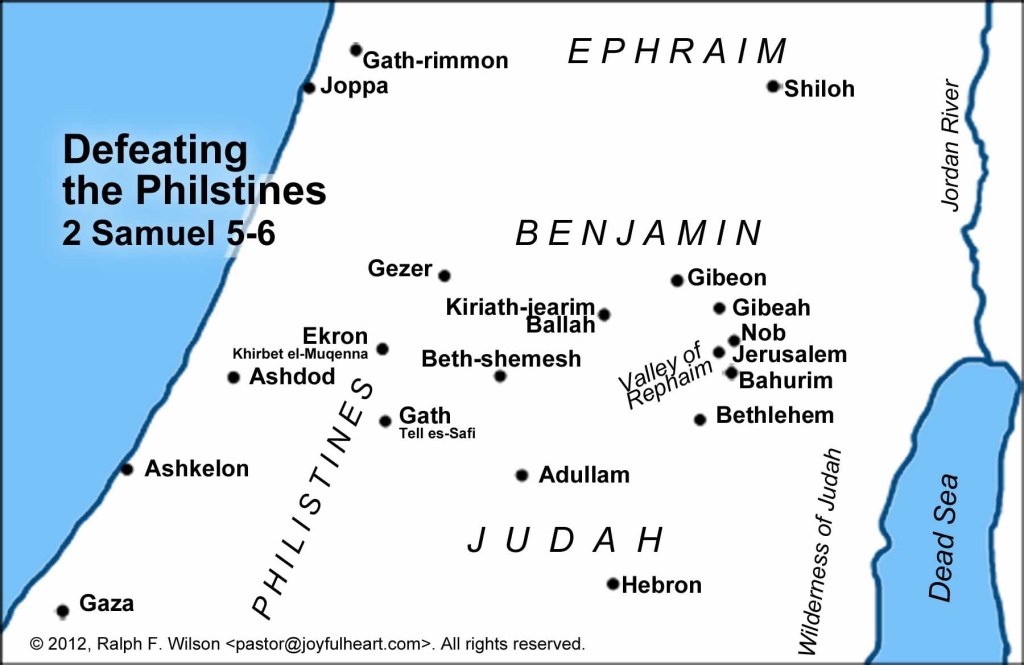
The Philistines are testing David. But rather than just go out with his army and his incredible Mighty Men, he consults Yahweh. The Lord says, “Go” and they go and win.
Then the Philistines come back. And again, David consults Yahweh. This time he gets a different answer.
“So David inquired of Yahweh, but He said, ‘You shall not go up. Rather, go around to their rear and come to them from opposite the balsam trees. And it shall be that when you hear the sound of marching in the tops of the balsam trees, then pay attention, for then Yahweh has gone out before you to strike down the army of the Philistines.’” 2 Samuel 5:23-24 LEB
What an incredible text! David and his men won’t see the angelic host of warrior angels fighting alongside them, but they will hear them marching out.
The Septuagint does not have it as “balsam” or “mulberry” trees. One note even suggested poplars. It’s the Hebrew word Baka – weeping tree. Not a weeping willow, but a tree that “weeps” its sap; so it probably does refer to some kind of resinous tree. But the Septuagint has it as “Place of Weeping.”
The Valley of Giants and The Place of Weeping sound like locations in the story of Pilgrim’s Progress.
David fights two different battles with the Philistines right after his coronation and both are in The Valley of Giants (or Titans).
If you walk with the Lord (and especially if He places you in a position of leadership and influence), you will also have to fight some battles in the Valley of Giants.
Sometimes you face the enemy head-on. And the Lord will break through for you and give you victory.
Other times you have to get behind your enemy and come at that lie-you-have-believed from a different angle. You have to go the long way around. You have to learn the terrain and where the enemy is positioned in your land. It takes time.
The Lord will give you victory in this too BUT you must wait to hear the sound of marching in the Place of Weeping. Don’t move until then. You won’t beat this foe on your own. Wait on the Lord and when He marches, you march. You may feel stuck right now in that place of weeping. Let me remind you that:
“Weeping may endure for a night, but joy cometh in the morning.” Psalm 30:5 KJV
Or as the LEB translation captures it:
“Weeping lodges for the evening, but in the morning comes rejoicing.”
The tears are an overnight guest. In the morning – which ultimately refers to the dawn of the reign of Christ – Weeping checks out and a new guest comes to stay: Rejoicing.
This word Baka (Balsam Tree/Place of Weeping) is only mentioned in one other place in the Bible:
“What joy for those whose strength comes from the Lord, who have set their minds on a pilgrimage to Jerusalem. When they walk through the Valley of Weeping, it will become a place of refreshing springs. The autumn rains will clothe it with blessings.”
Psalms 84:5-6 NLT
We don’t live in the Valley of Weeping. We “walk through” it on our way to Zion. And that place of tears where we waited on God and finally defeated the enemy – that place will “become a place of refreshing springs.” It will be a source of satisfaction. No longer watered by tears that did nothing to soften the hard dry ground, but with the gentle autumn rains that make everything green again.
 To The Reader