Today’s cluster of psalms all come from the first section called “Book 1.” And they were all written by David.
PSALM 25
There is a type of musical form known as Rondo (Ron-doe). The more familiar name for it is a “round,” like Row Row Row Your Boat.
A rondo or round has 2 parts that repeat as a pattern. Like this:
A – Row, row, row your boat gently down the stream
B – merrily, merrily, merrily, merrily life is but a dream
Psalm 25 has a kind of conceptual rondo form. Like this:
A – prayer and worship
B – teaching
Here is how it works… you should read back through the psalm and note the structure.
A – v. 1-7
B – v. 8-10
A – v. 11
B – v. 12-14
A – v. 15-22
Isn’t that cool? If you wanted, you could write your own psalm like this. Do a few lines of prayer that includes statements of faith and honoring God. Then do a couple lines of facts about the Lord – His character and what He does. Then rinse and repeat. And presto! A rondo psalm.
PSALM 29
This psalm focuses on “the Voice of Yahweh.” The Septuagint’s heading says that it is connected to “the final day of the Feast of Tabernacles.” It was probably meant to be sung on that day, which was the great and final day of the feast.
So what do we learn about the Voice of Yahweh? The Voice…
- Is upon many waters (see Gen. 1:2-3, also as a symbol of chaos/death showing His power over them)
- Is strong (see Mat. 8:26-27)
- Is full of majesty (see 2 Pet. 1:17-18)
- Shatters the cedars of Lebanon (a symbolic reference to powerful nations and/or their kings, see Eze. 31, Is. 14:8, Judges 9:7-20
- Divides fire (see Dan. 3:23-27)
- Shakes the wilderness (see Ex. 19:18, Joel 3:16, Hag. 2:6-7)
- Either: causes deer to give birth or causes the oaks to tremble. Given the context of the shaking wilderness and the following line about making the forest bare I lean toward the oak trembling translation.
- Deer: see Job 39:1
- Oaks were associated with pagan worship because shrines were built on hilltop oak groves- see Is. 1:29, Hos. 4:13; oaks were also associated with nephilim giants because of their size and strength, see Amos 2:9
Interestingly, there is a moment in the Gospels where Jesus does something special on the last day of the Feast of Tabernacles. And it involved His Voice:
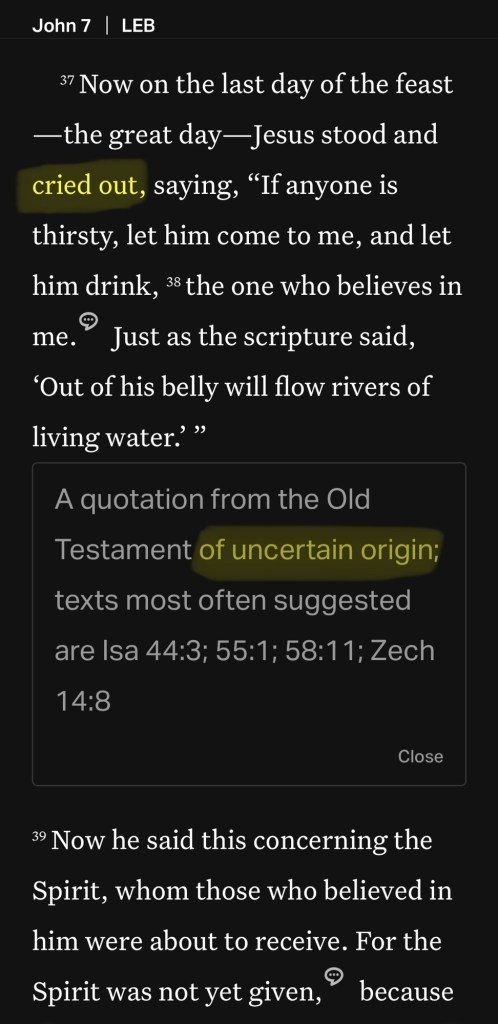
The Incarnate Word “cried out” with an invitation to believe on Him. The Voice that is “upon the waters” invites us to drink and having “living waters” flow from our inner being.
The Voice that “divides the flames of fire” is speaking of the Holy Spirit who will appear on Pentecost as divided tongues of fire.
And Jesus is literally crying out “in the temple” and He has just been speaking about “glory.”
“The one who speaks from himself seeks his own glory. But the one who seeks the glory of the one who sent him—this one is true, and there is no unrighteousness in him.”
John 7:18 LEB
Only a few months after this Jesus will be in the temple again and the children will be glorifying God and shouting “Hosanna to the Son of David.”
During that feast the Voice of the LORD will thunder from heaven in response to Jesus:
“Father, glorify your name!” Then a voice came from heaven, “I have both glorified it, and I will glorify it again.” Now the crowd that stood there and heard it said it had thundered. Others were saying, “An angel has spoken to him!” Jesus answered and said, “This voice has not happened for my sake, but for your sake. Now is the judgment of this world! Now the ruler of this world will be thrown out! And I, when I am lifted up from the earth, will draw all people to myself.” (Now he said this to indicate by what sort of death he was going to die.)”
John 12:28-33 LEB
If you go all the way back to John 12:23 you find the glorification Jesus is talking about is His death on the cross and His consequent resurrection.
PSALM 33
The Masoretic Text doesn’t have an indicator of the authorship of this psalm, but the Septuagint attributes it to David.
To the strumming of stringed instruments this psalm praises the awesome power of God as Creator. And if Creator, then Ruler.
He carries around all of the oceans in His water bottle.
All of earth’s most brilliant thinkers and their ideas? Child’s play. Boring.
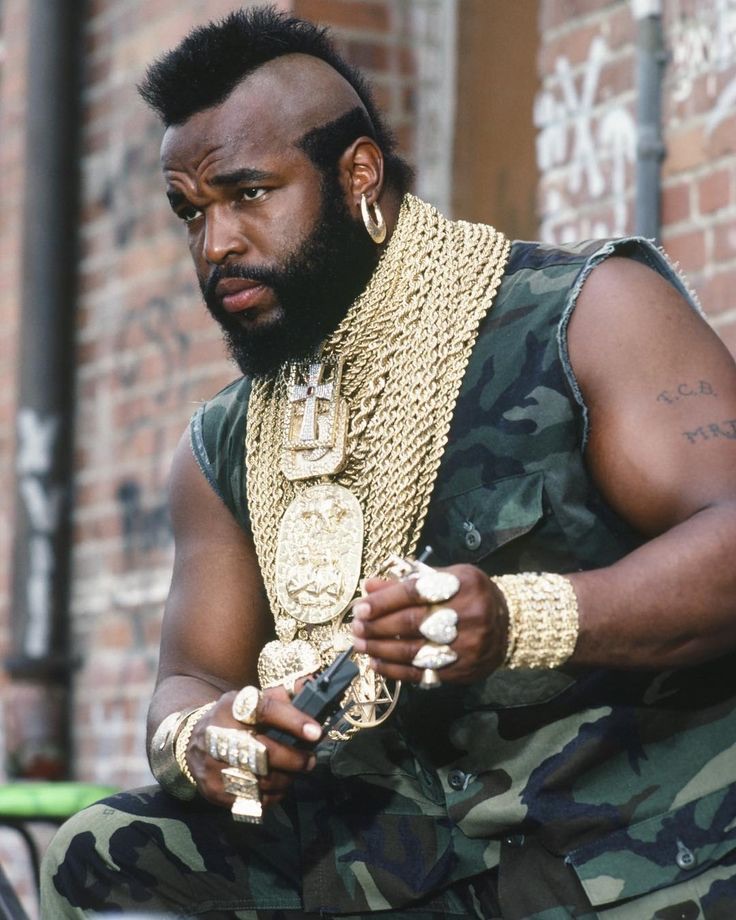
This psalm positively swaggers as it boasts in the LORD. If this psalm’s attitude had a picture, it would be this:
We get reminded again of the important truth we have encountered many times already in the OT:
God does not require favorable circumstances.
Huge army? Not required.
Huge warrior? Unnecessary.
War horse? Surely at least a war horse would be helpful? Nope.
All you need is the fear of the Lord and faith in His mercy.
“We put our hope in the Lord. He is our help and our shield.” Psalms 33:20 NLT
PSALM 36
There are 3 sections in this psalm:
- The Wicked (v1-4)
- The LORD (v5-6)
- The Righteous (v7-12)
Sadly, the first 4 verses perfectly describe the wicked still today. I think the way the Septuagint puts the last part of verse 4 is particularly good:
“He (the wicked one) is unwilling to understand how to do good.”
Wicked people are not victims. That’s the current trend – feel sorry for the wicked murderer rather than the ones his violence has affected. The Bible has it correct. The wicked are unwilling… It’s a choice. It is stubbornness and pride. They REFUSE to understand how to do good. They REFUSE to consider another viewpoint. They REFUSE to put anyone but themselves first. They REFUSE to entertain the notion that they might be wrong and evil.
Then there are the downright diabolical ones who know they are evil and take pleasure in it. That’s a whole other level of messed up.
But if you scroll to the end of the psalm, we get what Paul Harvey would call, “The Rest of the Story.”
“Look! Those who do evil have fallen! They are thrown down, never to rise again.”
Psalms 36:12 NLT
Evil will not prevail. It will be thrown down. NEVER to rise again.
And how can be sure? Well, that’s why there’s that section about the LORD and His character and what He does for the people who hope in Him.
And I think a fantastic rendition of that part of the Psalm is Your Love O Lord by Third Day. Take a minute to sing along if you can. May you be encouraged.
 To The Reader