Psalm 70 has the feel of a note hastily written. We don’t know when it was written or the circumstances surrounding it but we can gather the following:
- David has someone out to get him, v2
- David is poor and needy, v5
It sounds a lot like his years of hiding out in the wilderness when Saul was chasing him.
Whatever the circumstance, it feels as if David has grabbed a scrap of paper – like someone writing a note on a napkin or the back of a junk-mail envelope. And he has hurriedly scratched out this urgent message to the Lord to be handed off to a waiting courier on the fastest horse in the army.
That’s probably not what happened but it has those vibes.
There are 2 “seekers” in this psalm and 2 different things sought.
- In verse 2 we have the person who is seeking David’s life.
- In verse 4 we have those who seek the LORD.
David pronounces a curse on those seeking his life and a blessing on those who seek the LORD. David calls down humiliation on those who seek to kill him. He calls for confident joy upon those who seek the Lord and rejoice in His salvation.
David seems to put himself in a 3rd category: poor and in desperate need of Yahweh’s help. The last line reads like:
P.S. HURRY!!!!
The Lord responds to short prayers, shot off to him in a hurry. I once heard someone call them “arrow prayers” because you just shoot them heavenward in a crisis.
Peter has the distinction of praying the shortest prayer in the Bible. It was when he famously walked on the water to go to Jesus.
“But when he saw the strong wind, he was afraid. And beginning to sink, he cried out, saying, “Lord, save me!”
Matthew 14:30 LEB
Three words.
But the Lord answered.
2nd SAMUEL 11
This chapter gives us the infamous account of David committing adultery with Bathsheba. And it reveals a lot…
David has 6, count-em, SIX wives. Is SIX not enough for ya, Bro? That’s one for every day of the week then you can rest on the Sabbath.
SERIOUSLY.
Somewhere along the way David began to justify some small things. You don’t go from zero to adultery and murder overnight.
“Everybody else does it.”
And yes – every other king or chieftain in the ancient world collected women like trophies and used them like tools and cattle. That did not make it ok.
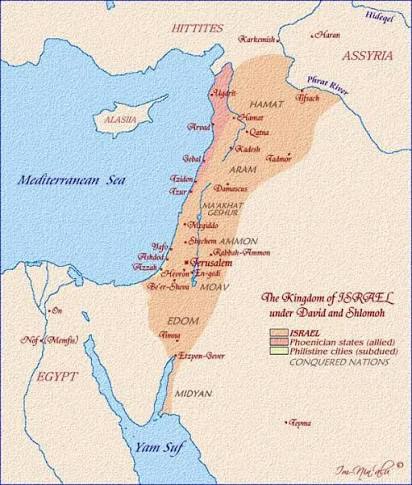
Uriah is a member of David’s personal elite squad. And… he’s not even a Hebrew.
Uriah is a Hittite.
🦃+🎉
While the descendants of Joseph were still slaves in Egypt, The Hittite’s were sacking the mighty city of Babylon.
We’re not given Uriah’s backstory. We have no idea how a man from the northern kingdom of the Hittites found his way into David’s team of “Mighty Men.” The Hittites were one of the groups that lived in the land promised to Abraham.
“On that day Yahweh made a covenant with Abram saying, “To your offspring I will give this land, from the river of Egypt to the great river, the Euphrates river, the Hittites, the Perizzites, the Rephaim, the Amorites, the Canaanites, the Girgashites, and the Jebusites.” Genesis 15:18, 20-21 LEB
We don’t know if Uriah had joined the covenant of Abraham through circumcision and keeping the Law, or if he was simply a God-fearing Gentile. But he was a man of intense loyalty and integrity. And what David did to him was despicable.
The opening of the narrative tells us that it was spring, the time when kings go out to war. Only David isn’t where kings are supposed to be. He’s at home.
A big part of avoiding sin is simply not putting yourself where you’re not supposed to be when you’re not supposed to be there.
Gambling? Don’t go to the casino.
Alcohol? Stay away from the bar.
Pornography? Delete the app. Get an old flip-phone. Don’t browse the smut books.
You get the idea.
I know that we all know this story well. Bathsheba is “bathing” on the roof. And the text makes a note that she “had been purifying herself from her uncleanness.”
This is referring back to ritual purification after a woman’s menstrual cycle which is addressed in Leviticus 15.
“And if she is clean from her body fluid discharge, then she shall count for herself seven days, and afterward she becomes clean.” Leviticus 15:28 LEB
The 7th day after the end of a woman’s period is typically her ovulation day – when her ovary releases an egg. It’s prime conception time; smack in the middle of about a 10-12 day fertility window.
David has 6 wives and a bunch of sons. And he’s not stupid. He ought to know there’s a VERY high chance Bathsheba will conceive. But it’s as if he silences any objections of his conscience with arguments; perhaps along these lines…
- I am king. God placed me in this position of power. He wants me to have what I want.
- I’m a man. I need this. It’s only natural.
- I deserve this pleasure. I work hard. I put up with a lot of stress at work. In fact, it will probably make me better to live with.
- This won’t hurt anyone.
These arguments have not aged a day in thousands of years. We still use them- as fresh as the day we plucked the forbidden fruit in Eden (see Gen. 3:6):
- Good for food (it’s only natural)
- Pleasant to the eyes (pleasure)
- Desirable (what I want)
- Make one wise/successful (beneficial, it won’t cause harm)
Bathsheba does conceive. It would’ve taken her at least 3, probably 4-5 weeks to know. And David immediately begins to try to cover his tracks.
Bring Uriah home. He’ll sleep with his wife. Let everyone assume the baby belongs to Uriah. Only Uriah has an inconvenient level of integrity. David tries getting him drunk. When a man still has integrity in a drunken state, that’s pretty amazing. I think perhaps Yahweh was giving him some help there.
🤔 Why didn’t David just confess? Like, why didn’t he just humble himself and admit it?
Because…
“As for a man who commits adultery with a man’s wife, who commits adultery with his neighbor’s wife, both the man who commits adultery and the woman who commits adultery shall surely be put to death.” Leviticus 20:10 LEB
Both he and Bathsheba would’ve been executed. Adultery was a capital offense.
There is only one way out of this. Bathsheba is going to have to become his wife. So her husband has to be taken out of the picture.
😐 But marriage doesn’t work retroactively.
You know that, Captain. And I know that. But maybe David kinda hoped it would.
So he sends an order to Joab to withdraw from Uriah in battle. And he gives to Uriah to carry.
😐 He knew Uriah wouldn’t read it, huh?
Well, it could be that. Or, perhaps Uriah couldn’t read Hebrew. Either way, it’s terribly sad. Uriah is left behind in a vulnerable position and is killed while fighting for David.
One thing I noticed in this story is how well Joab knows David. He anticipates David’s reaction and preps the courier with the words to calm the anger he knows will be coming for such a rookie mistake as putting men in a position where they could be easily targeted from a wall.
David’s callous reply ticks me off… 😠
“Well, tell Joab not to be discouraged,” David said. “The sword devours this one today and that one tomorrow! Fight harder next time, and conquer the city!”
2 Samuel 11:25 NLT
It ticked the LORD off too.
Bathsheba mourned for her husband then after a period of mourning, David married her. Wife #7. And the baby was born. A boy.
“But the thing which David had done was evil in the eyes of Yahweh.”
2 Samuel 11:27 LEB
Some translations have it that God was “displeased” with David. And that’s true. But it’s more than just displeased. I am “displeased” when McDonald’s gets my order wrong or makes me wait 20 minutes in the drive-thru for an Egg McMuffin and a coffee. 😒 That’s not what God was feeling.
This is a compound Hebrew word that means to be grievous in the sight. The word for grievous is yara. It’s literal meaning is:
“To be broken up (with any violent action.)”
Yara is basically the letter yod attached as a prefix to the Hebrew word for bad (evil/hurt/harm) which is ra’a (raw-ah).
RA’A is spelled Resh, Ayin, Ayin.
Here are the paleo-Hebrew letter pictures:
- Resh – head of a man
- Meaning: man, head, first, beginning
- Ayin – eye
- Meaning: eye, sight, perception, knowledge, understanding
And isn’t that how evil entered the world?
“When the woman saw that the tree was good for food and that it was a delight to the eyes, and the tree was desirable to make one wise, then she took from its fruit and she ate. And she gave it also to her husband with her, and he ate. Then the eyes of both of them were opened, and they knew that they were naked. And they sewed together fig leaves and they made for themselves coverings.” Genesis 3:6-7 LEB
Man/beginning + eye + knowledge = evil.
And isn’t that what David JUST did?
He saw Bathsheba. He desired. He took her and knew her.
But the word in the text is yara. There’s a yod (a hand) involved.
Yod – hand, make, do, authority, power
Resh – man, head, first, beginning, chief
Ayin – eye, sight, perception, knowledge
This isn’t theoretical badness, this is badness happening. It’s the kind of badness you feel the consequences of. This is badness with power to affect. Yara means “To be broken up (with any violent action.)” We see the effects of sin in our world and it breaks us up inside. We say “it broke my heart.”
The full compound word is:
Ayin-yara. Seeing-powerful-badness-done.
And that’s how Yahweh sees it. In Yahweh’s eyes, this is just as devastating as the sin in the Garden. God sees it for what it is: EVIL.
God still loves David just as He loved Adam and Eve and made coverings of skins for them and made a way of salvation for them and all of their children.
But just as the LORD showed up in the Garden to confront the fallen couple and the Serpent and pronounce judgment, so Yahweh is about to show up to confront David. Judgment is coming. And God’s judgement is absolutely just; with no favoritism. Doesn’t matter that David is the prophet-priestly-king-ancestor of Messiah who killed Goliath and composed the Psalms. Nobody gets a pass. Nobody.
That’s what we’ll read tomorrow.
 To The Reader