🚐🌳🌳⛺️
Rise & shine, campers. It’s time to go.
Lots of road to cover. Here, have a donut. We’ll have breakfast on the way. 🍩
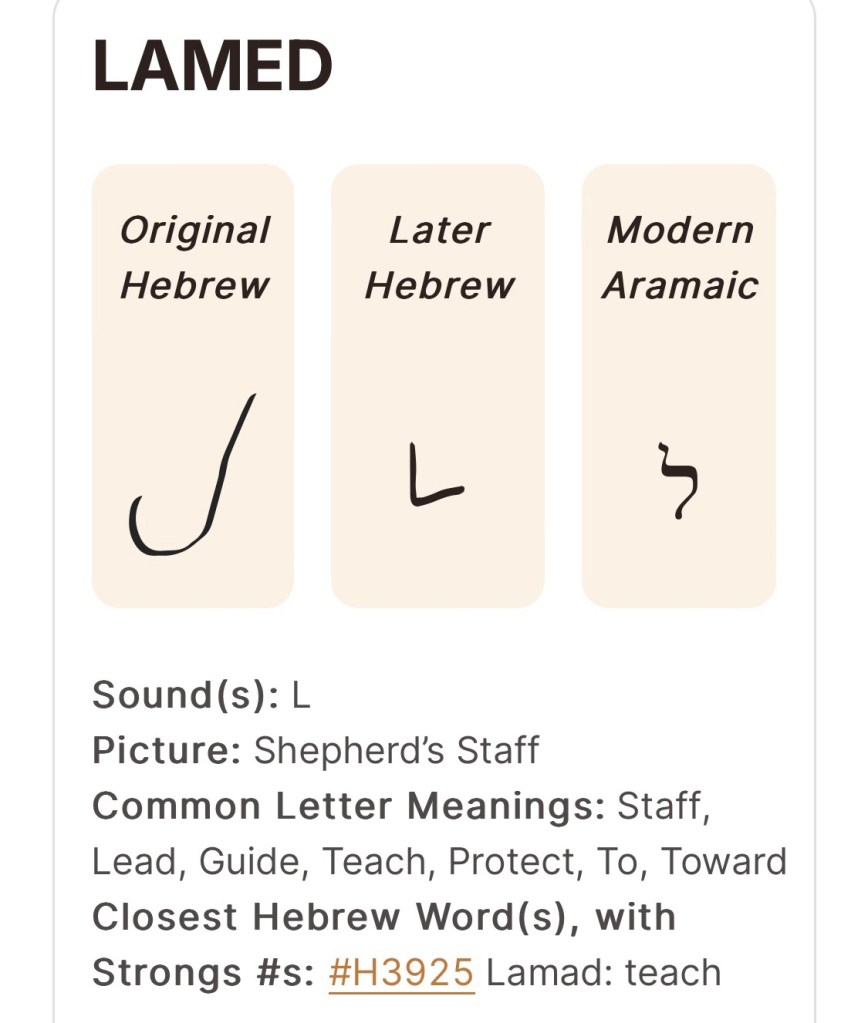
The L-word that starts off this stanza is lolam. It’s often owlam with the L on the front. It is translated “forever” but the word carries the idea of being concealed or hidden. It’s like watching a boat sail away until it vanishes and is concealed from sight.
The eternal past and future are so far from our sight that they are hidden.
The Word of Yahweh is established in Heaven to the vanishing point.
At the end of the stanza in verse 96 there is something the psalmist was able to see the end of: perfection.
The Hebrew word here translated as “perfection” is tiklah and it only appears here, this one time in all of scripture. It’s based on the word kalah which means “to end.” Adding the Tav (a strong indicator) to the front of kalah apparently turns “the end” into “the-be-all-end-all”: perfection.
So the psalmist might be using a bit of word-play here. I’ve seen an end of the end. But, the Word of the LORD is endless- hidden beyond the vanishing point.
There’s also a compelling word-picture with the Paleo Hebrew letters of tiklah (perfection).
Tav – looks like a cross, means: “This!”
Kaf – palm of the hand / sole of the foot
Lamed – shepherd
Hey – man, look!
The perfect man had an “end.” We have the cross with palms and feet of the Shepherd-Man. And yet the Divine Command (Word) is greatly expanded in every direction. Sounds like a prophetic summary of the whole NT if you ask me.
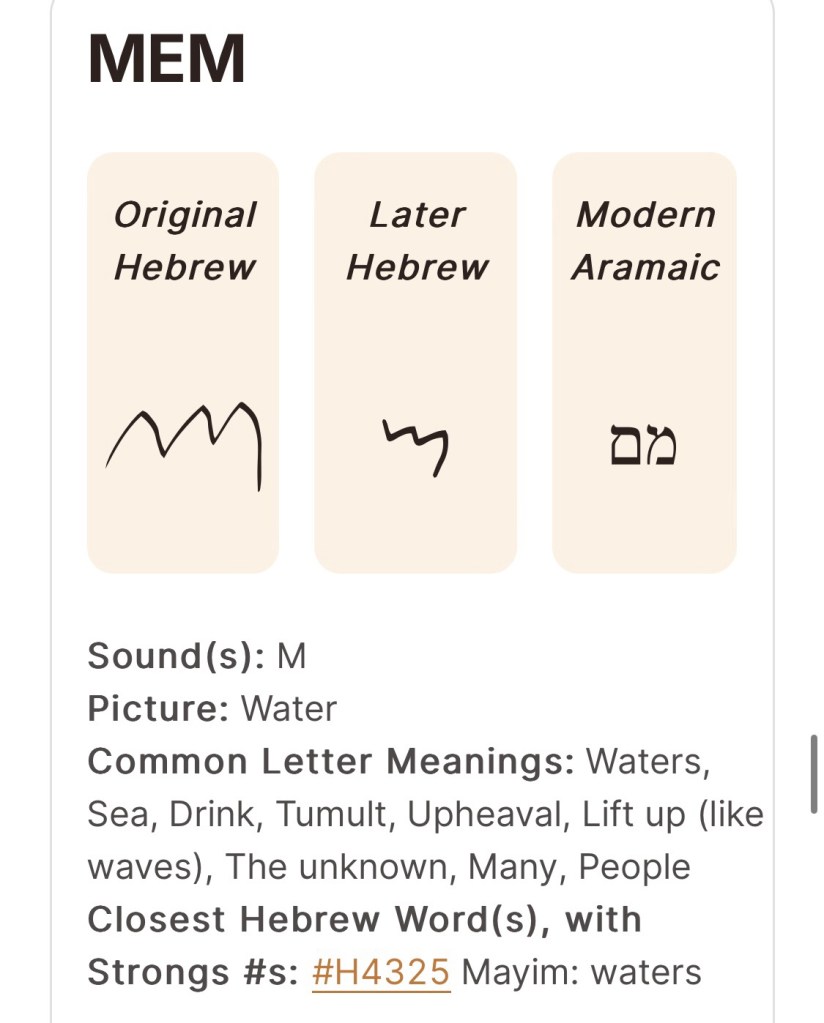
There are 2 key M-words in the Mem stanza. The first is mitsvah, which means command or commandment. Yahweh’s mitsvah are credited with making the psalmist wiser than his enemies, his teachers, and even his elders. In keeping the mitsvah the psalmist has kept away from evil and not departed from the good ways of God.
The second M-word is malats which is translated as “smooth” or “sweet” in verse 103. Think creamy milk chocolate.
This Hebrew word appears only here in all of scripture. I think that smooth is probably the better meaning based on the compounded meaning of the letters.
Mem – waters, sea
Lamed – shepherd(ed), guided to
Tsade – lying down
The waves of the sea have laid down. Smooth.
But these three letters also make me think of this other psalm:
“The LORD is my shepherd; I shall not want. He maketh me to lie down in green pastures: He leadeth me beside the still waters.”
Psalm 23:1-2 KJV
The Shepherd leads us beside the smooth water. And He commands the uplifted waters to be still and smooth.
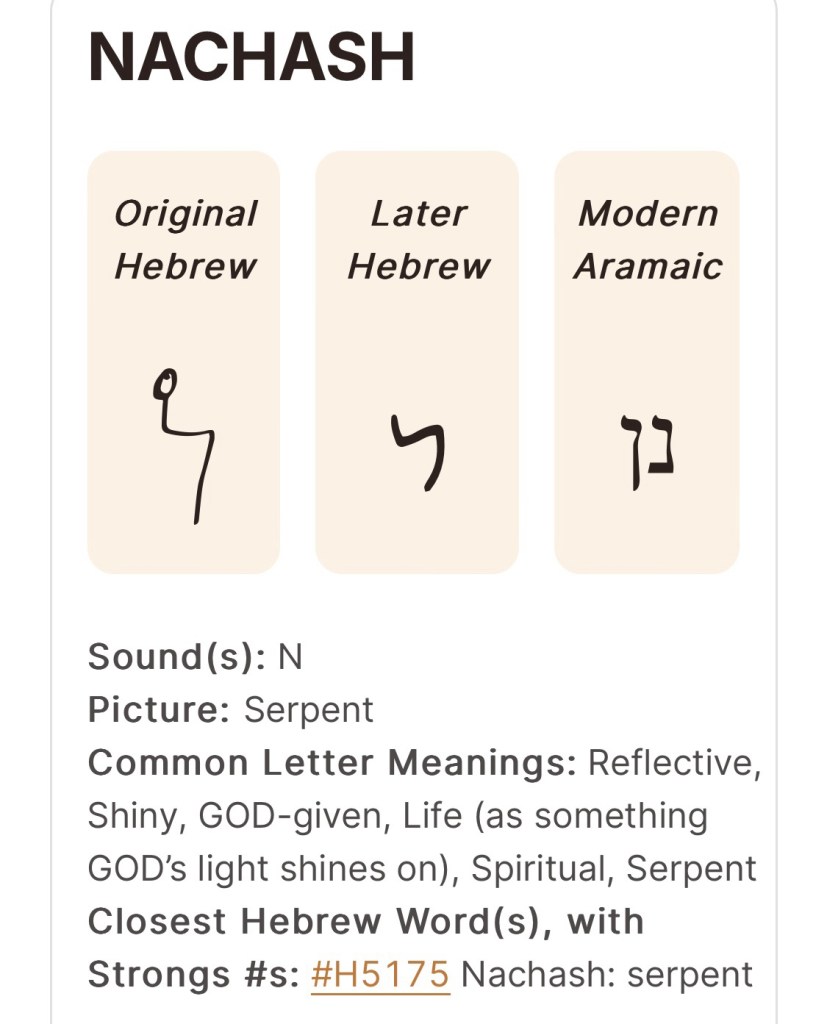
In Modern Hebrew this letter is called Nun. And it’s pronounced like noon.
There are 4 key words in this stanza that begin with nun/nachash:
- Niyr (neer) – lamp, v105
- There are 3 Hebrew letters in this word: Nachash (shiny), Yod (hand/power), Resh (beginning/man).
- The controlled use of fire for light – man having the power to hold shiny fire in his hand – is something that sets man apart from beast.
- It also seems to be a nod to the power in the beginning which first created light.
- It is God’s Word that is this Lamp. Verse 105 is basically John 1.
- Nephesh (nef-esh) – soul, v109
- Nephesh means “breathing creature.” We have Nachash (life), Pheh (mouth), and Shin (teeth/consume).
- Put your hand in front of your mouth and take a few deep breaths. Do you feel your mouth consuming the life? You are a breathing creature – a Nephesh.
- The soul (Nephesh) is said to be “in the hand” which is a way of saying the life is a risk. We say things like “My life in your hands, Doc.” But, even if life is precarious or it puts our lives at risk, we do not stop following the law of the Lord.
- Nechal (neh-khal) – heritage, v111
- A heritage is an inheritance. A possession. And what is this inheritance? God’ witness. His testimony. And what is God’s testimony? It’s the thing that was stored in the Ark of the Testimony. The Law of God.
- Natah (nah-tah) – inclined, v112
- Natah means to stretch or spread out. Think of a sunflower stretching to follow the sun or stretching one’s gaze to the horizon. It is the heart that is stretching to DO the things God has appointed.
- The psalmist isn’t stretching only his mind. You can know what to do and still not do it. He’s stretching his heart – his desires, his will, his emotions. In the Hebrew mind, the heart is the center of the being. It includes but is not limited to the intellect. We cannot change ourselves from the outside-in. We need the Lord to give us a new heart that will reach toward Him and His ways forever.
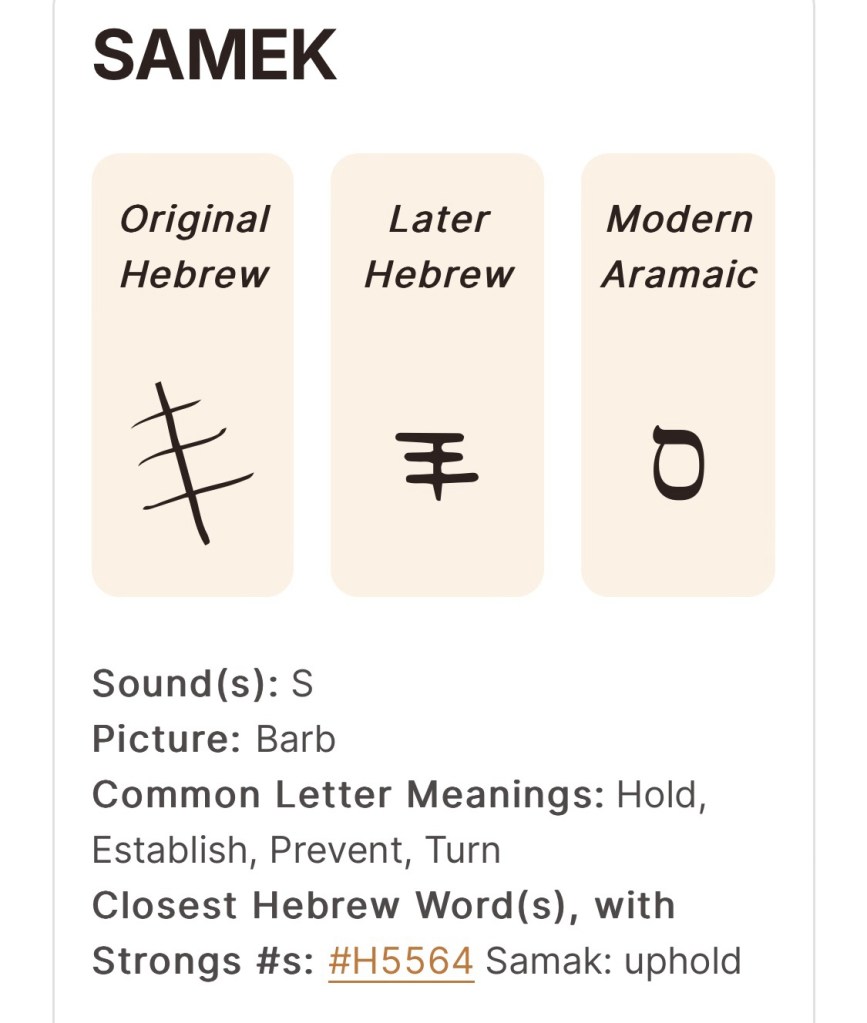
How does a letter go from looking like barbed wire to a loop? I have no idea.
The first word in the samek stanza is ce’eph (pronounced say-afe). It means divided in mind or thought; so, “double-minded.” The 3 letters are:
Samek – turn [back], like a hedge of briars (barbs) forces you to turn around.
Ayin – eyes, sight, perception, understanding
Peh – mouth, words
Someone who constantly turns his understanding or perception about words is divided in thought. He can’t pick a side. And the psalmist doesn’t like him very much. Or perhaps he’s saying he doesn’t like himself very much when he finds himself being double-minded.
It reminds me of Paul in Romans 7 battling between the spiritual man and the fleshly man. Who delivers us “from this body of death?” The same one who delivered the psalmist; the Word of the LORD.
Additional samek-words in this stanza are:
- Sether (pronounced say-ther). It’s the hiding place in v.114.
- Sure (soor) – depart, turn aside in v115
- Samak – (yes, it’s the name of the letter), in v116 and it means uphold or sustain.
- Sawad – v117, hold me up, support
- Salah – reject, condemn, trodden down in v.118
- Siyg (seeg) – dross, v119
- Samar – this is translated as “tremble” in v.120 and the psalmist says that his flesh is doing this. This word is only used in one other place – back in Job 4:15 where Eliphaz “saw a ghost” and his hair “stood up.” I think samar means to get what we call goosebumps. The psalmist thinks about the LORD and he has goosebumps.
I think 7 words is a record. It’s like when preachers get on a role and decide to use alliteration for a 7-point sermon and they all start with S’s. [And I spelled them with S’s even though in the Strong’s they are spelled with what is meant to be a soft c. I thought it would be easier to spell them phonetically.] Cause “Hooked on Phonics worked for me.”
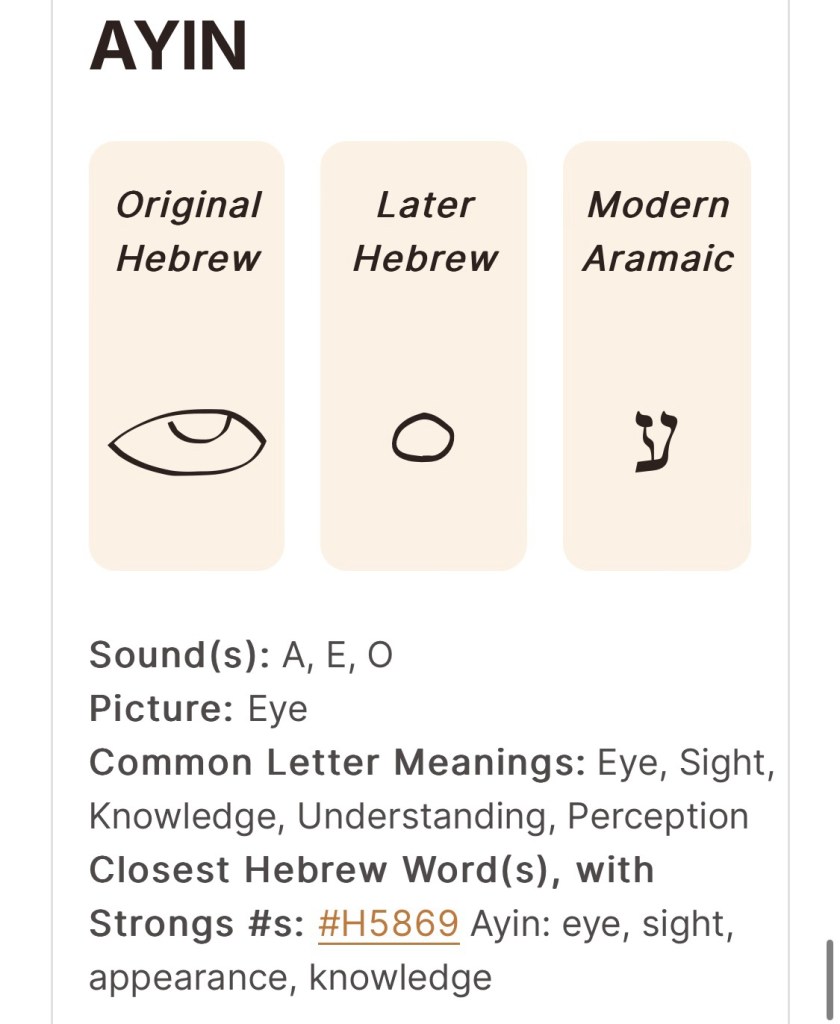
Don’t ya just love that the letter that means eye and sight used to look like an eye? And look… what we have in this stanza:
“My eyes long for your salvation, and your righteous word.”
Psalms 119:123 LEB
The first word in the stanza starts with Ayin in v.121. It’s asah and it means to do or make. It appears again in v.124 as “deal” (with your servant) and v.126 as “work” or “act.”
The word for “oppressors” in v121 also starts with an ayin. It’s the word ashaq and it sounds like you’re saying “a shock.” Ashaq is spelled:
Ayin – eye, see/sight
Shin – teeth, consume/destroy
Quof – horizon, circuit, surround
Most of the people in the post-modern west who think they are “oppressed” aren’t really oppressed. They just have to get up and go to work. And they’d rather play. That’s not oppression. Oppression is when your eyes look all the way around you and you see teeth ready to eat you up and destroy you. That’s oppression.
And because of these oppressors, the psalmist calls upon Yahweh to do something:
“It is time for Yahweh to act, for they have broken your law.”
Psalms 119:126 LEB
The word for “time” is just 2 Hebrew letters, Ayin (eye, sight) and Tav (strong indicator, this!). It’s the perception of THIS moment. It’s not time in the sense of a whole day on a calendar or a clock. It’s time in the sense of NOW. You only exist in NOW – THIS nanosecond. You don’t exist in the past or future, but NOW.
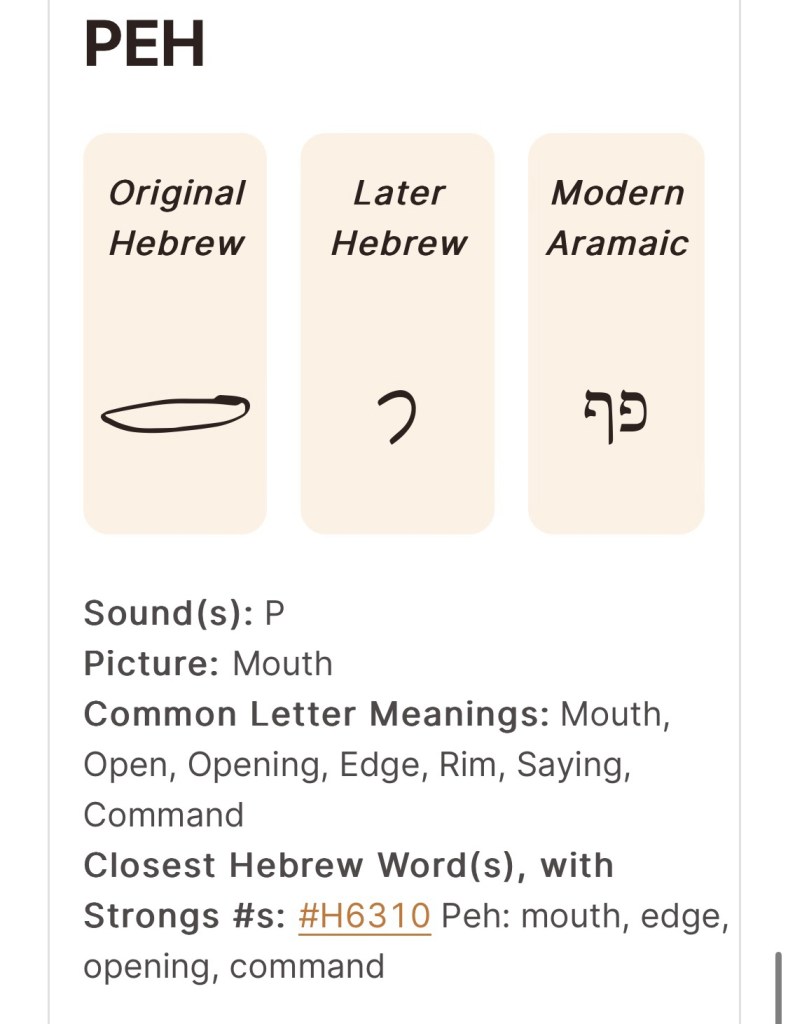
If you put a couple dots above the original Hebrew peh you’d have a cartoon face. The Modern Hebrew letter kinda looks like a bite of food going into a mouth.
This section starts with the word pele; wonderful or miracles.
Peh – mouth, saying, command
Lamed – shepherd
Alef – strong, chief
Yup. That’s where miracles come from alright. From the command of the Chief Shepherd.
Verses 130 and 131 have 2 mouths opening. In verse 130 it’s God’s mouth (pethach, pronounced pay-takh) which is phrased as the “entrance” or “unfolding” or “opening” of your Word. When God opens His mouth… well… “Let there be light.”
Then the psalmist says,
“I open my mouth and pant, because I long for your commands.”
Psalms 119:131 LEB
Other peh words in the peh stanza:
- Panah – look, turn to face, v.132
- Pah’am – steps, v.133
- Padah – deliver/redeem, v.134
- Piqqud – precepts, v.134
- Paniym – face, 135
- Peleg – rivers/streams, v.136
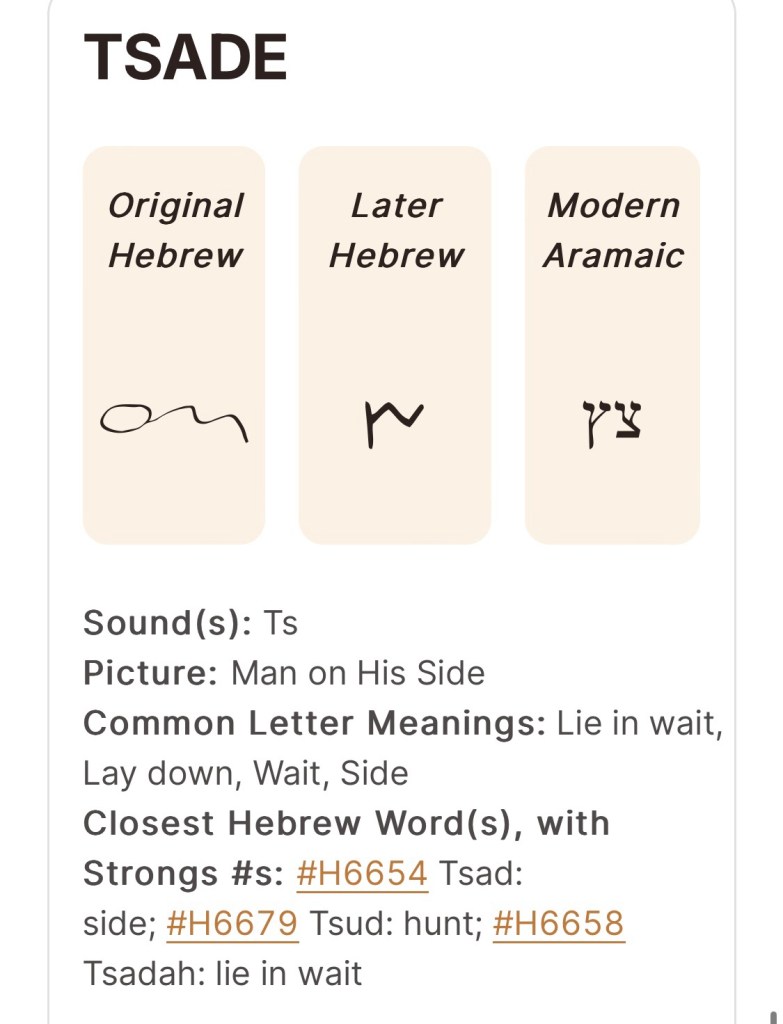
To me, the modern Hebrew letter tsade looks like a man on his knees with his arms stretched out in prayer. And that is a posture you would observe in a righteous man. The word “righteous” in verse 137 is tsaddiyq (tsad-deek). This whole section has a refrain of righteousness. The word appears no less than 5 times.
When I make the sound for tsade I always hear Yenta in Fiddler on the Roof and the way she says, “No, the Tsar’s Tsaitel.” (If you have 5 minutes, click the link to watch the scene. It’s hilarious.)
And speaking of the Tsar… I just discovered that’s the word for “trouble” in verse 143. 🤔
Tsade words in the stanza besides Tsar and tsaddiyq:
- Tsamath – consume, v.139
- Tsaraph – pure, v.140
- Tsa’iyr – small, v.141
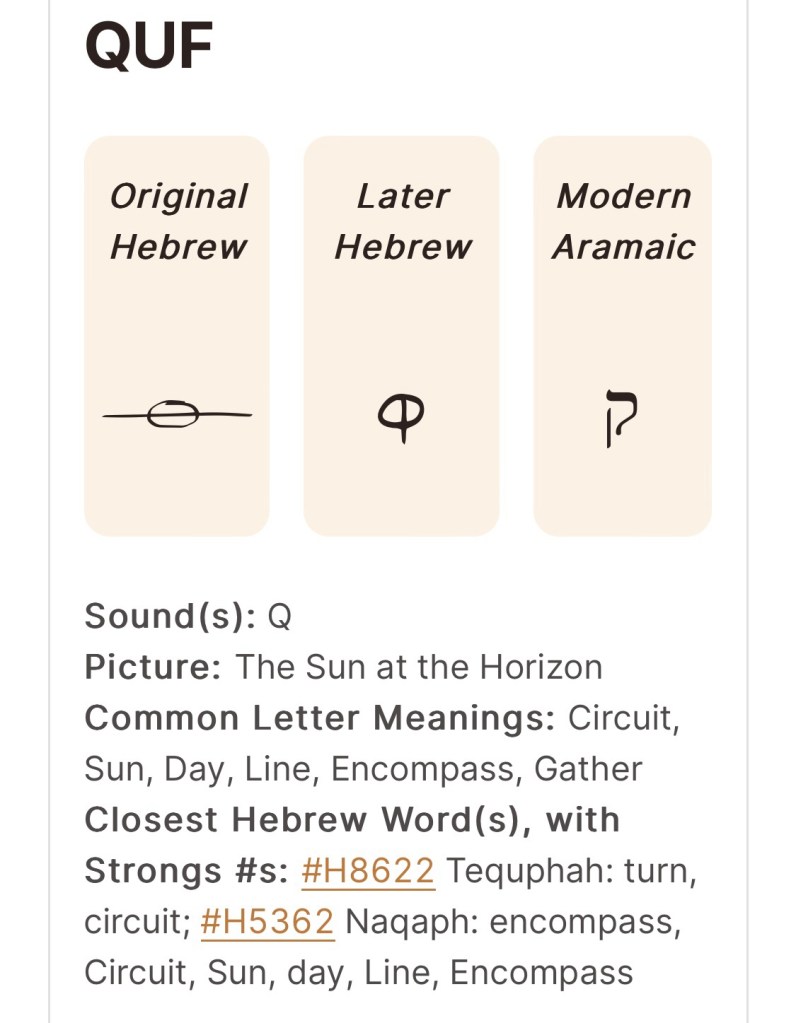
😄 It looks like a middle C!
Yes. Yes it does.
😆 Next time I sing I’m gonna tell them I’m in the key of Quf.
Qara is the opening word here and it means to call out.
Quf – line, encompass, circuit
Resh – head of a man
Alef – strong, strength
🗣️👤
Even the emojis still carry this idea of a line of sound encompassing the head of a man with strength.
The psalmist “cries out” repeatedly in this stanza and he also precedes or anticipates the dawn which is another quf-word: qadam.
In verses 150 and 151, both the wicked and the LORD “draw near” which are the words qarab and qarowb, respectively.
🤔 Crab? 🦀 And carob? That’s weird.
🙄 No. Not crab and carob.
🙄 Kaw-rob and Kaw-robe.
🤨 Oh. Well why didn’t you say so in the first place?
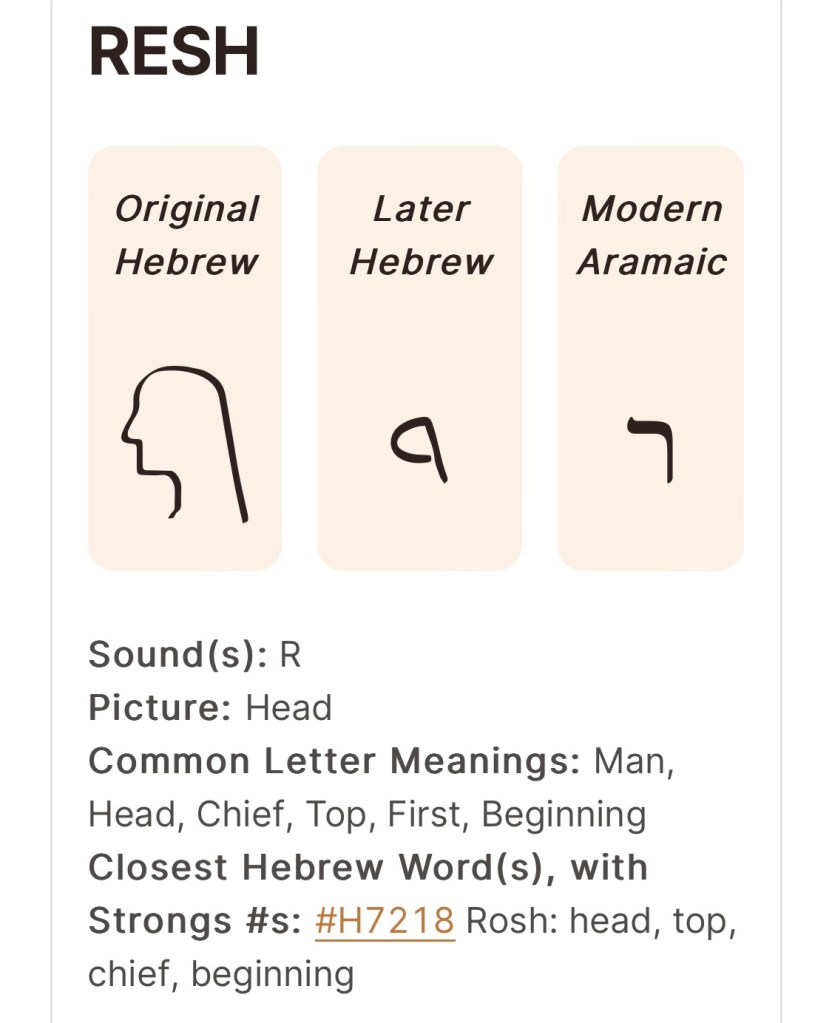
Verse 153 begins with ra’ah.
😀 Rah? As in rah rah rah go team? 🚩
🤨 Ok. You’ve been quiet for most of the trip through this Psalm. Why are you talking now?
😌 I was napping before. It got a little tedious.
🤨 Well, don’t distract me. We’re on the last 3 letters.
😃 X, Y, & Z?
🤨 No. Resh, Shin, and Tav. Now, be quiet and let me drive. 🚐
Ra’ah is not a cheer. It means to consider, to see, behold, discern. And there is a ra’ah sandwich in this stanza.
😄 A sandwich? 🥪 I’m hungry. Can we stop?
🤨 No. It’s 10pm and I’d like to get through this psalm before dawn. 🚐
🤐
The first ra’ah is in v.153 where the writer asks God to see and consider his affliction.
Then in v.158, the writer is seeing the transgressors.
In v.159, the writer again asks God to see and consider, but this time he asks the Lord to see that he loves the LORD’s precepts.
There are some additional Resh words like
- Riyb – plead, v.154
- Rab – great and many, vv. 156 & 157
- Radaph – persecutors, v.157
- Rosh – beginning, v.160
🚨
🚔
🚐🚓
👮🏻♂️ I need to see your operator’s license, ma’am. Did you know you were speeding?
😑 Ho boy…
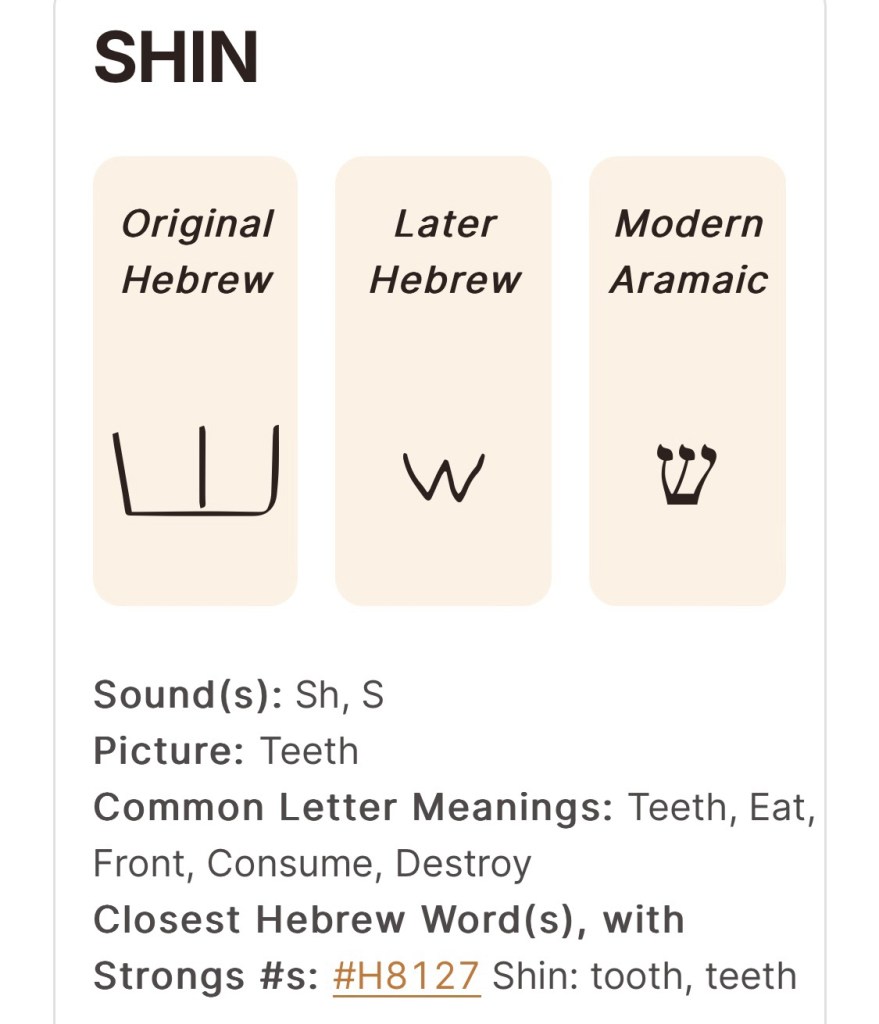
If you’ve been reading the blog for a while, you know we have encountered the teeth of Shin before. If you missed that part, just a reminder that this letter is pronounced like sheen.
In Hebrew, the word for prince, chief, captain, ruler is sar. And tsar is trouble. I’m no expert on language but that sounds fishy to me. Verse 161 kicks off the Shin Stanza with sar; princes.
Verse 162 begins with rejoicing which is the word suws.
🤔 Like Dr. Seuss?
🤨 I thought we agreed you were going to take a vow of silence.
😒
The psalmist is rejoicing like someone who found “spoil” and that’s another Shin-word, shalal.
In verse 153 he hates (sane [saw-nay]) lying (sheqer [sheh-ker]).
He praises the Lord seven (sheba) times a day.
Finally – we have reached my favorite verse in Psalm 119…
“Great peace have they which love thy law: And nothing shall offend them.”
Psalm 119:165 KJV
I decided some years ago that I would refuse to be offended. I still get hurt sometimes from an unkind word but I do NOT get offended because I have a no-offense policy. I recommend everyone adopt a no-offense policy.
The Shin-word here is of course, peace. Shalom.
In verses 167 and 168 the word shamar is featured. It means to “keep” as in guard. It means “to hedge about with thorns.” Interestingly, it is used in Genesis 2:15 as part of the purpose for Adam. He was to “dress and keep” the Garden. What was there to guard it from? How could he hedge about the Garden with thorns before the “thorns and thistles” curse in Genesis 3?
Shamar is a very ancient word, I believe. It’s made of 3 letters:
Shin – teeth, eat, consume, destroy
Mem – waters, the unknown, lift up
Resh – head, first, beginning
Keep. Guard. Shamar. If you are on guard, you show your teeth to the unknown first. You destroy the waves that have lifted up their heads.
That’s what the Man was supposed to do; bare his teeth to the unknown threats at the beginning – as soon as they appeared- to keep them out of the Garden. Instead, his teeth sank into and consumed a fruit that was all about knowing the unknown and being the first; just like God.
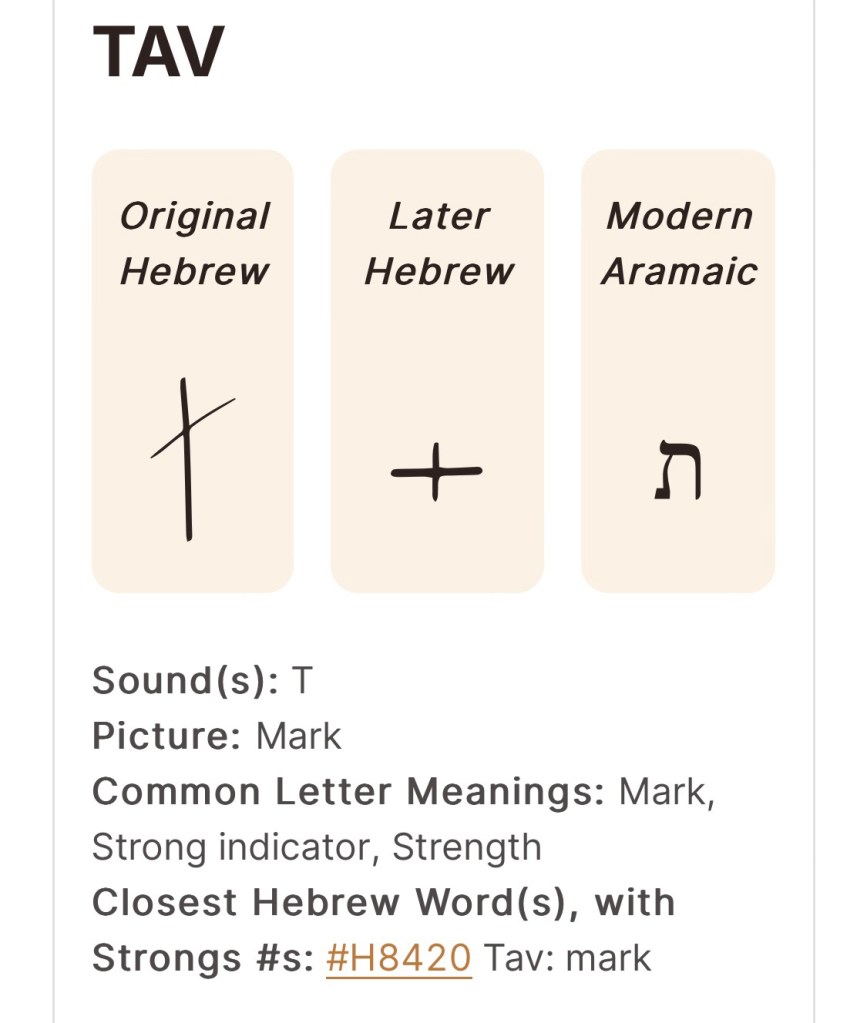
In verse 170, the word “supplication” or “plea” is tchinnah (tekh-in-naw). A supplication is an entreaty for grace and favor.
The next Tav-word is in verse 171 and it means “praise”: thillah (teh-hil-law).
😳 Tequila?
No. Teh-hil-law. Go back to sleep.
😓 Are we there yet?
Almost.
🥱
In verse 174 the word ta’ab means “long” or “longing.”
Tav – THIS! (Strong indicator)
Alef – strong, strength, leader, chief
Bet – house
If you put Alef and Bet together you get the word Ab. Father. Like Father Ab-Raham. I wonder if the word ta’ab is meant to remind us that the longing in every human heart is for a father. And not just any father, but THIS Father. The One the psalmist has been writing about; our Heavenly Father.
Ta’ab (longing) sounds kind of similar to the word in the final verse 176 that is translated “go astray.” That’s the word ta’ah.
Tav – THIS! (Strong indicator)
Ayin – eye, sight, look
Hey – man
And that’s how we go astray every time, isn’t it? We get our eyes off of our Father and we start looking at man.
🚐 🏁🏁🏁🏁🏁
We MADE it!! 🥳
Y’all… that was EPIC.
And I’m EXHAUSTED.
🌲🌲🏠 🚐
🥱
😃 Are we home now? Is it time for breakfast? Can we have more donuts? 🍩
😑 Yes. No. And absolutely not. We’re going to sleep.
😃 But I’m not sleepy.
😑 Then you can stay up and proofread this post. I’m going to bed.
 To The Reader