These parallel chapters give us a summary of Solomon’s infrastructure development. There are a few obscure terms and odd bits that stood out to me.
THE OMINOUS WARNING
The 1 Kings 9 passage feels very intentional toward the exiled Jews. Remember that the book of Kings was written after Jerusalem and the temple had been destroyed – about 400 years after Solomon’s reign. The warning from Yahweh to Solomon has come to pass.
Scripture includes many warnings like this from the LORD. But because He is merciful and gracious and extremely patient, humans frequently get it in their heads that His warnings are empty threats or perhaps just scary bedtime stories to make the kids behave. And so people ignore God’s Word and do as they please, and nothing happens for a long time. And they say, “See? All of that hell-fire and brimstone preaching was just talk. It was just a tool of organized religion to manipulate us. God – if He even exists – doesn’t care.”
But at some point, God’s judgment falls and people search for answers and they find out that what happened is exactly what God said would happen.
To put it in a more modern context, US President Dwight Eisenhower gave his farewell speech in 1961. In it he acknowledged that America had been “compelled to create a permanent armaments industry of vast proportions.” But he also warned…
“This conjunction of an immense military establishment and a large arms industry is new in the American experience. . . .Yet we must not fail to comprehend its grave implications. . . . In the councils of government, we must guard against the acquisition of unwarranted influence, whether sought or unsought, by the military-industrial complex. The potential for the disastrous rise of misplaced power exists and will persist.”
We look back at that warning from a distance of more than 60 years and can better appreciate his concerns. But it is also too late to heed that warning. His speech can now be looked back upon as proof that we were warned.
So it was with Israel reading 1st Kings 9:3-9.
20 CITIES in GALILEE
1st Kings 9:11-12 indicates that Solomon gave 20 cities in the Galilee region to King Hiram of Tyre as perhaps some kind of payment or bonus gift for all the materials provided for all of Solomon’s building projects.
But 2nd Chronicles 8:2 says that Hiram gave cities to Solomon.
I think both are true. It seems there was some kind of foreign exchange program between them. Solomon and Hiram were allied and so just like the US has military bases in the lands of our allies, Solomon and Hiram had cities (bases) in each other’s lands.
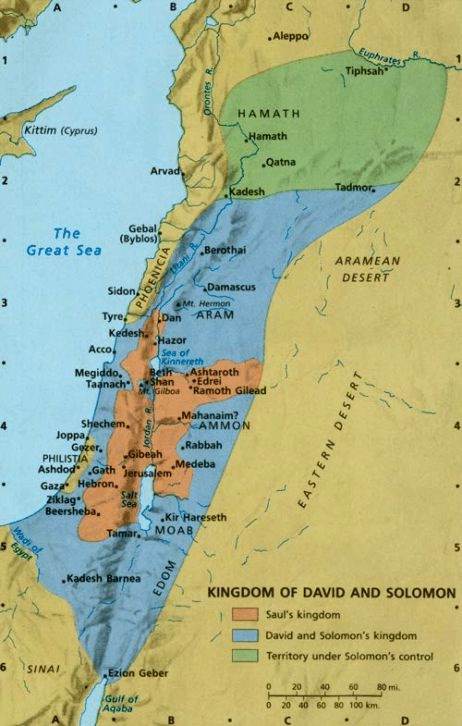
It seems like the 20 cities that Solomon gave to Hiram were a bit primitive. He wasn’t very impressed. In most English translations Hiram calls the cities “Cabul” which means “sterile” and carries the idea of “limitation.” The Septuagint translates this word as “Frontier.” So – they were probably small settlements in rural areas of the Galilee. If you’ve ever lived in a tiny town far away from an urban center, you understand that there are “limitations” to what kind of supplies you can get. Especially in the days before Amazon.
THE GOLD OF OPHIR
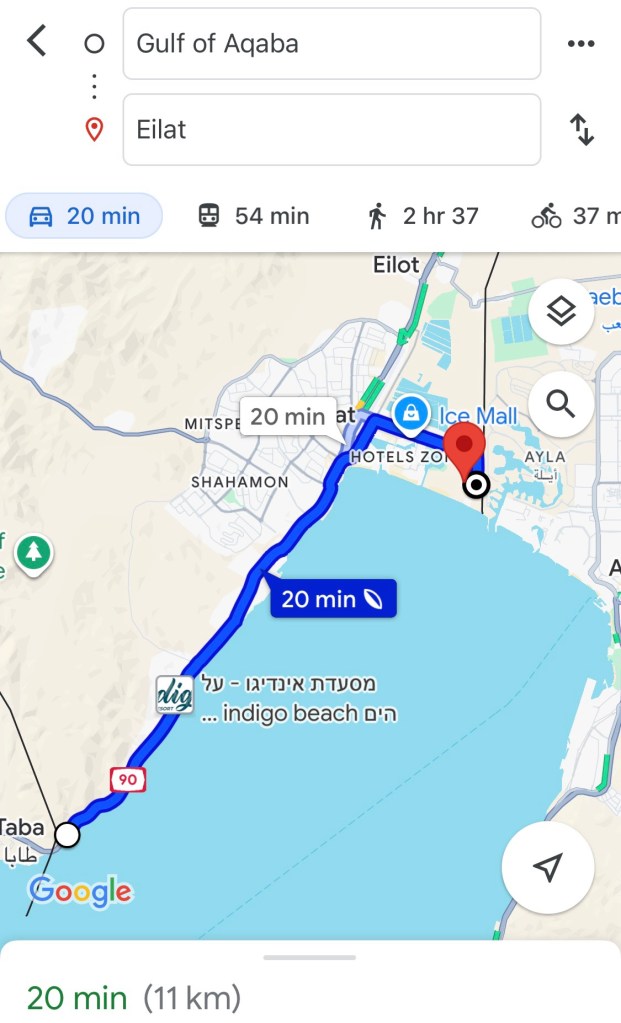
Speaking of places on the map…
Solomon captured the crucial port of Ezion Geber. Israel possess it today.
Everyone knows that Solomon was insanely rich. You would be too if you sent out a fleet of ships and they came back with nearly 17 tons of gold.
Some people think that “King Solomon’s Mines” are the stuff of legend; like El Dorado. But we don’t have a receipt from El Dorado. We have one from Ophir.
Check out this article from 2020 published by the Armstrong Institute of Biblical Archeology.
WHAT BECAME OF THE CANAANITES
Remember how Israel never could quite get rid of the “ites” in the land? 1st Kings 9:20-21 is like footnote that explains what became of them. Solomon turned them into slaves of the state. This was not a new concept. Ever since the Gibeonites deceived Joshua and were put to work cutting wood and hauling water, the conquered tribes of Canaan had been forced into slave labor upon surrender.
Makes me wonder how much influence they had in the coming years as Israel drifted into idolatry. I also wonder how many converted to worship Yahweh.
The line in verse 21 “as they are to this day” suggests that this situation continued for many centuries. This is just about the last we will hear of many of these tribes.
I ponder a spiritual application for this in the life of a Christian. When the reign of Christ is fully established in our lives, the old enemies are well and truly subjugated. The test has become a testimony. The habits and people and situations that once threw us out of faith in God and into fear are now powerless. They are made to serve the purpose of Christ. They no longer destroy but are part of the building process.
As Joseph said, “You intended to harm me, but God intended it all for good.”
Genesis 50:20 NLT
A HOUSE FOR SOLOMON’S WIFE
“Solomon moved his wife, Pharaoh’s daughter, from the City of David to the new palace he had built for her. He said, “My wife must not live in King David’s palace, for the Ark of the Lord has been there, and it is holy ground.
2 Chronicles 8:11 NLT
In this little verse we learn something extraordinary that wasn’t quite clear before. David had the Ark in his house!
Now, we know that he pitched the tent for it known as “the Tabernacle of David.” But it seems that this Tabernacle was quite literally “in his back yard.” He wanted the Ark close for a couple reasons –
- To protect it from being stolen
- To be near to Yahweh
Perhaps we should think of our homes as “holy ground.” Does the LORD dwell in you? Do you live in your house?
We have more access and closer fellowship with God than David or Solomon had, yet they were more careful to honor the space where His presence had been than we typically are to honor where He IS. The Ark wasn’t even there anymore, but the space continued to be regarded as holy.
I feel like this needs pondering over several sips of coffee. 🤔☕️
 To The Reader