You probably already know that the northern kingdom of Israel will have no good kings. Not one. Every last one is evil.
The southern kingdom of Judah is a mixed bag. Some will start out ok and go bad. Some are bad but repent at the end. And there are a few good ones, but mostly wicked.
We’ve gotten into the section of history where we’re going to ping-pong back and forth between: King of Israel, King of Judah.

So far in Judah we have:
- Rehoboam
- Abijah/Abijam
- Asa
In Israel we have:
- Jeroboam
- Nadab (Jeroboam’s son)
- Baasha (no relation, killed Nadab)
Don’t worry. There won’t be a test at the end.
2 Chronicles 12
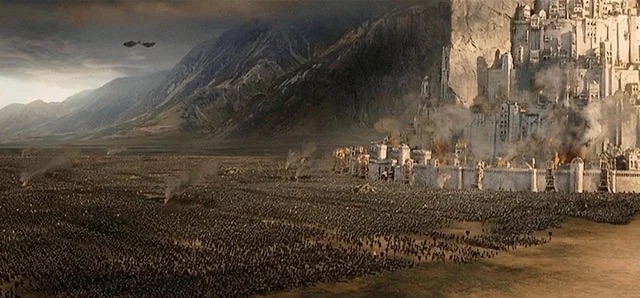
In the Kings account of this invasion that we read already, we don’t get as many details as in the Chronicles account. Here we learn the staggering size of the army that was amassed against Rehoboam in Jerusalem. When I read in the Bible about armies so big they can’t be numbered or “like the sand of the sea,” I picture this:
Once again, our lone prophet, Shemaiah, stands up and delivers Yahweh’s message to the leaders of Judah –
“Thus says Yahweh: ‘You yourselves have abandoned me, and I myself have surely abandoned you into the hand of Shishak.’ ”
2 Chronicles 12:5 LEB
They were this close 🤏🏼 to being obliterated by Egypt. If they hadn’t humbled themselves, the rest of the Old Testament would’ve looked very different.
Notice how they humbled themselves. The text says nothing about them stripping off their robes and dressing in sackcloth and throwing ashes and dust on their heads. It doesn’t even say they “repented.” What did they say?
“Then the princes of Israel and the king humbled themselves and said, ‘Yahweh is righteous.’ ”
2 Chronicles 12:6 LEB
That’s it.
And that is a statement of truth because Yahweh IS righteous. Is that all it took? What just happened here?
I’ll tell you.
They came out of agreement with their own word and came into agreement with Yahweh.
(Now that’s GOLD right there if we will take it and apply it.)
Up to this point, who did they think was right? Themselves or Yahweh?
Did they perhaps think that Yahweh’s rules were too oppressive? That He was unfair?
Whose judgement did they place higher than Yahweh’s?
Would that be considered prideful?
So if they came to the point where they said, “Yahweh is right,” who are they tacitly admitting was wrong?
🤔 Are you gonna tell us the answers or is this a pop quiz? I thought you said there wasn’t going to be a test?
These questions are dots for you to connect.
😒 Oh. You must’ve really liked dot-to-dot as a kid.
I did.
There comes a time when we need to examine our own ideas and values. Have we placed our own ideas of right and wrong above what the Word of God says? Slipping into agreement with a lie can happen so gradually we don’t even notice until we find ourselves at odds with God’s ways. That’s when we have to choose to admit, “God, You are right and I was wrong.” We can choose to come out of agreement with a lie and come into agreement with the Truth. Lies tend to fall into 3 categories:
- Lies we believe about God
- Lies we believe about others
- Lies we believe about ourselves
You may have never said out loud, “I agree with whoever told me that God doesn’t love me.” You don’t have to. Every time you parrot to yourself in your head “God must be so tired of me.” Or, “God can’t possibly love me.” (or any other such thing about God or yourself or others)… Every time you repeat some version of that lie in your head you agree with it.
But if you decide to agree with it you can also decide NOT to agree with it.
It’s not a matter of your feelings, it’s a matter of your will.
“and you will know the truth, and the truth will set you free.”
John 8:32 LEB
If you choose to acknowledge the truth (which is outside of you) and know it (receive it inside of you) the Truth will set you free (from the inside). It replaces the lie. But you have to first reject any word that does not agree with the Truth.
The leaders of Judah finally acknowledged the truth but it took a vast army on the doorstep to make them desperate. And God spares them from being utterly wiped out. Instead they are looted and humiliated and subjugated. Not a very shining record for the son of Solomon.
Ok- so I went t down a long twisty rabbit hole of Abijah and Asa’s genealogies. And honestly, I’d prefer to pretend that none of this exists and just move on. But I have to confront these 4 contradictory texts:
“After her, he [Rehoboam] took Maacah the daughter of Absalom, who bore him Abijah, Attai, Ziza, and Shelomith. Rehoboam loved Maacah the daughter of Absalom above all his wives and concubines (he took eighteen wives and sixty concubines, and fathered twenty-eight sons and sixty daughters). And Rehoboam appointed Abijah the son of Maacah as chief prince among his brothers, for he intended to make him king.”
2 Chronicles 11:20-22 ESV
“In the eighteenth year of King Jeroboam, Abijah began to reign over Judah. He reigned for three years in Jerusalem. His mother’s name was Micaiah the daughter of Uriel of Gibeah. Now there was war between Abijah and Jeroboam.” 2 Chronicles 13:2
“In the twentieth year of Jeroboam king of Israel, Asa began to reign over Judah, and he reigned forty-one years in Jerusalem. His mother’s name was Maacah the daughter of Abishalom.”
1 Kings 15:9-10 ESV
“Abijah slept with his fathers, and they buried him in the city of David. And Asa his son reigned in his place. In his days the land had rest for ten years.”
2 Chronicles 14:1 ESV
Did you catch the problems? How is Asa’s grandma also his mom? And if you remember the Absalom story, it said nothing about a daughter named Maacah. That was his mom’s name. Who are Micaiah and Uriel?
Y’all… I read and researched and reread until my eyes were cross-referenced.
Here we go. Might wanna top off your coffee. I hope it’s strong.
Maacah was Rehoboam’s favorite wife. And no wonder. She was probably drop-dead-gorgeous. According to Josephus she was actually the granddaughter of Absalom; not his daughter (Josephus Antiquities, 8.10.1.249). The terms son and daughter are rather loose in scripture. A “son of Abraham” can be any descendant of Abraham. Jesus is the “Son of David,” meaning: a descendant.
Absalom’s own mother’s name was Maacah. She was a princess – the daughter of king Talmai of Geshur – that David married (1 Chr. 3:2). 2nd Samuel 14:27 tells us that Absalom had 3 sons and 1 daughter named Tamar (after his sister). But, very strangely…
“Absalom in his lifetime had taken and set up for himself the pillar that is in the King’s Valley, for he said, “I have no son to keep my name in remembrance.” He called the pillar after his own name, and it is called Absalom’s monument to this day.”
2 Samuel 18:18 ESV
So did his sons all die young? We never hear anything about Tamar again. But Josephus records that Tamar had a daughter – named after her grandmother: Maacah.
Maacah is married to Rehoboam, a cousin. Her first son is Abijah.
But who are Micaiah and Uriel??? Were there two Abijahs? Did Abijah father a child (Asa) by his own mother? How can Maacah be the mother of Abijah AND Asa? This is a tangled knot. And I have spent two days pulling on every thread of the questions I just raised. I did not include all that in this post. You’re welcome.
Some people might just assume this is an error in the text. And it MAY be an error in translation.
One option is that Micaiah and Maacah refer to the same person (although the names are significantly different in the Hebrew of the Masoretic Text- M.T.). If so, then Micaiah/Maacah’s father is Uriel and her mother is Tamar, the daughter of Absalom.
The Septuagint supports this view because it consistently uses the same name. There is no Maacah or Micaiah. There is only Maacha. Compare 2 Chron. 13:1-2 in the Brenton LXX with the same verse in a version based on the Masoretic Text (like the one I pasted earlier):
“In the eighteenth year of the reign of Jeroboam Abia began to reign over Juda. 2 He reigned three years in Jerusalem. And his mother’s name was Maacha, daughter of Uriel of Gabaon.” (LXX)
So Abijah’s (Abia) mother was Maacah (Maacha), daughter of Uriel who was probably the husband of Tamar (Absalom’s daughter).
Here is 3 Kings 15:9-10 in the Brenton Septuagint (which is 1st Kings in the M.T.):
“In the four and twentieth year of Jeroboam king of Israel, Asa begins to reign over Juda. 10 And he reigned forty-one years in Jerusalem: and his mother’s name was Ana, daughter of Abessalom.”
Hello. New person: Ana. Also a “daughter” (descendant) of Absalom.
If we go by the Septuagint, (which was translated from ancient Hebrew manuscripts that no longer exist, into Greek which is a VERY precise language), then there is no problem. With a little assist from Josephus, we arrive at this:
- Rehoboam married Maacah, a “daughter” (granddaughter) of Absalom through his daughter Tamar.
- They have a son: Abia/Abiu/Abijah/Abijam (spellings vary)
- Abijah marries Ana, another “daughter” (descendant) of Absalom, perhaps a niece or younger sister of his mother Maacah – so, a cousin or aunt.
- I suspect that with Absalom’s legendary good looks, saying that someone was a descendant of Absalom would be like saying “She’s the granddaughter of Marilyn Monroe,” or “Audrey Hepburn.” Or “he’s the grandson of Marlon Brando,” or “Robert Redford.” It’s saying that the person won the genetic lottery and they are just GORGEOUS.
- Abijah and Ana have a son, Asa.
So that clears up the genealogical hurdles.
Mostly.
Since we’re on this kick of tackling apparent contradictions in the text, let’s do one more. We’ll compare 2 verses in a translation based on the Masoretic Text vs Septuagint (LXX).
“He also removed Maacah his mother from being queen mother because she had made an abominable image for Asherah. And Asa cut down her image and burned it at the brook Kidron.”
1 Kings 15:13 ESV
“And he [Asa] removed Ana his mother from being queen, forasmuch as she gathered a meeting in her grove: and Asa cut down her retreats, and burnt them with fire in the brook of Kedron.” 3 Kings 15:13 Brenton LXX
“Even Maacah, his mother, King Asa removed from being queen mother because she had made a detestable image for Asherah. Asa cut down her image, crushed it, and burned it at the brook Kidron.”
2 Chronicles 15:16 ESV
“And he removed Maacha his mother from being priestess to Astarte; and he cut down the idol, and burnt it in the brook of Kedron.” 2 Chronicles 15:16 Brenton LXX
The above is the only time the Septuagint references Maacah (Maacha) as the mother of Asa. But as we saw with the situation with her being technically the granddaughter of Absalom and called “the daughter of Absalom,” I think it may be reasonable to consider that BOTH of the verses in the Septuagint are true as written.
- Asa dethrones his mother (Ana) and removes her royal title and privileges because she made an Asherah shrine.
- Asa shuts down grandma Maacah’s cult group where she had been priestess to Astarte.
Asherah and Astarte, while similar, were regarded as two separate entities. Asherah was Canaanite, while Astarte was primarily Phoenician and probably connected with the Babylonian goddess Ishtar.
Asa hauled a LOT of pagan garbage to the dump and lit it on fire. If there is no translation error in the LXX, then we have Asa going after BOTH mom and grandma. They had their idols destroyed and themselves kicked out of the family and cut off from any cushy financial situations they enjoyed.
If I’m wrong on this, then the only other explanations that makes sense of these verses would be:
- Maacah/Maacha/Micaiah/Ana are all the same person
- Abijah had an incestuous relationship with his own mother (Maacah) and produced a son Asa who was also his half-brother. And that makes Asa’s mother and grandmother the same person.
If you feel like you need therapy after all this, I suggest listening to this song:
I’m My Own Grandpa (with diagram!).
The family tree diagram was done by the YouTube channel “Useful Carts” and he really does have fantastic content. He has some Biblical family tree charts and a series that shows where various Christian denominations came from. Very useful. You can also purchase any of his charts.
Perhaps this is all as clear as mud, but I had to get to the bottom of those verses that seemed to be impossible to reconcile. And I feel satisfied with the light that the Septuagint shines on the text.
(I’m sorry that this post was probably about as exciting as watching paint dry.)
So the next time you hear someone say, “the Bible is full of contradictions,” try to have a little compassion. Of course the Bible isn’t FULL of contradictions, but they are there – at least in some texts. I think that likely most or all of them can be reconciled and worked out with some digging. They only appear to be contradictory at first reading. But for someone who is not a believer and has not experienced the undeniable life-change that happens when a person trusts in Christ and the Bible comes alive, these apparent contradictions are red flags and major problems. Would you trust a boat with holes in it? That’s how they see it- holes in the “good old Gospel ship.”
What if you hadn’t read this post and an unbeliever at work brought you those contradictory verses and said “See! I told you the Bible was full of contradictions!”
What then?
I think it’s important to wrestle with these difficult passages and DO the homework so we aren’t simply asserting things we know nothing about. This requires honesty and humility.
Technically, most of us fall into the level of: reading the homework that other, more advanced scholars have done, but hey, that’s part of education.
 To The Reader