Of Abijah, the book of Kings said:
“He walked in all the sins of his father that he had done before him, and his heart was not fully with Yahweh his God as the heart of David his father.”
1 Kings 15:3 LEB
And what were “the sins of his father,” Rehoboam?
“And he did evil, for he did not set his heart to seek Yahweh.”
2 Chronicles 12:14 LEB
Setting your heart on something means it’s a big deal. You want it really bad and you don’t even consider other alternatives.
“She has her heart set winning that fluffy unicorn.” 🦄 That means: she will not be happy with any other outcome. She wants THAT one.
Neither Rehoboam or his son Abijah had their heart set on Yahweh. In the text, we only see them seeking Yahweh when they are in big trouble.
Rehoboam went to the temple (2 Chr. 12:11), but it seems to have more of a ritual than the desire of his heart. Abijah welcomed the Levites and knew that it was important that they do things according to the Law, he just didn’t seem to have much interest in participating himself. Abijah’s pre-battle speech to Jeroboam tells us a lot about his relationship with Yahweh.
He knows that Yahweh is the God of Israel. He knows that the Levites are supposed to do all the worship rites in the temple. He brags that “…we are keeping the requirement of Yahweh our God, but you yourselves have forsaken him.”
2 Chronicles 13:11 LEB
I doubt it ever occurs to Abijah that God Almighty wants to know him and be his friend. Abijah just thinks: “as long as we do the religious requirements, that’s what’s important.”
Yahweh didn’t want just “fulfilling the religious requirements then, and He doesn’t want it now; anymore than a married person wants a spouse that just “fulfills the requirements of marriage” without actually opening their heart and engaging with their partner as a true friend.
A couple other details that stood out to me in this speech were…
🧂 The Covenant of Salt
“Ought you not to know that the Lord God of Israel gave the kingship over Israel forever to David and his sons by a covenant of salt?”
2 Chronicles 13:5 ESV
We only have 2 other verses in scripture that directly address this covenant of salt:
“You shall season all your grain offerings with salt. You shall not let the salt of the covenant with your God be missing from your grain offering; with all your offerings you shall offer salt.”
Leviticus 2:13 ESV
Every Israelite was to add salt to any and every offering. Salt was part of the covenant meal that God shared with His people. Remember that all sacrifices except the whole burnt offering were to be eaten by priest, Levite, and the offerer and his family. It’s a shared meal with Yahweh; a purified and well-seasoned meal.
Speaking to Aaron concerning his priestly family, God says,
“All the holy contributions that the people of Israel present to the Lord I give to you, and to your sons and daughters with you, as a perpetual due. It is a covenant of salt forever before the Lord for you and for your offspring with you.”
Numbers 18:19 ESV
If you’d like to dig further into salt covenants, here is a link to a free short Ebook on the topic written in 1899.
🎺 Battle Trumpets & Battle Shout
“Behold, God is with us at our head, and his priests with their battle trumpets to sound the call to battle against you. O sons of Israel, do not fight against the Lord, the God of your fathers, for you cannot succeed.”
2 Chronicles 13:12 ESV
“And when Judah looked, behold, the battle was in front of and behind them. And they cried to the Lord, and the priests blew the trumpets. Then the men of Judah raised the battle shout. And when the men of Judah shouted, God defeated Jeroboam and all Israel before Abijah and Judah.”
2 Chronicles 13:14-15 ESV
First off, the term “battle trumpets” is just super cool. I can’t imagine “Battle Flutes” or “Battle Kazoos.” Battle Tubas, maybe. These are not shofar. These are chatsotsrah (cats-ots-rah), silver trumpets. The idea of using loud, intimidating sounds as a kind of psychological weapon is ancient and widespread. Click here to listen to a 35 second clip of the carnyx, an ancient Celtic war trumpet from 300BC. There’s also the Aztec Death Whistle, but if you look that up, you’re on your own. It sounds like a woman screaming bloody-murder. I don’t recommend.
Here’s what the LORD told Israel about the silver trumpets (the chatsotsrah):
“Make two trumpets of hammered silver for calling the community to assemble and for signaling the breaking of camp.”
“When you arrive in your own land and go to war against your enemies who attack you, sound the alarm with the trumpets. Then the Lord your God will remember you and rescue you from your enemies.”
Numbers 10:2, 9 NLT
The war-trumpeting was God’s idea. It’s not that God forgets and He needs an alarm to wake Him up. The Hebrew word is zakar and it means “to mark (so as to be recognized);” like when I put my initials on my cup at a family get-together so I can recognize mine from all the others. It also means “to make mention,” “to be mindful,” “to recount,” “to record.” Their trumpet sound was unique and it marked them as belonging to Yahweh.
We need to look just a little closer at zakar.
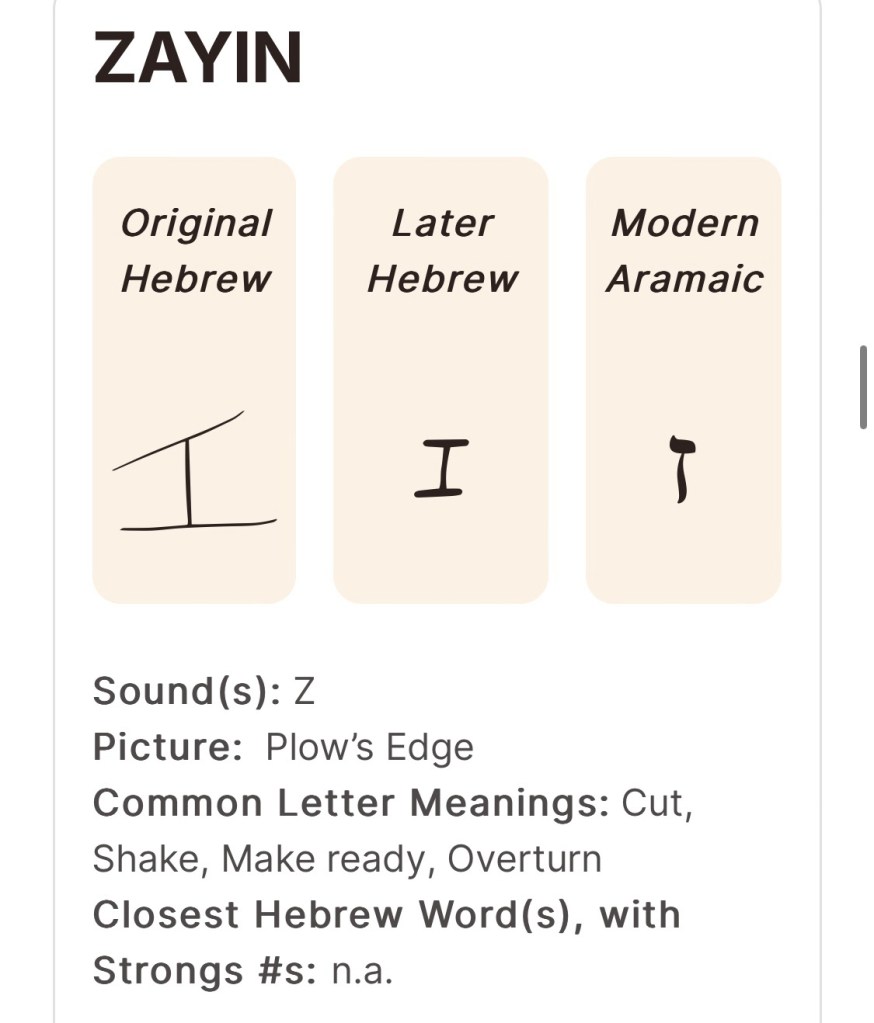
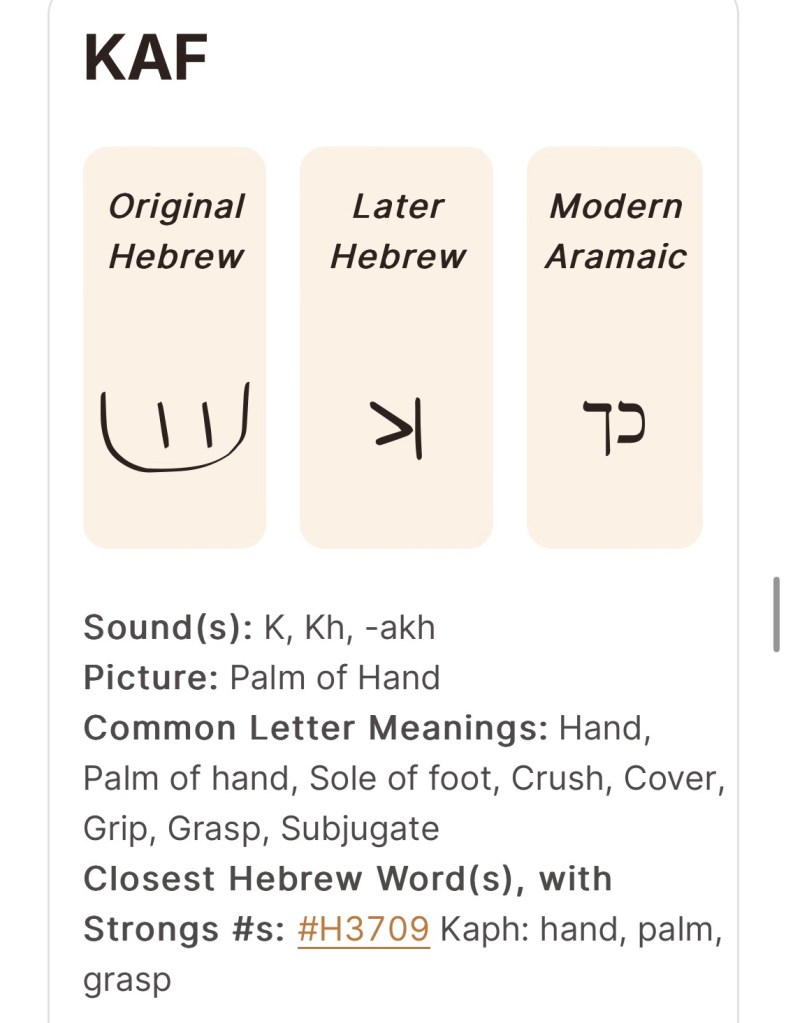
It’s spelled: Zayin, Kaf, Resh (Z K R).
The paleo-Hebrew pictograph for zayin is the plow.
Then there’s Kaf… the palm of the hand.
Finally, Resh, the head:
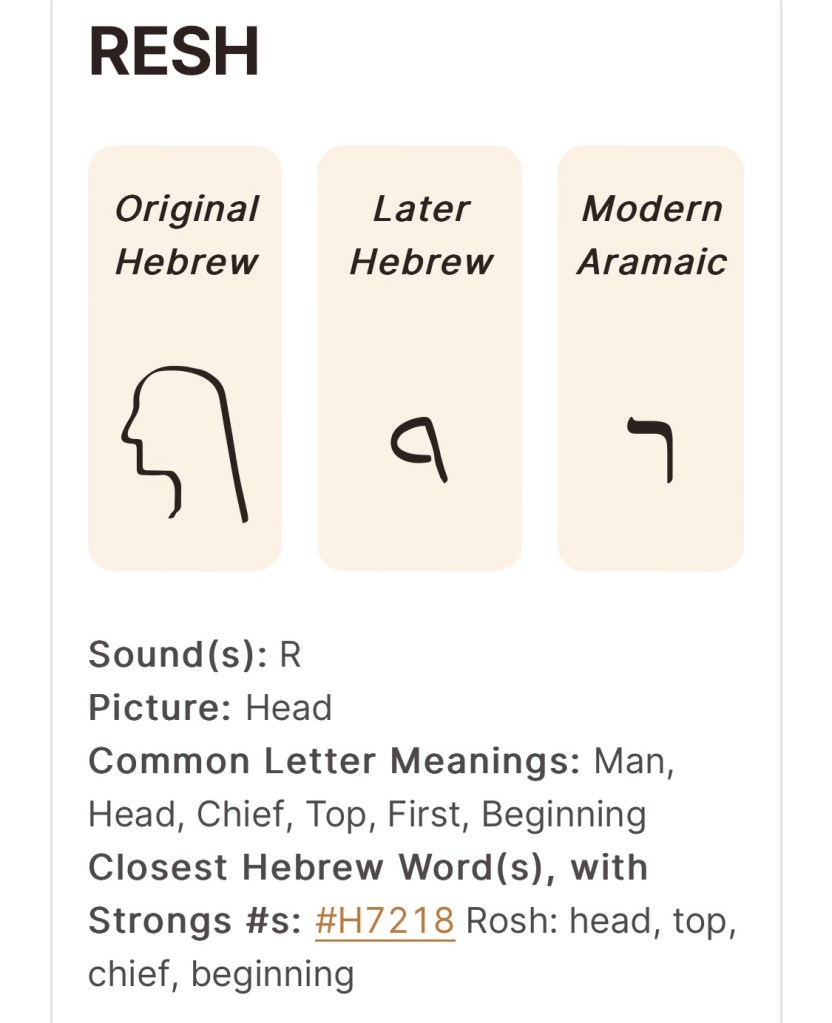
The plowing of the hand/foot of the chief man from the beginning…
“Can a woman forget her nursing child, that she should have no compassion on the son of her womb? Even these may forget, yet I will not forget you. Behold, I have engraved you on the palms of my hands; your walls are continually before me.”
Isaiah 49:15-16 ESV
He will not forget. He remembers. Zakar. “To mark (so as to be recognized).”
🪑 Here’s a chair. In case you need to sit in that for a minute…
💭
The battle shout seems to have been some specific war-cry; not just the general shouting on a battlefield. The Hebrew word is ruwah (roo-ah). It’s an ear-splitting sound. It literally means “to mar,” like- you broke it.
And the Lord responds to the trumpets and the shout and defeats Jeroboam’s army; which was double the size of Judah’s and was positioned both in front and back of Judah with a surprise ambush. All the normal military factors point to a sure defeat for Judah. But when God is with you, the odds mean nothing.
Which makes me think of…

Abijah’s son and successor, Asa, also faced an impossible battle situation…
Asa went out to face a million-man army from Ethiopia… with only 580,000 men. That’s basically 30 to 1.

(In case you’re wondering, the King leading the vast army is Zerach in Hebrew, not Zerah like the word for remember. But they sound fairly similar.)
“And Asa cried to the Lord his God, and said, O Lord, it is not impossible with thee to save by many or by few…” 2 Chron. 14:10 LXX
Now where have we heard that before?
Oh yeah…
“Jonathan said to the young man who carried his armor, “Come, let us go over to the garrison of these uncircumcised. It may be that the Lord will work for us, for nothing can hinder the Lord from saving by many or by few.”
1 Samuel 14:6 ESV
Say it again with me, friend, “God does not require favorable circumstances.”
Asa is one of Judah’s better kings and we will look more closely at his reign in the next post.
 To The Reader