I find this to be one of the most inspiring narratives in all of the stories of the kings.
Jehoshaphat really took the correction of the prophet Jehu to heart. He personally went all over Judah and Benjamin appointing impartial Levites to teach the people the Word of God and to settle legal disputes.
He’s busy doing all this good and suddenly comes under attack. Unprovoked.
(Perhaps you know the feeling.)
The armies have assembled at En Gedi. They are practically on the back porch of Jerusalem.

Or – if you ask Google Maps… it’s about a day and a half walk.
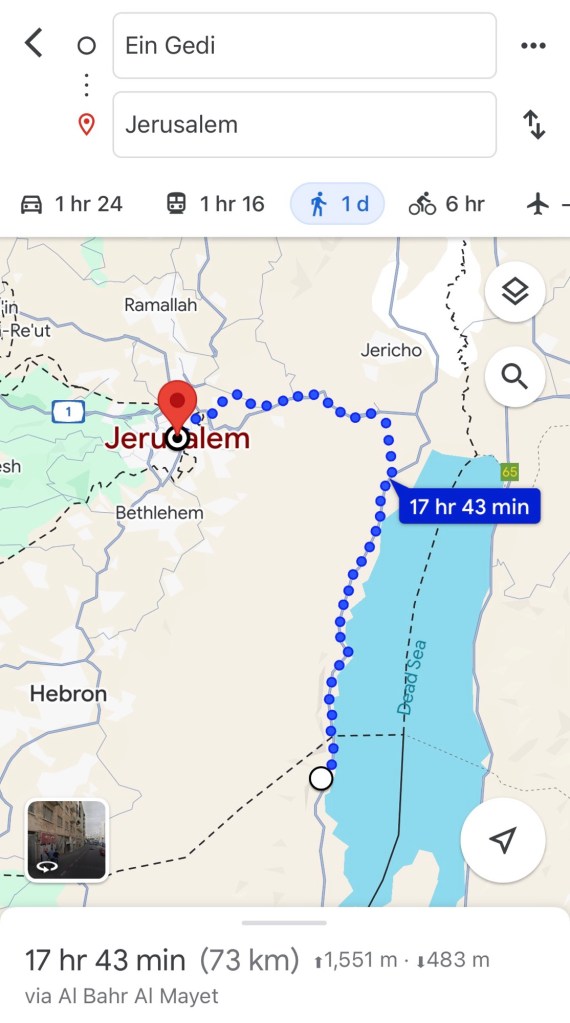
Jerusalem has less than 24 hours before they could be attacked.
Jehoshaphat got the word out immediately – probably by royal couriers (basically their version of the Pony Express). 🐎 And he calls the nation to fast and assemble at Jerusalem to pray. 🙏
He’s not inventing this plan of gathering people to the temple to pray. He’s basing it on what Yahweh told Solomon He would do if they were in trouble:
“then if my people who are called by my name will humble themselves and will pray and will seek my face and will turn from their evil ways, then I myself shall hear from the heavens and will forgive their sins and heal their land.
Now my eyes will be open and my ears attentive to the prayer of this place. And now I have chosen and consecrated this house for my name to be there forever. My eyes and my heart will be there for all time.”
2 Chronicles 7:14-16 LEB
So the nation gathers. Everyone. Even the children. 👶🏽 And while they are praying and weeping in desperation, 😭 Yahweh’s Spirit comes upon one of the Levites – Jahaziel (whose name, incidentally, means “beheld of God.”) You may have some of Jahaziel’s words on your coffee cup right now.
“The battle is not yours, but God’s”
“You do not need to fight this battle”
“Stand still and see the salvation of the Lord”
“The Lord will be with you”
When he finished speaking, the king bowed and worship erupted. 🙌🏼
The army went out the next day and Jehoshaphat said something that, unfortunately, has been used as a shield by some who claim to be modern prophets:
“…Believe in the Lord your God, and you will be established; believe his prophets, and you will succeed.”
2 Chronicles 20:20 ESV
This text does not negate THIS text:
“when a prophet speaks in the name of the Lord, if the word does not come to pass or come true, that is a word that the Lord has not spoken; the prophet has spoken it presumptuously. You need not be afraid of him.”
Deuteronomy 18:22 ESV
Or this one:
“Beloved, do not believe every spirit, but test the spirits to see whether they are from God, for many false prophets have gone out into the world.”
1 John 4:1 ESV
A modern prophet can make a claim, then quote 2 Chronicles 20:20 as if it’s a get-out-of-scrutiny-free card. The text can be used to manipulate people into being too afraid to question or test the words and spirit of a prophet. I mean, everyone wants to be established and succeed right? But if I don’t believe the prophet then I won’t be established or succeed. So I better believe.
Y’all, that’s not what this text is here for.
Test the prophet first. If the prophet passes the tests, then you can believe.
This is the famous battle where the singers go out as the front line troops. And as they sang in praise, Yahweh sent confusion into the camp of the enemies and they turned their swords on one another.
Most of us already know that praise is a powerful weapon. But you may want to make a note to add prophetic declarations to your prayer arsenal. Just know that it’s a powerful weapon. Don’t get trigger-happy with prophetic declarations of confusion into the enemy’s camp. Wait til you are led by the Spirit. Also, be aware that sometimes the division we see in the world today – the infighting amongst former allies – might just be the Lord turning enemies against each other. Watch and pray. Observe. Discern. The Lord didn’t take His hands off the wheel of the affairs of nations when Jesus came. He’s just as involved now as He was in this battle in Jehoshaphat’s day.
God turned this situation around on a dime.
And He did not need favorable circumstances.
One day God’s people are faced with a huge army bearing down on them. The next (and the next and the next) they are picking up the spoils from a battle they did not even fight. They assembled on the 4th day and renamed the valley “Blessing.”
Most literal things in the OT tend to have a spiritual application for the NT believer. How about we trust that the same Yahweh who took care of Jehoshaphat’s enemies will take out the enemies encamped on the borders of our lives? How about we dare to believe that we will be 3 days in collecting all the spoils from a battle we don’t even have to fight?
😉 Here she goes… cue the Pentecostal organ
How about we rename the places where God won the victory and call them a “Blessing” rather than a “battle ground” and gather there with our community to testify what God has done and bless and thank the Lord.

PSALM 83
Jahaziel’s ancestor, Asaph, wrote this Psalm.
It’s amazing how little has changed in 3000 years. There are still groups like this:
“They say, “Come, let us wipe them out as a nation; let the name of Israel be remembered no more!”
Psalm 83:4 ESV
This is basically the situation the Jehoshaphat and the people were facing.
Verses 1-8 of this prayer-psalm describe the problem. Asaph gets crystal clear and specific on who the bad-guys are and what they are trying to do.
It would be a good idea for us to take the time in our prayers to get crystal clear and specific on who the bad-guys are and what the problem is.
Verses 9-18 are prophetic imprecations.
😯 They’re what?
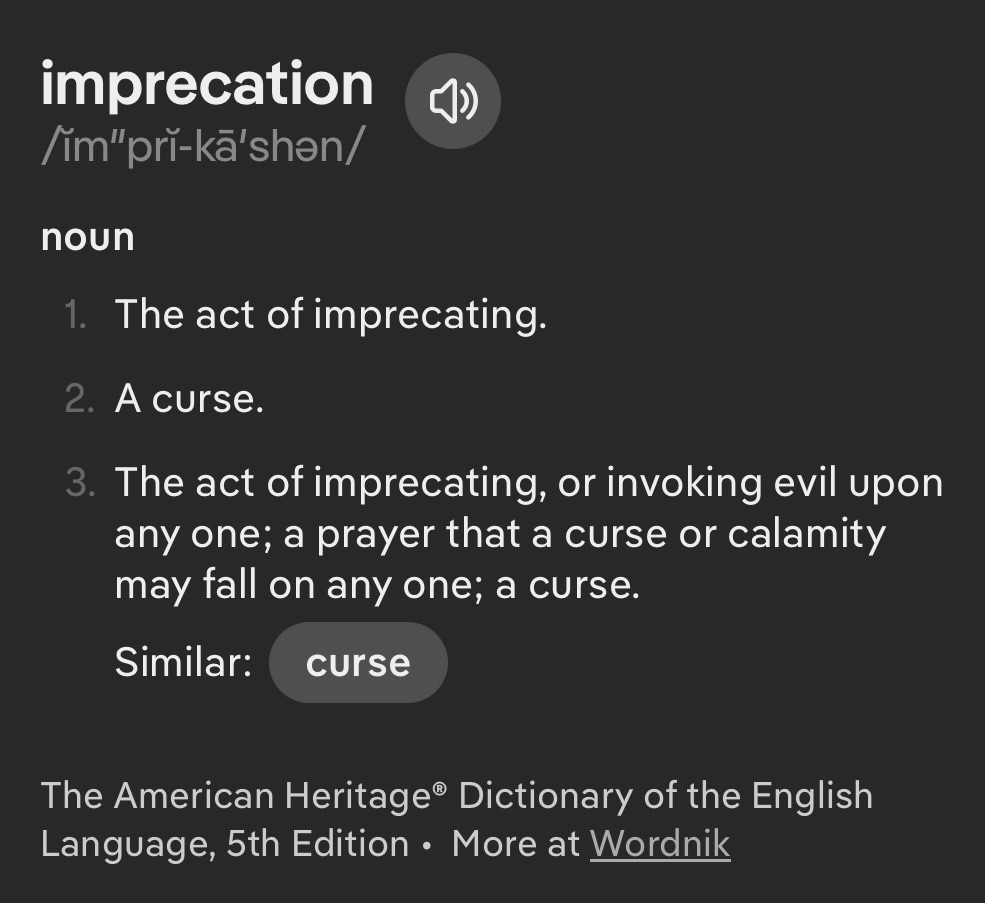
When you invoke death, destruction, and shame upon someone, that’s imprecation. That’s what Asaph is doing in this Psalm.
So the fancy technical term for this class of psalm is “Imprecatory Psalms.”
🤔 And why are they prophetic?
Well, apart from the fact that this is scripture, if you read the Psalm carefully, Asaph isn’t exactly asking Yahweh to bring these things about. He’s not saying “Would you?” He says:
“Do to them…”
“Make them like…”
“May You pursue them…”
“Terrify them”
“Fill their faces with shame”
“Let them be put to shame”
“Let them perish in disgrace”
The prophet isn’t necessarily giving God an order, but it’s like he’s speaking to Him as a partner, not a petitioner. These are bold, confident requests.
This is not “Please help me!”
This is: “Go get ‘em, Tiger!”
There’s nothing wrong with “please help me” prayers. The LORD hears them! Jehoshaphat basically prayed a “please help me” prayer. And God rescued them.
But the only way you can partner with the Lord is if His Holy Spirit is moving you and putting His desires and Word in your heart and mouth. And the descriptive term we use for “inspired speech” is: Prophetic.
🤔 So you’re saying that the Spirit of God is inspiring Asaph to invoke destruction on the enemies of His people?
Yes. That’s exactly what I’m saying.
And like I said earlier in the post, this is a powerful weapon and we shouldn’t get trigger-happy with it. But, if the Spirit of Lord leads you in prayer to invoke confusion into the camp of the enemy or to say to the LORD, “May You pursue and terrify them and bring them and their influence to an end,” then I think we have a TON of biblical precedent to do so with confidence.
As long as we remember that…
“we do not wrestle against flesh and blood, but against the rulers, against the authorities, against the cosmic powers over this present darkness, against the spiritual forces of evil in the heavenly places.”
Ephesians 6:12 ESV
And we must only do this kind of imprecatory-prayer fighting in the authority of Jesus Christ, under His direction, and clothed in His righteousness and truth.
Here’s a good (and short) article on the Imprecatory Psalms if you’d like to learn a little more about them. They are powerful psalms to pray in spiritual conflict.
 To The Reader