Prophets and Yokes
This is an incredible set of chapters and more applicable for today than might appear at first glance.
Jeremiah’s yoke was probably not a big ol honkin’ yoke for a team of oxen.
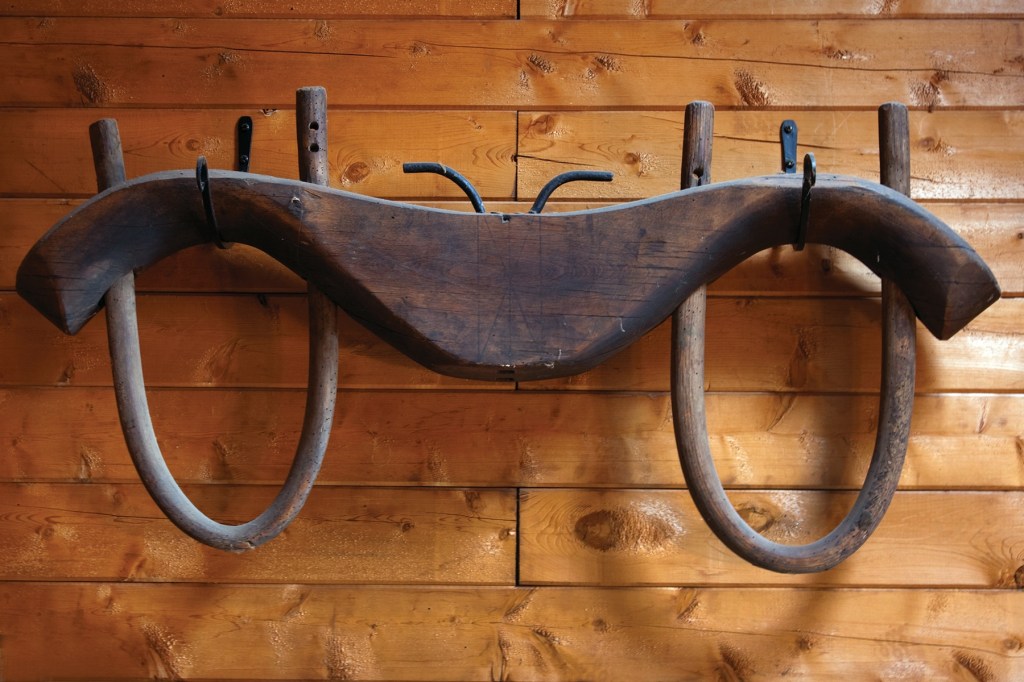
Human-sized yokes have been in common use for millennia. And they are still used in many parts of the world because they are extremely practical.


First, it’s important to note that the initial prophecy about the yoke came in the beginning of the reign of Jehoiakim, the son of Josiah, (27:1). Jeremiah makes a restraining yoke and puts it on his shoulders. Then he gives a prophetic word to all the kings of surrounding kingdoms. It’s not exactly clear if he also sent yokes along with his messages to the kings, or if he just sent messages. Either way, he let them know what Yahweh said.
Second, how wild is it that in the ancient world, in addition to the usual military and political advisors, heads of state had prophets in their cabinets?! They weren’t prophets of Yahweh, of course, but I bet cha they knew about Yahweh. I bet cha they knew about ALL the deities of all the surrounding nations. That was their field of expertise. Only, if you’re not getting information about the future from Yahweh, it will not be reliable because ONLY Yahweh declares the end from the beginning, (Is. 46:9-10).
This message to the neighboring kings was similar to the good figs/bad figs prophecy we read just a few chapters ago.
🎺😮📜 Here ye… Here ye! A message from Yahweh – the Most High God Who made everything: If you submit to the King of Babylon, you can stay in your lands and live. But if you try to fight him you will die.
This is the complete opposite of what the paid prophets on the advisory boards of these kings are foretelling.
Jeremiah is basically Admiral Ackbar saying:

“So do not listen to your prophets, your diviners, your dreamers, your fortune-tellers, or your sorcerers, who are saying to you, ‘You shall not serve the king of Babylon.’ For it is a lie that they are prophesying to you, with the result that you will be removed far from your land, and I will drive you out, and you will perish.”
Jeremiah 27:9-10 ESV
Now, when a person says something that isn’t true, here are the 2 basic options:
- They KNOW they are lying. So, they are a charlatan, a fraud.
- They DON’T KNOW they are lying. So, they are deceived. Deluded.
I’m going to guess that most of the prophets we read about in this section are in the 2nd group. They probably truly believed they were receiving revelation from the unseen realm. And, honestly, they probably were! But, again, if it’s not revelation from Yahweh, it cannot be accurate.
Incidentally, when uninformed people say things like “Jesus was an enlightened teacher but he wasn’t God,” then you can use the test above. Jesus absolutely claimed Divinity. That was his official charge before Pontius Pilot. So, either….
- Jesus KNEW he was lying. He was a charlatan, a fraud. If so, He would deserve no trust.
- Jesus did NOT KNOW He was lying – so He was a kook who truly thought He was God (if He wasn’t). And intelligent people should not listen to kooks.
- The only other option is…Jesus WAS Who He said He was: The Eternal Word of the Creator in human flesh. Fully Divine and fully human.
Let’s stop with the “Jesus-was-a-good-teacher” nonsense. He was either a Liar, a Lunatic, or LORD.
Back to Jeremiah…

“I spoke words like all these to Zedekiah king of Judah, saying, “Bring your necks under the yoke of the king of Babylon and serve him and his people, and live!”
Jeremiah 27:12 NASB2020
Zedekiah is the brother of the previous king, Jehoiachin (Jeconiah), who – along with the Queen Mother and most of the royal family – gave themselves up to Nebuchadnezzar and had been taken as captives to Babylon. It seems that Zedekiah refused to go along with the rest of the family.

Jeremiah made the yoke and gave the initial message to the surrounding kings in the beginning of Jehoiakim’s reign. Then, he gives the same message to Zedekiah (27:12). That’s at least 10 YEARS later! I’m not suggesting that Jeremiah wore that yoke every day for a decade, but I suspect it was something he was seen with quite often. In fact, it’s probably WHY Jehoiachin and his mother surrendered to the Babylonians. They were obeying the Word of Yahweh. That’s why they were the good figs.

Can you imagine? People in Jerusalem would be going about their business and for YEARS Jeremiah could be seen around town wearing that yoke, telling people to surrender to the enemy. No wonder the leaders didn’t like him. From their perspective, that’s not exactly good for morale.
😐 And they probably thought he was nuts.
The other prophets in Jerusalem are saying things like, “You will not have to serve the king of Babylon,” and “The vessels of the Temple will be brought back soon” (27:14, 16). Jeremiah is definitely the voice in the minority.
One of the prophets saying these things was Hananiah. He even gave a time frame of 2 years that the former king and the temple treasures would be restored.
😐 Ho boy… so they had “date setters” in Jeremiah’s time too huh?
Yeah. Gotta be careful about those guys.
😏 I wonder if Hananiah had a book – “The Two Big Reasons Jeconiah Is Coming Back In Two Years.”
I find it interesting that we have this little verse that gives us solid information on what parts of the temple furnishings had been taken already, and which were still in the temple at this point:
“For thus says Yahweh of hosts concerning the pillars, and concerning the sea, and concerning the stands, and concerning the rest of the vessels that are left in this city,”
Jeremiah 27:19 LEB
The 2 great bronze pillars that stood on either side of the entrance to the Holy Place were still there. The gigantic cast-bronze “sea” of Solomon was also still there. The “stands” were the 12 bronze oxen that the sea had rested on (see Jer. 52:20). At one point, King Ahaz had moved the sea off the bronze oxen and put it on a stone platform (see 2 Kgs. 16:17). It’s likely that the oxen were too big to break up and melt down, or perhaps they were used for decorative purposes. At any rate, they were still intact and probably restored in Josiah’s temple-restoration project.
The prophet Hananiah approaches Jeremiah in the temple courts. You’ve heard of rap battles. This is a prophecy battle.

Jeremiah is wearing his yoke. As usual. And Hananiah gives a prophecy that within 2 years the temple vessels that had been taken and the royal family would come back from Babylon.
Now look at how Jeremiah handles it:
“Jeremiah responded to Hananiah as they stood in front of all the priests and people at the Temple. He said, “Amen! May your prophecies come true! I hope the Lord does everything you say. I hope he does bring back from Babylon the treasures of this Temple and all the captives. But listen now to the solemn words I speak to you in the presence of all these people. The ancient prophets who preceded you and me spoke against many nations, always warning of war, disaster, and disease. So a prophet who predicts peace must show he is right. Only when his predictions come true can we know that he is really from the Lord.””
Jeremiah 28:5-9 NLT
It doesn’t appear that Jeremiah instantly knew with 100% certainty that this was a false prophecy. I mean, God has had a record of changing His mind or altering His plan when people repent. So, Jeremiah seems to leave the door open (just a crack) that this word could be legit. He is humble and doesn’t act as if he has a monopoly on prophetic words. God can use anyone He wants.
And I think his response is helpful for how we can approach prophecy today.
He doesn’t immediately affirm or denounce the message from Hananiah. By saying “amen!”, he shows that he desires victory and peace for the people of Judah. But then he points everyone back to scripture for the basis on which to judge a prophetic word.
Hananiah is up again in the prophecy battle. And he takes Jeremiah’s yoke off and breaks it. (Another evidence that it wasn’t one of those big ol ox yokes. He would’ve needed a few minutes with a hatchet to break one of those) He gives the same word but he escalates and includes all the nations under the yoke of Babylon.
And Jeremiah just leaves.
And THEN Yahweh gives him a reply.
😐 Yeah… I know that feeling. I never can think of a snappy comeback until later.
Jeremiah goes to Hananiah to tell him that the wooden yoke has been replaced with an iron one.
“Then Jeremiah the prophet said to Hananiah, “Listen, Hananiah! The Lord has not sent you, but the people believe your lies. Therefore, this is what the Lord says: ‘You must die. Your life will end this very year because you have rebelled against the Lord.’” Two months later the prophet Hananiah died.”
Jeremiah 28:15-17 NLT
This is serious business. We cannot get into Hananiah’s head but I suspect that he thought he really was hearing from Yahweh.
😐 But he wasn’t.
No. And it appears that he was not checking his prophecies against scripture.
😧 So who was hearing from?
Good question. Some might immediately assume he must have been hearing from a demonic spirit. But that doesn’t have to be the case. Remember what God told Jeremiah about the false prophets?
“Thus says the Lord of hosts: “Do not listen to the words of the prophets who prophesy to you, filling you with vain hopes. They speak visions of their own minds, not from the mouth of the Lord.”
Jeremiah 23:16 ESV
The human mind is far more vast than we probably realize. We can be convinced that something is true or real when it’s only a product of our own minds. Mental, emotional, and spiritual experiences feel very real. That’s why scripture is foundational to faith. It’s outside of our heads. It exists in reality. Its claims can be tested by others and proved solid. And its miraculous properties have withstood centuries of observation, criticism, and outright attack.
It’s why all prophecy must be measured against the written Word of God. A legit prophetic word will not contradict scripture.
(For example, a “word from the lord” or a “sense in your spirit” that tells you it’s ok to leave your marriage and run off with another partner is not from the LORD because adultery is sin.)
We do not judge or interpret the Word by experiences or our feelings. We are to judge and interpret experiences and feelings by the Word.
If a prophetic word or spiritual experience does not align with the Word of God, or does not come to pass precisely as given, then (at best) the human mind has had some kind of deceptive experience and it was not a genuine Word from the LORD.
🤔 So I guess this means we need to know the Bible REALLY well.
Yes it does. So, when we get to the end of Revelation, we can all start back over in Genesis and read it again.

