These final 2 laments are thoroughly sad and pitiful. Again, we have a description of cannibalism that happened during the siege and fall of Jerusalem. And it’s not a gang of wild-eyed men killing another man and eating him.
“The hands of compassionate women have boiled their own children; they became their food during the destruction of the daughter of my people.”
Lamentations 4:10 ESV
This word translated as “pitiful” or “compassionate” is used only here in all of scripture. It’s the word rachmaniy [rahk-maw-nee] and its root is racham which is usually translated “to love” or to have “compassion or mercy toward,” to pity.
Now, I’m the kind of person who apologizes to bugs when I have to squash them. I just did so this morning. That’s the kind of tender-hearted woman the text is talking about. These are not tough old broads who have been raised on the streets. These are not cold-hearted, narcissists. These are kind, loving mothers. Or at least they used to be. Those are the women who were stewing the bodies of their own dead children.
🙁 Eww… Creepy. It kinda has Hansel and Gretel Evil Witch vibes.
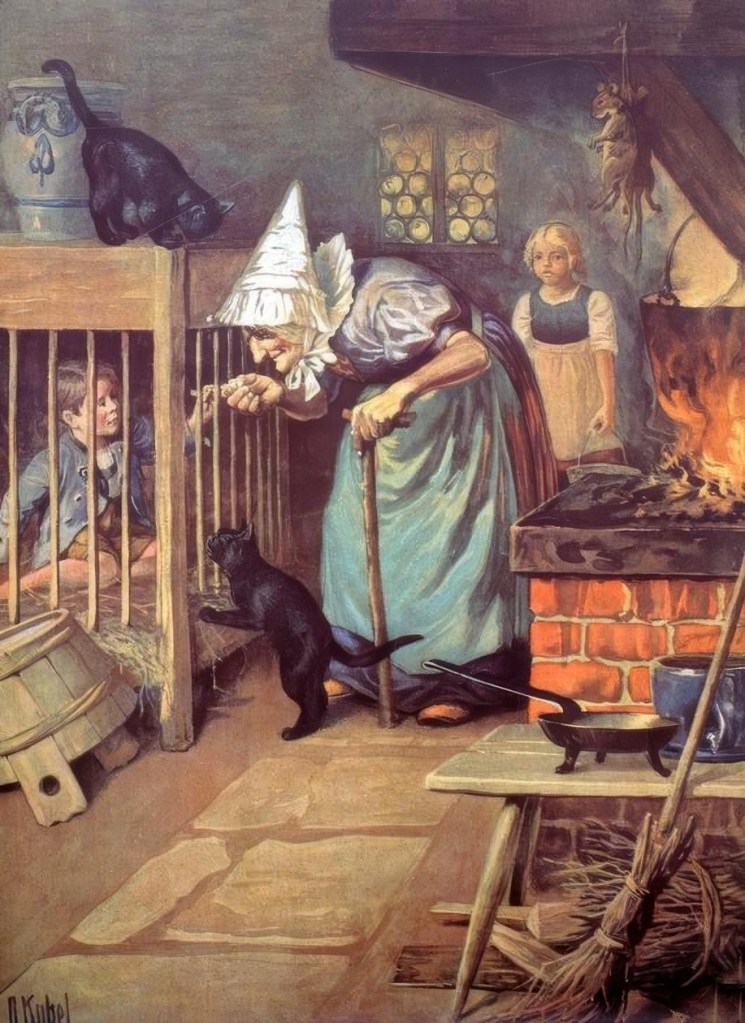
Indeed. This text suggests that the conditions at the fall of Jerusalem were far worse than we may have realized when we read Jeremiah’s account.
It wasn’t just the citizens who were wicked who warranted this judgment. Just as Jeremiah preached, we see in 4:13 that it was the priests and (phony) prophets who were just as guilty of murder, violence, and oppression.
One little detail you may have noticed is that in 4:21 we are told where the land of Uz is.
🤔 The land of Uz?
From Job. Remember? Job lived in the land of Uz. And it’s pronounced kinda like ootz.
🤔 Oh yeah. Where is it?
It’s the territory of Edom. Here:
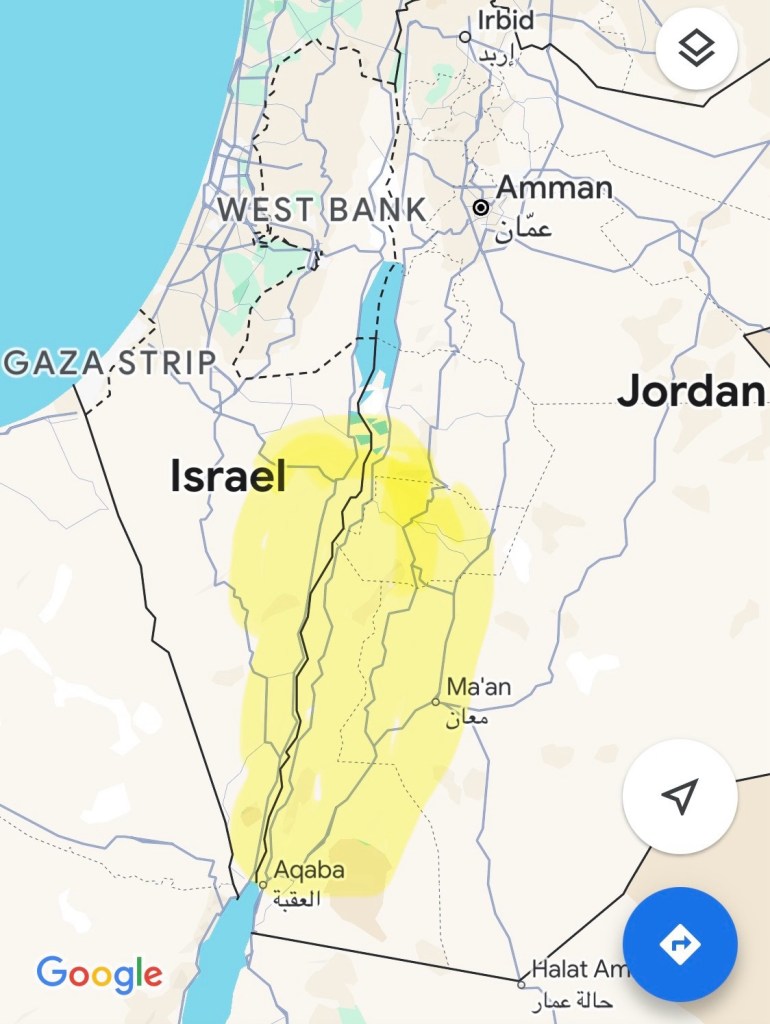
🤔 So Job lived somewhere in the yellow spot?
That seems to be what Lamentations 4:21 suggests. Could be slightly further east or south, but it’s a good starting point. My guess is that he lived east of the valley that runs from the Dead Sea to the Gulf of Aqaba because Job was “the greatest of all the men of the east.” So he had to be east of something significant.
The final lament, chapter 5, continues to describe the horrendous circumstances.
- Death
- They have to pay for even the most basic necessities like water or wood to make a fire
- They are vassals to other kingdoms
- Just getting food is a life or death risk
- Their physical appearances have changed due to starvation and exposure
- Women are routinely raped
- The Nobility are treated like criminals
- Young men and even small boys are forced into slavery with hard manual labor
- Music and culture have ceased to exist. There is no hope or joy. There is only survival. Or not.
At the end of all this, the writer sums it up by describing Judah as a prince whose crown has fallen from his head. And he expresses the realization which has FINALLY gotten through to the people: We were wrong.
“The crown has fallen from our head; woe to us, for we have sinned!”
Lamentations 5:16 ESV
It’s so very sad! All this tragedy could’ve been avoided if they had just believed the prophets and repented earlier. They have finally been made to see the truth – they had sinned and were far from Yahweh.
If the fall of Jerusalem is a microcosm of the global Day of Judgement (as Isaiah repeatedly compared), then we might draw a parallel from Lamentations. Perhaps, after at the final judgement, there will be people who come to the realization that those crazy Christians were right and they really DID need to repent. Only, it will be too late- just like for the people in Jerusalem. Death will be the only outcome.
The book of Lamentations ends with a request that goes unanswered:
“Restore us to yourself, O Lord, that we may be restored! Renew our days as of old— unless you have utterly rejected us, and you remain exceedingly angry with us.”
Lamentations 5:21-22 ESV
Perhaps that Divine silence is meant to point to the fact that in this particular instance, it’s “too late to ‘pologize.” (The chorus of this song sounds like something Yahweh could’ve sung to His people as Jerusalem fell.)
Even though many thousands perish and thousands more are scattered, the LORD has NOT cast off the whole nation forever. He already has a plan in motion to restore them and the world.
When we think about OT passages like this we must remember that our relationship to God is dramatically different than theirs because of Jesus. Those who trust in Christ have several advantages over these OT folks when we face severe adversity.
- We have the whole counsel of God (the complete Bible).
- We know (generally) how the future is going to unfold and God’s plan for His saints and planet earth.
- Christ has borne the wrath of God for our sins. Adversity isn’t divine punishment for our sin though it may be the natural consequence of it.
- We have the assurance of the Holy Spirit for our salvation and destiny after death.
- We have the indwelling Holy Spirit to comfort and empower us in difficult times.
- We have the specific biblical instruction and the example of the Apostles on how New-Covenant saints can face adversity in a way that honors the LORD.
- We can approach the throne of Grace boldly at any time knowing that Christ, our High Priest, intercedes for us.
Tomorrow we launch into the book of Ezekiel and we’ll find out that while the people in Judah and Jerusalem were going through all of these horrible judgments, there was another group already taken to Babylon and they had their own set of challenges.
 To The Reader