
“…and you shall know that I am the Lord.”
Ezekiel 6:7 ESV
This is a KEY phrase in the book of Ezekiel and appears more than 60 times!
If we get nothing else from Ezekiel, we should at least notice that the purpose for all of these prophecies is so that the people of Israel will KNOW that Yahweh is THE Sovereign God of the Universe.
Chapter 6 opens with a proclamation to the very geography of Israel. Ezekiel foretells the destruction of the land itself and in particular, the mountains. ⛰️
The mountains (as we have read many times up to this point) are the locations of the various idol shrines.
Last week we covered Jeremiah 51 and the message toward the “destroying mountain.” In that post, I wrote about how the ancients viewed mountains. Even today, very few people live on high mountains. They are much harder to access. Resources like crops and water are either rare or nonexistent. The weather can be treacherous and the helping hands of neighbors are few and far between. All of this was even more pronounced before the era of automobiles and electricity.
In the ancient world, mountains were the domains of the gods. And since the days of Solomon, Israel had their fair share of temples, altars, and shrines to other gods on their mountain tops. And Yahweh has had enough of it. In the very places where the children of Israel would prostrate themselves before foreign gods, Yahweh is going to see them slain. They will die in permanent prostration before a god that could not save them.
But Yahweh isn’t just angry. He’s hurt.
“Then when they are exiled among the nations, they will remember me. They will recognize how hurt I am by their unfaithful hearts and lustful eyes that long for their idols. Then at last they will hate themselves for all their detestable sins.”
Ezekiel 6:9 NLT
“Hurt” is not an emotion we typically associate with the Omnipotent One. This is yet another proof that the Creator is not some impersonal “Force” or “The Universe.” God Almighty has personality. Yahweh is a person. A Mind. A unique Being. He has emotions. If feeling hurt or angry or grieved was sinful, God wouldn’t be doing it because He does not sin. Feelings aren’t sinful. What we do with them has the potential to be sinful, but simply having a feeling is – I believe – part of what makes humans made in the image of God.
“Four Corners”
“And you, son of man, this is what the Lord God says to the land of Israel: ‘An end! The end is coming on the four corners of the land.” Ezekiel 7:2 NASB2020
Here is a map of Israel.
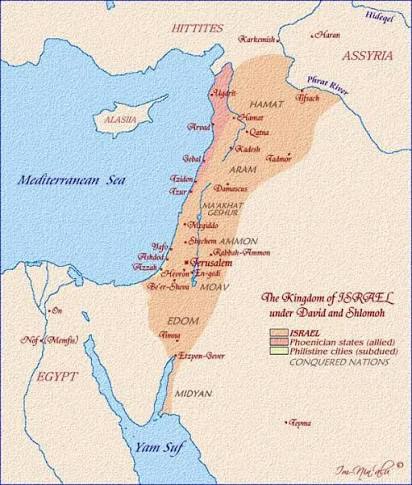
Do you see 4, 90-degree corners? It’s not a square. Or a rectangle. Its shape fluctuated all the time over 5 centuries. There are NOT 4 literal corners. (Please tell me I don’t have to explain the meaning of the word “literal” again and how a bunch of illiterate ignoramuses have highjacked its meaning through persistent misuse.)
😐 Oh….kay… you can skip defining literal.
Good. In the same way that there are NOT 4 literal corners of the land of Israel, there are NOT 4 literal “corners” of Earth. It’s not flat.
The Bible is a sophisticated piece of writing. THE most sophisticated piece of writing EVER. From the MOST intelligent Mind ever. It’s filled with poetry, idioms, metaphors, hyperbolic language, anthropomorphism, zoomorphism, legal code, and lots of other types of writing that a lot of people do not engage with on a regular basis. It’s not the Bible’s fault that some readers can’t tell the difference between an idiom and historical narrative, or hyperbole and analogy. And if we interpret it all the same way (literally), we will arrive at a flat earth on four pillars ruled by a feathered bird-god. You cannot cherry-pick some idioms to interpret as idioms and others to interpret literally.

K. Just needed to get that off my chest.
😏 Did you just use a non-literal idiom to express yourself as an example of how non-literal language works?
Yes. Yes I did.
And speaking of language with imagery…
“Forge a chain! For the land is full of bloody crimes and the city is full of violence.”
Ezekiel 7:23 ESV
This verse feels like it may have been Charles Dickens’ inspiration for the chain that bound the ghost of Jacob Marley…

Again the spectre raised a cry, and shook its chain and wrung its shadowy hands. “You are fettered,” said Scrooge, trembling. “Tell me why?”
“I wear the chain I forged in life,” replied the Ghost. “I made it link by link, and yard by yard; I girded it on of my own free-will, and of my own free-will I wore it. Is its pattern strange to you?” Scrooge trembled more and more. “Or would you know,” pursued the Ghost, “the weight and length of the strong coil you bear yourself? It was full as heavy and as long as this, seven Christmas-eves ago. You have laboured on it since. It is a ponderous chain!” – from A Christmas Carol by Charles Dickens.
⛓️⛓️⛓️⛓️⛓️⛓️⛓️
What Israel faced at their doom is a microcosm of what the entire world will face at the Day of Judgment. The idolatry on Israel’s mountains was only a thumbnail sketch compared to the idolatry of all the nations. Like Marley and Scrooge, many people today are forging a “ponderous chain.”
But, Scrooge and the residents of Judah and Jerusalem were given opportunities to repent; to change, to “sponge away the writing on this stone!” By Ezekiel’s time, the moment for national repentance had passed. Risky escape or certain death were the two options left by the time Ezekiel wrote this.
For those of us here on earth today, there is still a window of time for sinners to repent and change their behavior. That window will likewise close at some point. If that opportunity is not taken, as both Ezekiel and the “Ghost of Christmas Yet to Come” foretold, only death and the grave await.
 To The Reader