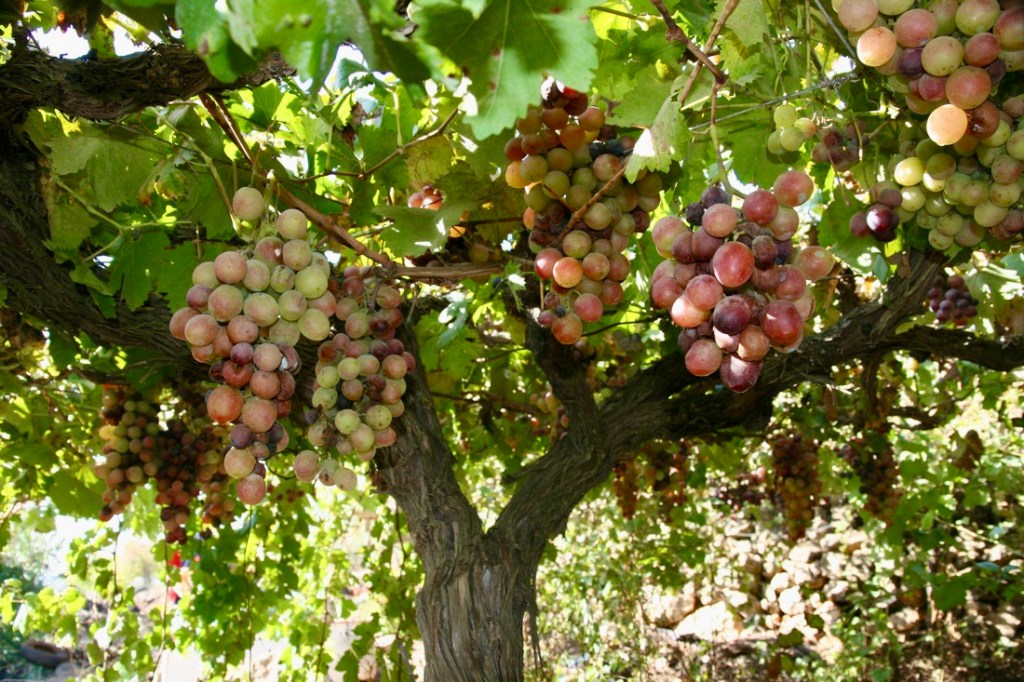
The Riddle of the Two Eagles 🦅 🦅
And the Proverb of Sour Grapes 🍇 😝
Chapter 17
In this chapter we get more details about the political maneuvering of King Zedekiah.
The two eagles are:
- The King of Babylon
- The King of Egypt
The King of Babylon plucked the “branch” (King Jeconiah/Jehoiachin and the royal family) from the highest tree (Jerusalem) and took it back to Babylon (exiles) and planted it there.
The King of Babylon also took a “seedling” (King Zedekiah) and planted it in fertile soil (made a treaty of peace). And the seedling grew into a vine.
Then another eagle showed up (Pharaoh) and the vine (Zedekiah) sent his roots and branches towards him (he broke the treaty he had made with the King of Babylon in the name of Yahweh and attempted to get out from under the oversight of Babylon with Egypt’s help).
This event seems to be the political catalyst that led to the destruction of Jerusalem. Breaking a sworn agreement to be loyal to Babylon was treason (as far as the Babylonians were concerned) and it was not tolerated.
At the end of this message the LORD adds this intriguing promise:
“This is what the Sovereign Lord says: I will take a branch from the top of a tall cedar, and I will plant it on the top of Israel’s highest mountain. It will become a majestic cedar, sending forth its branches and producing seed. Birds of every sort will nest in it, finding shelter in the shade of its branches.”
Ezekiel 17:22-23 NLT
Using the interpretation given by the LORD Himself in this chapter, we can surmise that the “branch” is a member of David’s royal family. When Zedekiah was “planted” in the riddle it meant that he was established as king by Babylon. So we can understand that the LORD is going to establish a king. Israel’s “highest mountain” is not talking about physical elevation. In the riddle, the “highest cedar” was Jerusalem.
So, Yahweh seems to be saying that He is going to take a member of David’s family and establish him as king in Jerusalem.
The part about the birds finding shelter in the tree’s branches is identical to Jesus’ description of the Kingdom of God:
“Here is another illustration Jesus used: “The Kingdom of Heaven is like a mustard seed planted in a field. It is the smallest of all seeds, but it becomes the largest of garden plants; it grows into a tree, and birds come and make nests in its branches.””
Matthew 13:31-32 NLT
“Then Jesus said, “What is the Kingdom of God like? How can I illustrate it? It is like a tiny mustard seed that a man planted in a garden; it grows and becomes a tree, and the birds make nests in its branches.””
Luke 13:18-19 NLT
👨🏻🔬 Cedar branches cannot become vines!! Mustards are not even woody shrubs. They cannot grow into trees. This is impossible! Those are three distinct taxonomic groups! Gasp! This is scientifically inaccurate!
In Ezekiel’s riddle, the branch from a cedar becomes a vine (he is diminished from independent sovereign to subjugated appointee). And in Jesus’ parable, the little mustard plant becomes a tree, (he is exalted from lesser to greater). This is capturing a concept. It isn’t meant to be “scientific.”
Chapter 18
I asked Google what the saying “don’t eat sour grapes” meant.
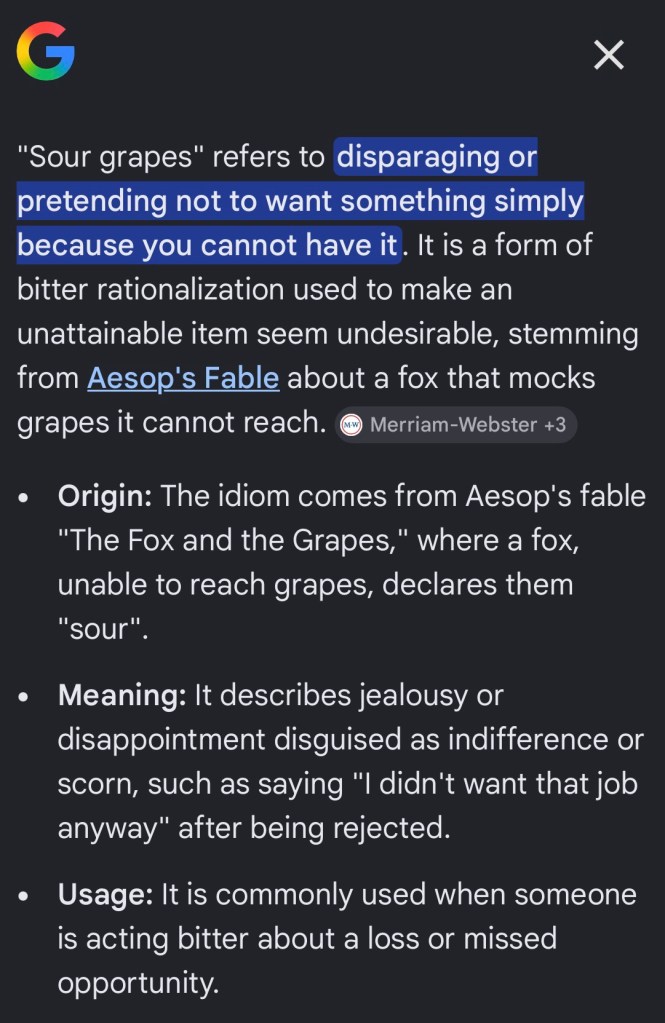
🤔 Oh yeah. I forgot about Aesop’s Fables.
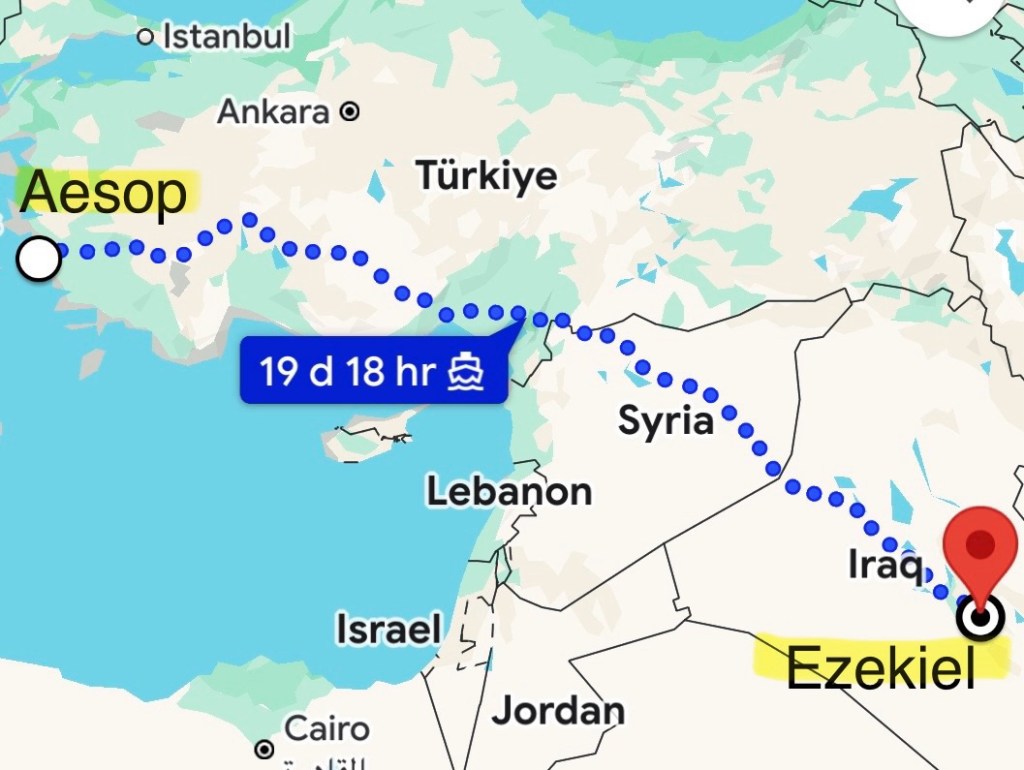
Interestingly, old Aesop himself lived at the same time as Ezekiel. He is believed to have lived around 620-564 BC.
The biblical proverb is a little different. It goes like this:
“The parents have eaten sour grapes, but their children’s mouths pucker at the taste.”
(Eze. 18:2 NLT)
The commentator A.R. Fausset compared this proverb to Adam eating the forbidden fruit which brought death upon his offspring. He also noted that this proverb’s sentiment is spelled out in a lament:
“Our ancestors sinned, but they have died— and we are suffering the punishment they deserved!”
Lamentations 5:7 NLT
Fausset goes on to say,
“They mean by “the children,” themselves, as though they were innocent, whereas they were far from being so. The partial reformation effected since Manasseh’s wicked reign, especially among the exiles at Chebar, was their ground for thinking so; but the improvement was only superficial and only fostered their self-righteous spirit, which sought anywhere but in themselves the cause of their calamities…”
The reason why God is not happy about this proverb is that it reinforces the idea of, “It’s not my fault. I’m a victim of my ancestor’s choices.”
Jeremiah has already shared a message about this proverb:
“The people will no longer quote this proverb: ‘The parents have eaten sour grapes, but their children’s mouths pucker at the taste.’ All people will die for their own sins—those who eat the sour grapes will be the ones whose mouths will pucker.”
Jeremiah 31:29-30 NLT
And the LORD repeats this message through Ezekiel.
“As surely as I live, says the Sovereign Lord, you will not quote this proverb anymore in Israel. For all people are mine to judge—both parents and children alike. And this is my rule: The person who sins is the one who will die.”
Ezekiel 18:3-4 NLT
Remember how in the last post we had the allegory of the cheating wife? Well, not only did this wife cheat, but she is literally blaming everyone BUT herself for her unfaithfulness.
“An adulterous woman consumes a man, then wipes her mouth and says, “What’s wrong with that?””
Proverbs 30:20 NLT
A society that normalizes blame-shifting, victim mentality, and self-justification, is a very toxic society.
This generation of exiles is going to learn this lesson. They are going to learn it so well that the proverb of the sour grapes will no longer be quoted.
The rest of the chapter is a series of scenarios and examples of what happens in a just society: people face the consequences of their own choices. They don’t get to play the victim card and blame society for their wickedness. They have the option to repent and turn away from wickedness. That’s what God wants them to do. And if they do, they will receive mercy.
“Therefore, I will judge each of you, O people of Israel, according to your actions, says the Sovereign Lord. Repent, and turn from your sins. Don’t let them destroy you! Put all your rebellion behind you, and find yourselves a new heart and a new spirit. For why should you die, O people of Israel? I don’t want you to die, says the Sovereign Lord. Turn back and live!”
Ezekiel 18:30-32 NLT
If you would like to geek-out on 11 minutes of theology related to this topic, I recommend this video by Dr. Leighton Flowers explaining the sinfulness of man and who is responsible for it.
In the next post Ezekiel sings a lament that uses a new metaphor for Israel – a pride of lions.