The “Sinking” of Tyre
These chapters are all about the city of Tyre so I think a little history review is in order.
Tyre or Tyrus was an old city. Wikipedia says it was founded in 2750 BC. If that’s so, Noah was still a young whipper-snapper at about 98. Archeologists say that 2750 BC was around the time that the great pyramids of Giza were built. Even if it was founded in 2750 BC, it would have to have been re-founded after the Flood (about 2469 BC).
So – point 1: Tyre is one of the most ancient cities on earth.
Point 2: Tyre has old ties with Israel.
Remember back when we read about David building his house and then Solomon building of the Temple? Who sent cedar wood and workers to build both of them?
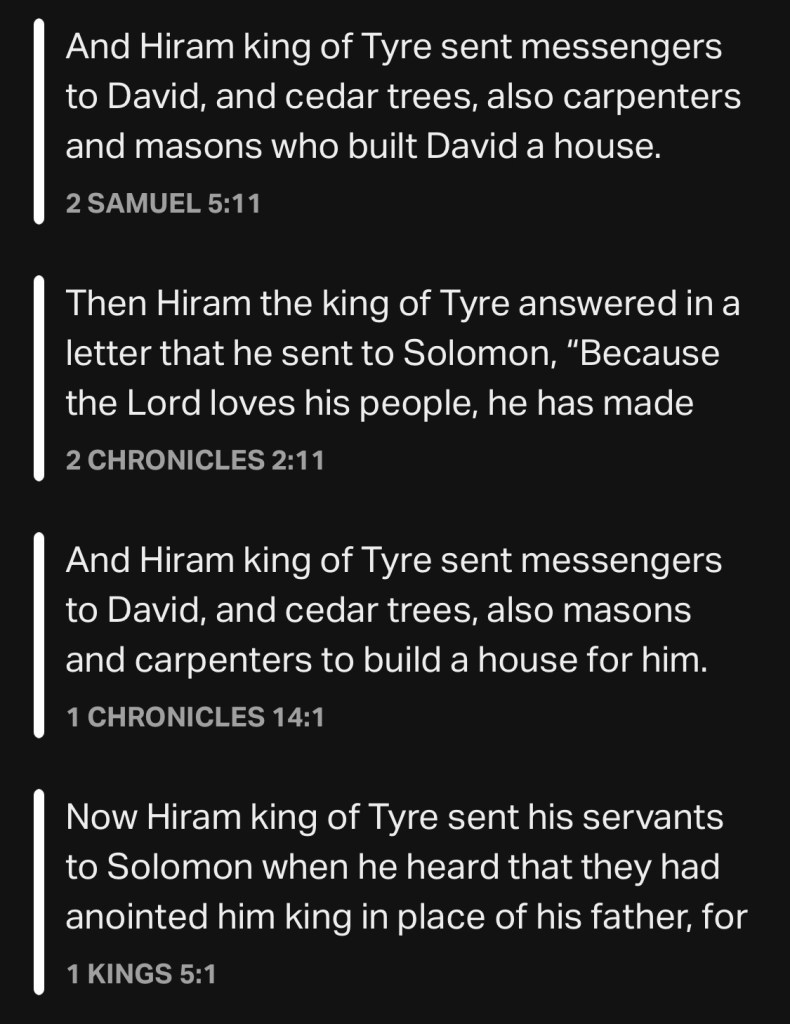
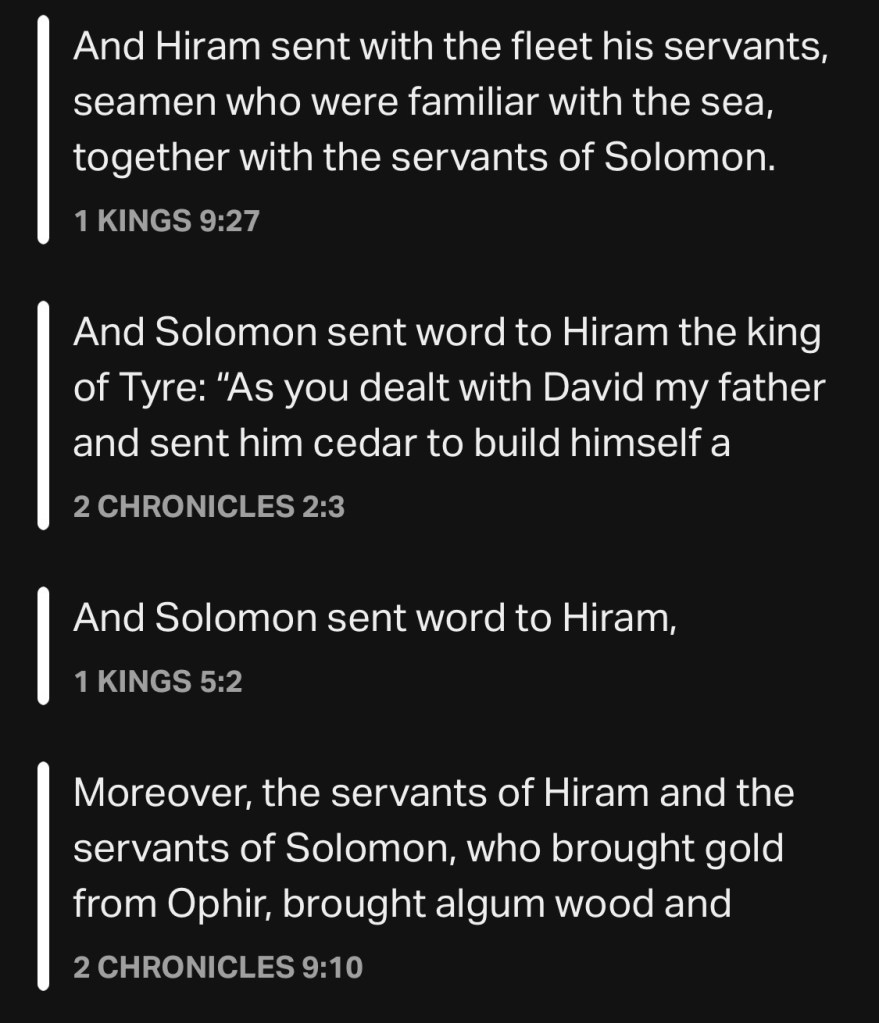
Tyre isn’t some random, distant place. It shows up a lot in Israel’s history because Tyre and Israel had been economic trading partners for centuries. That brings us to…
Point 3: Tyre was famous for its seafaring and trade. They even went to the mysterious land of Ophir and returned with gold.
“The king had a fleet of trading ships of Tarshish manned by the sailors sent by Hiram. Once every three years the ships returned, loaded with gold, silver, ivory, apes, and peacocks.”
2 Chronicles 9:21 NLT
😲 Three YEARS?! That’s a LOT of sailing! ⛵️
Yes. They could’ve ventured anywhere on earth in that time. 🌏 Tyre was RICH and globally influential. It might help to think of it as an ancient version of Singapore or Shanghai.
And then there’s the importance of these little guys:

The Tyrians were the first to discover how to make a purple dye from the Murex. It took a LOT of snails to make a small amount of dye. So much so that they were more valuable than gold.
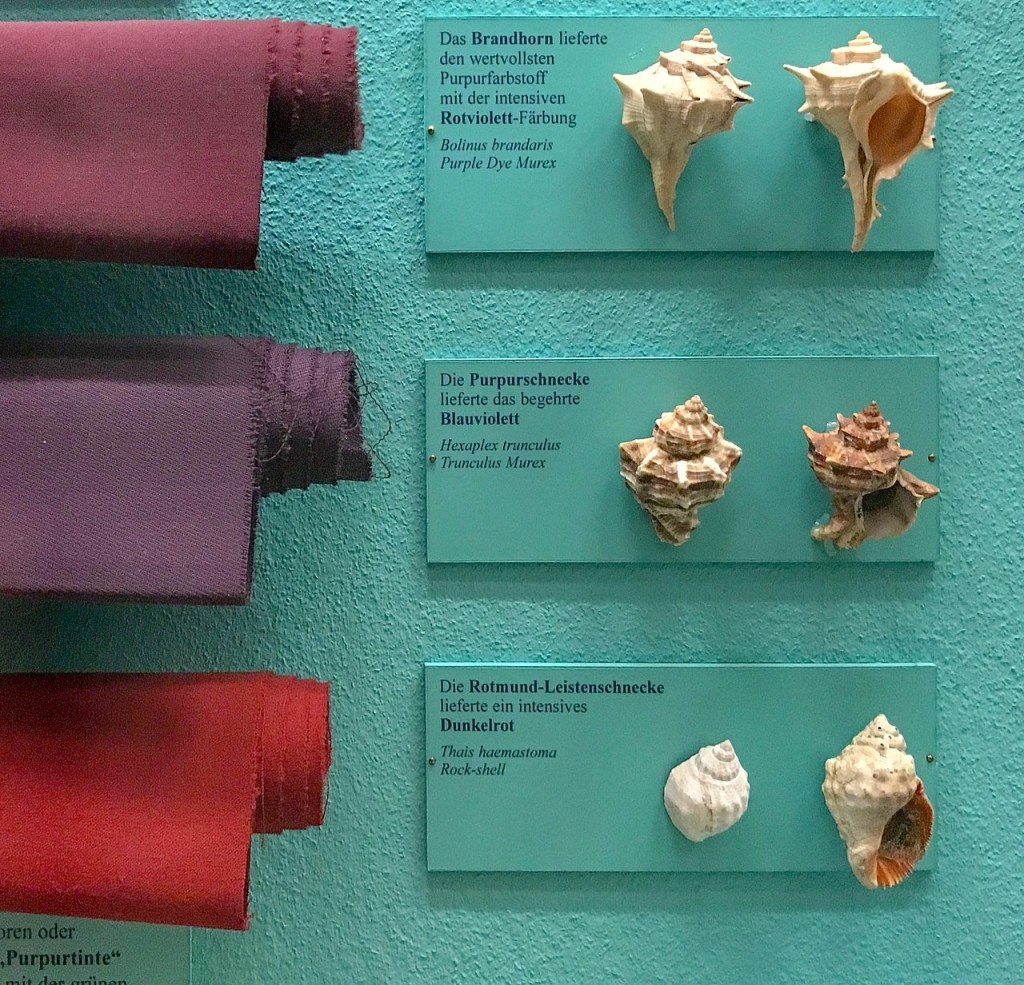
The color was so expensive to create that only kings and emperors could afford it and the color purple has been associated with royalty ever since.
Finally – Location, Location, Location…
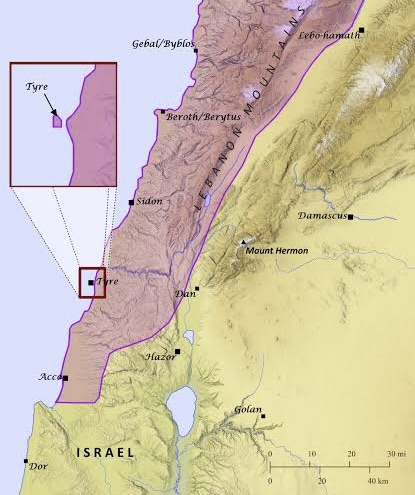
Remember the mighty Assyrians? They tried to conquer Tyre and failed. It was possibly the most secure city on earth.
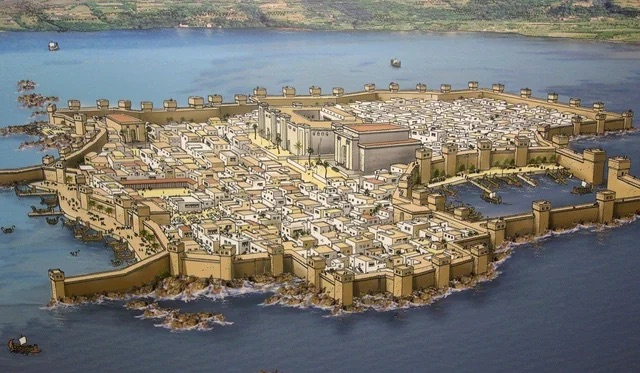
Part of Tyre was on the mainland but the island functioned like a fortress surrounded by a huge moat.
So… Tyre was…
- Ancient
- Wealthy with International Trade
- Innovative
- Influential
- Secure
With that in mind, we’re ready to tackle Ezekiel 26-28.
Prophecy of the Fall of Tyre – Ch. 26
Tyre has heard the news of Babylon’s siege of Jerusalem and the collapse of Judah. And, like the 4 nations in chapter 25, they are happy about it and anticipate an uptick in their economy. If overland trade routes are destabilized by war, guess what, trade will be rerouted by sea. And as one of the largest trading ports on the eastern Mediterranean, Tyre benefits.
God was not ok with Moab, Ammon, Edom, or Philistia cheering over Jerusalem’s fall and He’s not ok with Tyre either.
“Therefore, this is what the Sovereign Lord says: I am your enemy, O Tyre, and I will bring many nations against you, like the waves of the sea crashing against your shoreline.”
Ezekiel 26:3 NLT
This part of Ezekiel is precisely dated: February 3, 588 BC. Jerusalem will be destroyed within 2 years and then Nebuchadnezzar will march his formidable army to Tyre. This is how Google summarizes what happened next:
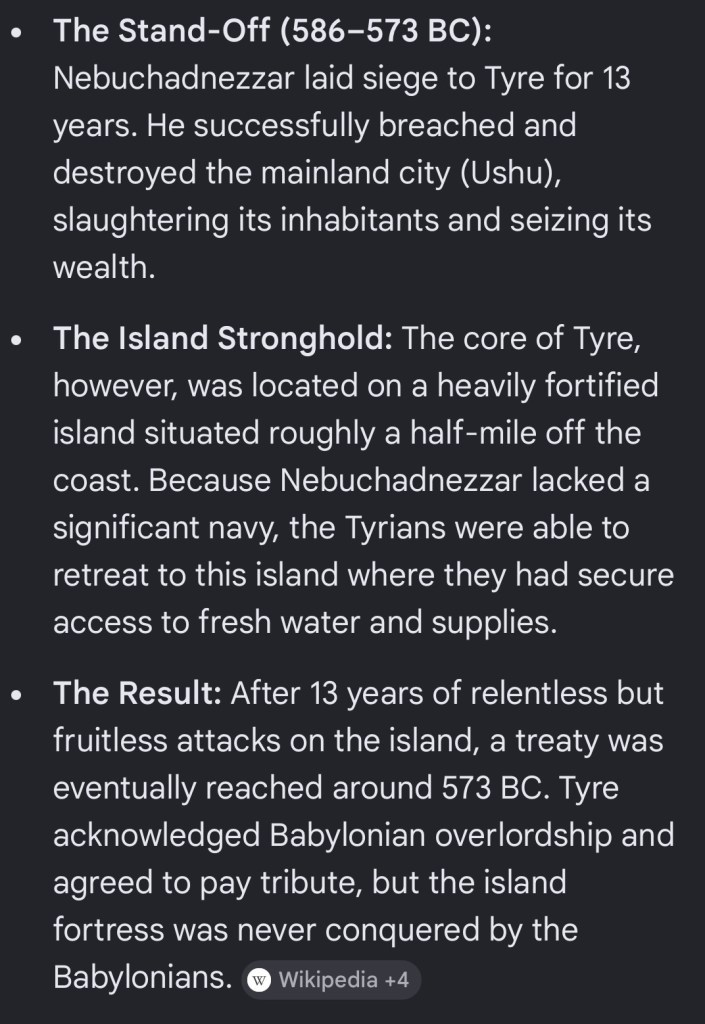
This wasn’t the end. God had said He would bring “many nations” against Tyre. After the Babylonians came the Persians who incorporated the city into their empire around 539 BC. It became an important naval hub… until it was conquered by Alexander the Great. He built nearly a mile of causeway to get to the island and guess what he used for building materials? The rubble from the mainland city Nebuchadnezzar had destroyed. After 7 months, he conquered Tyre around 332 BC.
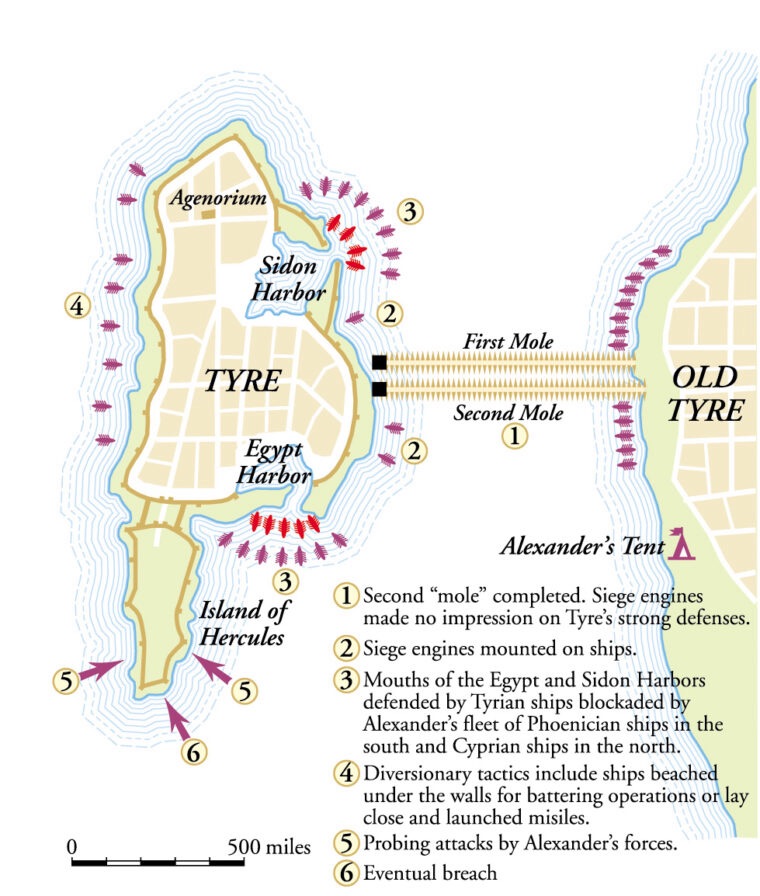
The causeway or “mole” between mainland and island interrupted ocean currents and began accumulating sand and silt. Now a whole peninsula has formed:
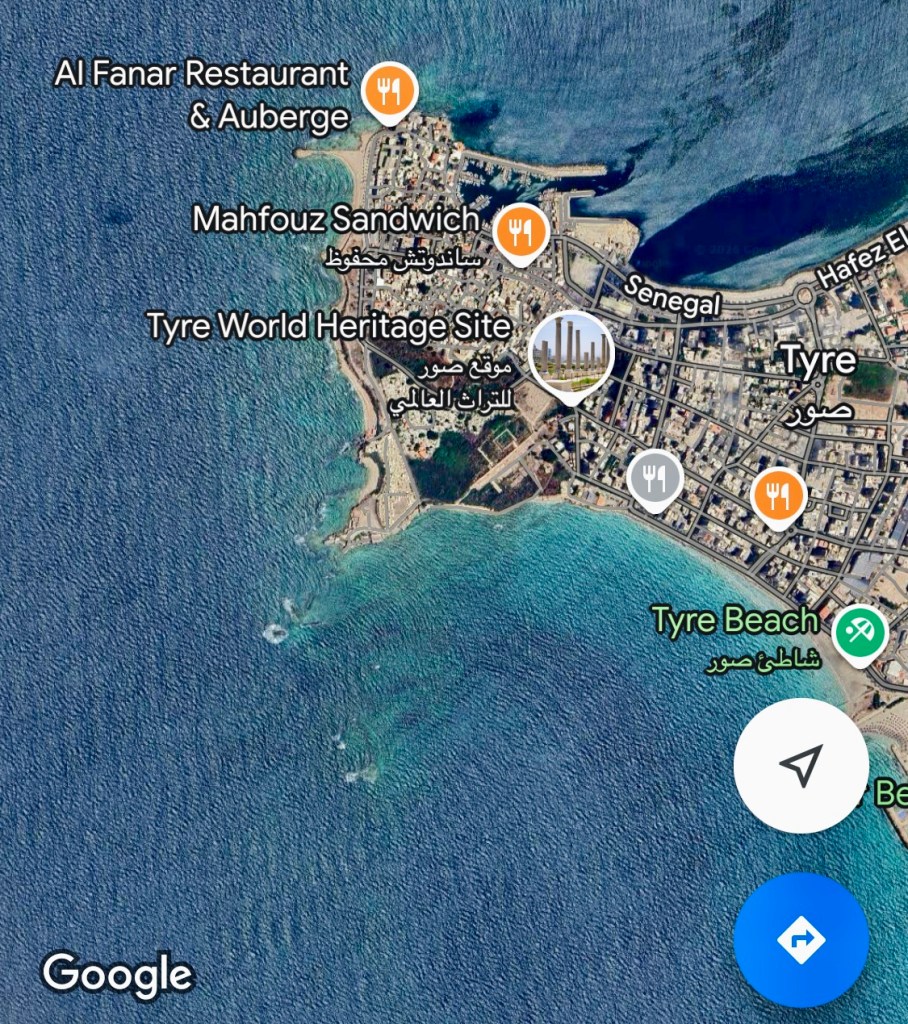
😏 There’s now a sandwich 🥪 shop on the spot that withstood 13 years of Nebuchadnezzar’s not-so-successful siege. Gotta respect the Tyrians.
Yeah. And it has great reviews. ⭐️⭐️⭐️⭐️⭐️
By the way, if you look closely at the picture above – just to the south of the old island area you can see submerged terrain. That was part of ancient Tyre that collapsed in an estimated 7.5 earthquake in 551 AD that triggered a tsunami.
The name Tyre/Tyrus means sharp rock, flint, flint knife. It was built on a “sharp rock” and reduced to a bare rock.
Lament for the Shipwreck of Tyre – Ch. 27
Chapter 27 is lament; a funeral song for Tyre. It’s kinda like having their funeral before they have passed.
In the song, Tyre is appropriately described with the metaphor of a beautiful and majestic merchant ship; sailing the seas and loaded down with valuable goods. And then the ship sinks in a violent storm.
One thing that stood out to me was the similarity between the language around the fall of Tyre here and the Fall of Babylon in Revelation 18:10-19. Both speak of their commerce and trade by ships. Both speak of their costly merchandise and the grief of the merchants upon witnessing the destruction. Tyre perishes in water while Mystery Babylon perishes in fire.
Prince, King, Fishery, and Future – Ch. 28
There are 4 distinct segments in chapter 28 and we will take them one by one.
It’s time to gird up the loins of thy mind. This is gonna get…involved.
😐 Sounds….formidable.
I’m going to just mention the Fishery first and get it out of the way.
That is referring to the city of Sidon. The name Sidon means fishery or to catch fish; which probably tells us what their main industry was. Sidon is under judgment too.
A Message for The PRINCE of Tyre
This message is directed toward the nagyid [naw-gheed] of Tyre; the governor, ruler, commander, leader, captain of Tyre. He is proud and arrogant and in the top 2% in intelligence. But he is a MAN and he is going to die like all men do.
I point this out because the next segment about the KING of Tyre raises a lot of debate. And we’re coming to that, but the text is VERY clear on the prince of Tyre. He is human:
“Son of man, say to the prince of Tyre, Thus says the Lord God: “Because your heart is proud, and you have said, ‘I am a god, I sit in the seat of the gods, in the heart of the seas,’ yet you are but a man, and no god, though you make your heart like the heart of a god.”
“Will you still say, ‘I am a god,’ in the presence of those who kill you, though you are but a man, and no god, in the hands of those who slay you?”
Ezekiel 28:2, 9 ESV
A Lament for The KING of Tyre
The previous word was a message. This is a lament; another funeral song. It is directed toward the “king of Tyre,” and it gets really strange, really fast. This “king of Tyre” is described as being “in Eden, the garden of God,” and bling’d out with more gems than a jewelry store.
“You were an anointed guardian cherub. I placed you; you were on the holy mountain of God; in the midst of the stones of fire you walked.”
Ezekiel 28:14 ESV
You know how we’ve encountered the “throne guardian cherubim?” Whoever this king of Tyre is, the text says he used to be one.
Now… many scholars take the position that this is very poetic language to speak of the human king of Tyre. And that is a defensible interpretation. This section is, after all, a song. Songs are full of metaphor and symbolic language. God could refer to the king of Tyre as a cherub in Eden just like He referred to Tyre as a merchant ship sailing around the world. That was a song too. So why are we not consistent in our interpretation? Why is the ship song symbolic but the cherub song is literal? No one is making the argument that the city of Tyre was literally a ship with sails floating around the Mediterranean, but because the metaphor for the King of Tyre is a cherub, we suddenly insist that it must be talking about a literal angelic being.
I say all this to point out why some scholars would find this reasoning inconsistent.
Another position is that this “king of Tyre” section is a talking about a supernatural being; a fallen cherub. Some connect this fallen cherub with the Serpent of Eden, known in the NT as the Devil and Satan (Rev. 12:9, 20:2).
I don’t think those two views must be mutually exclusive. Ezekiel’s readers would’ve been familiar with the narrative of a rebel supernatural being in the Garden of Eden; and how he lured the humans into sin with promises of tempting things. That story helps communicate a warning to a city that is so cock-sure of its own power and cleverness and security that it just does what it wants. If God can throw the arrogant cherub of Eden out of the mountain of God, Tyre’s island fortress and proud king will not be enough to protect it.
Let’s Address the Theological Elephant in the Room head-on…
This is the passage where people get the idea which I have heard repeated all my life… “Satan was the worship leader in heaven.”
I am going to push back on that idea.
Where does the text actually SAY that?
That whole idea comes from 2 Hebrew words in verse 13 that are translated in the King James as “pipes” and “tabrets,” which are musical instruments. Two words. That’s not enough to build a doctrine. Yet I have heard preachers wax eloquent on how Lucifer had musical instruments built into his body and he led the praises of heaven.
Ok. Even IF we built doctrine on 2 words in a single verse of scripture – WHICH WE DO NOT – those words only appear in the KJV. More recent discoveries that assist in translation have led to better translations of:
- “Craftsmanship of your settings and mountings” LEB
- “Workmanship of your settings and sockets” NASB
- “Crafted in gold were your settings and your engravings.” ESV
The language of jewelry settings is appropriate given the context of gemstones.
Let’s dig in further…
Here is the Hebrew word translated in KJV as “pipes” and in other versions as “mountings,” “sockets,” and engravings.”
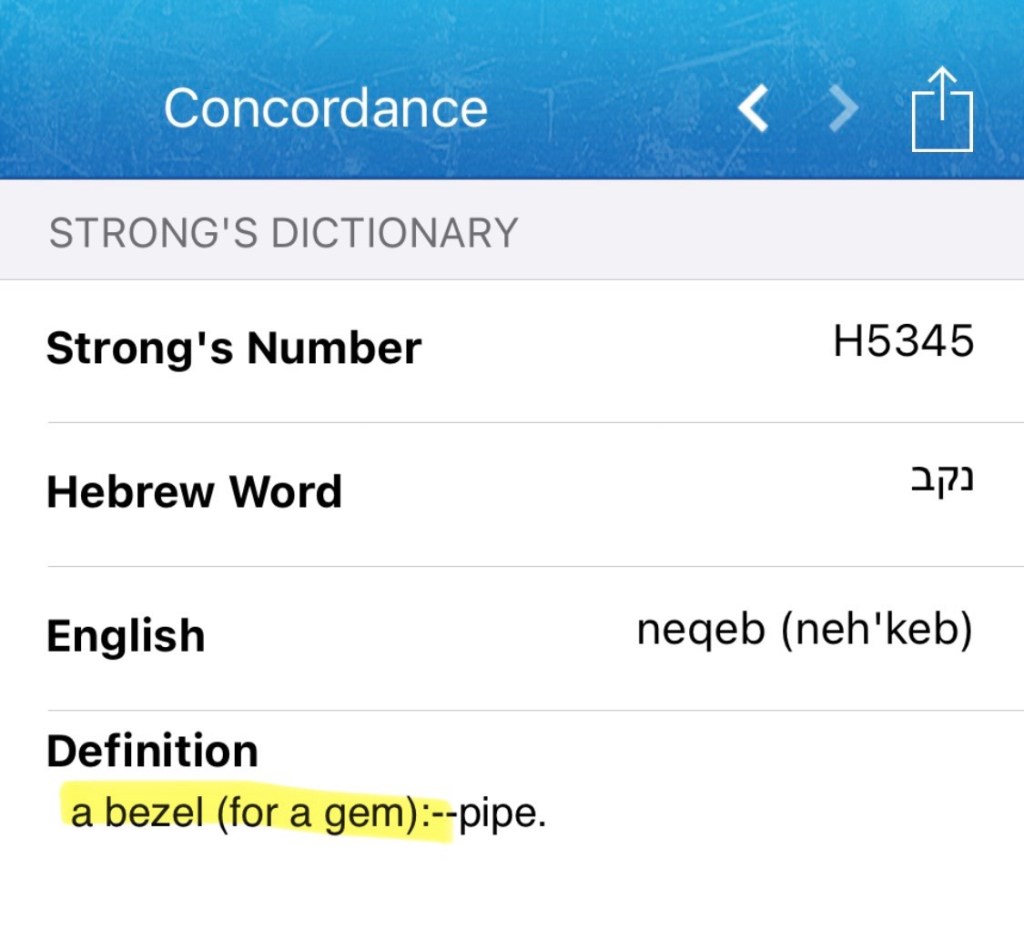
This word appears only here in all of scripture. When we read “pipes” elsewhere and it refers to musical instruments, it’s this word:
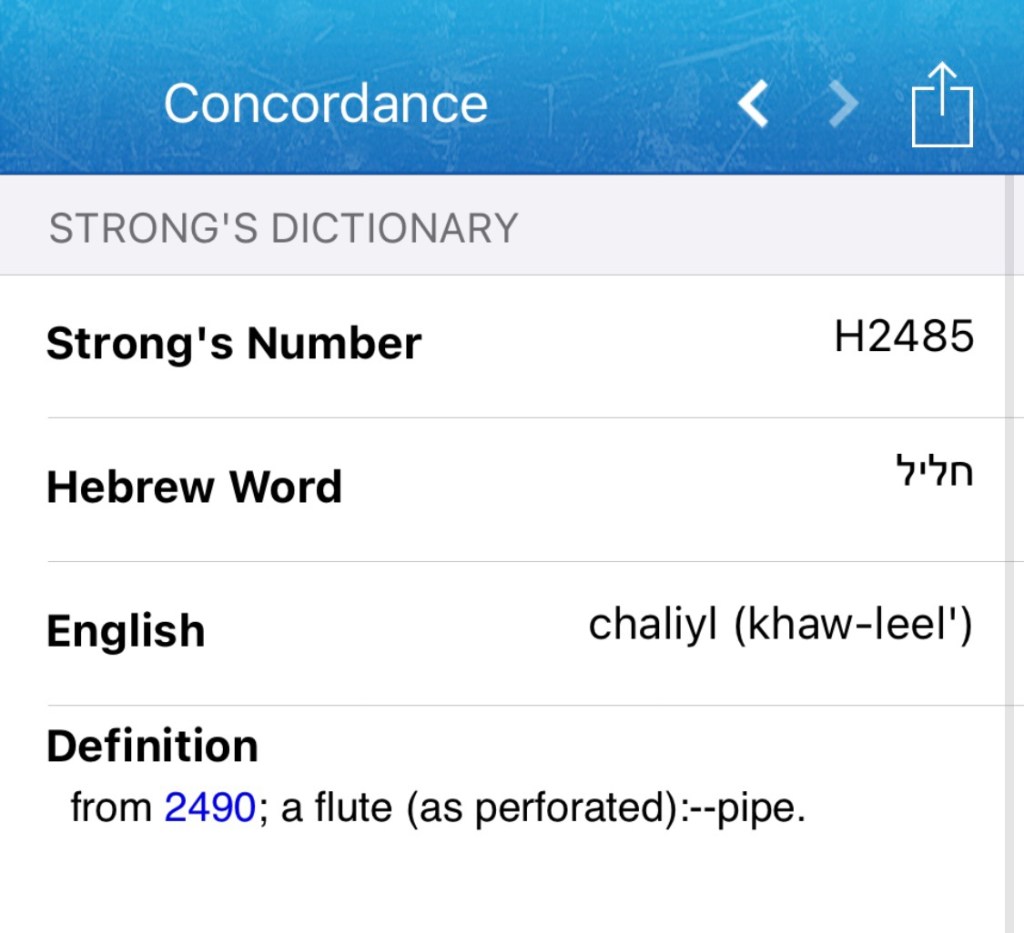
The text is clearly talking about gemstones, not musical instruments.
🤔 But what about the tabret?
You mean this?
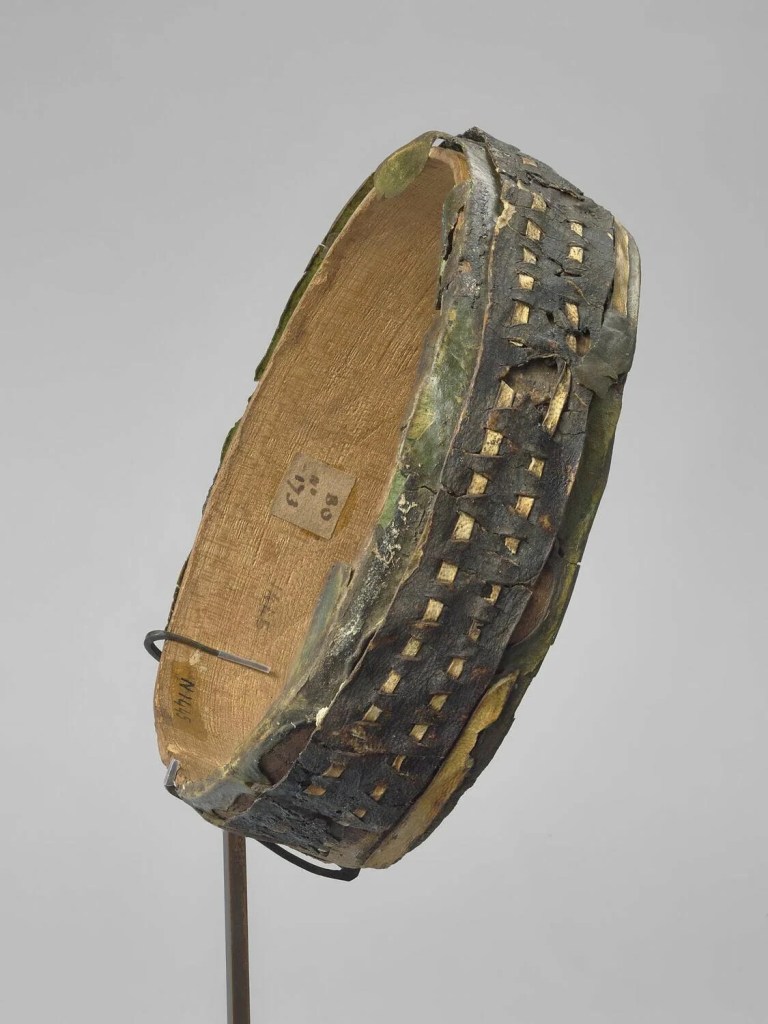
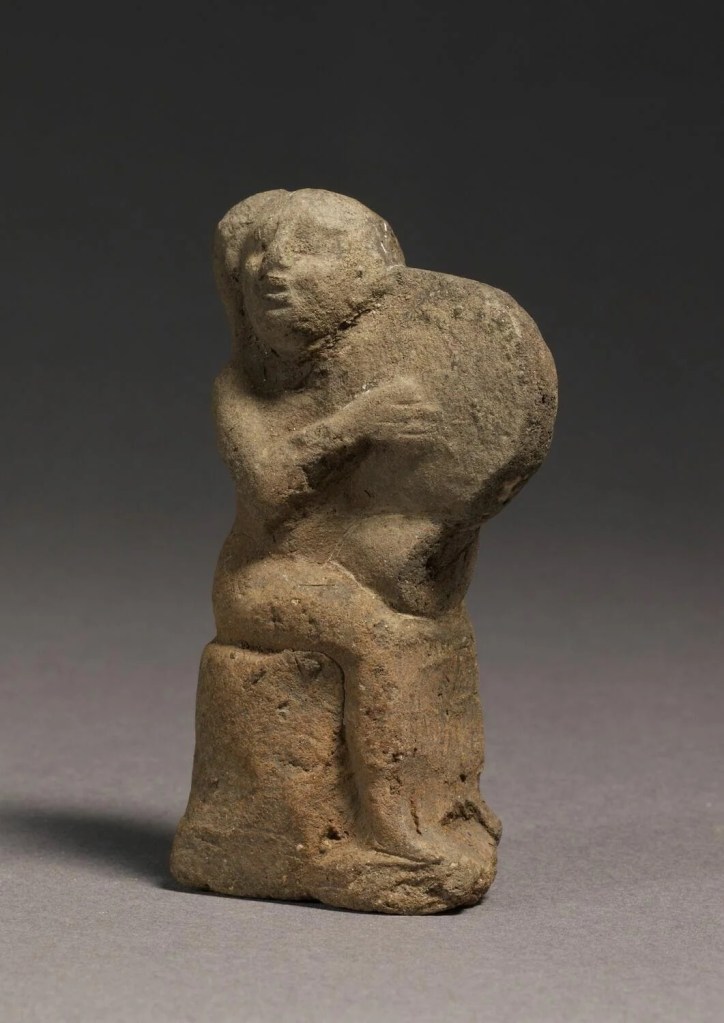
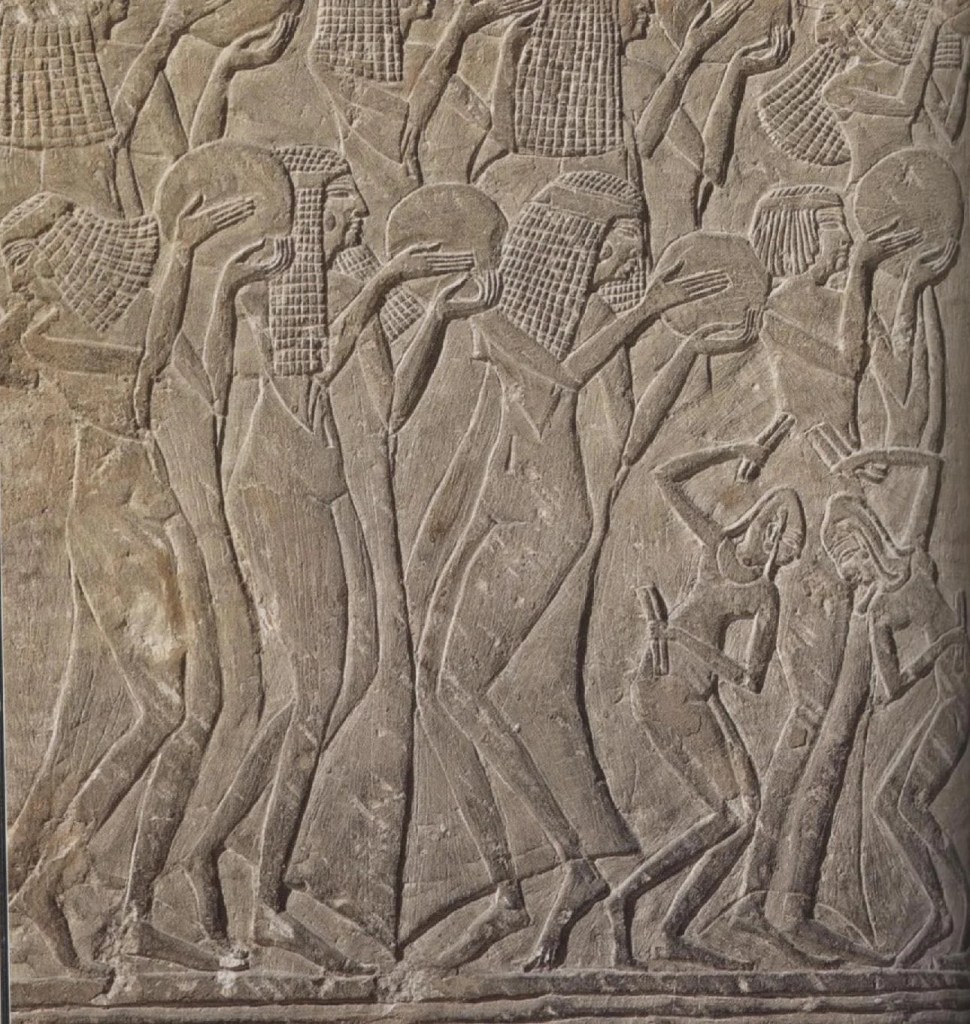
A tabret was a wood or metal frame hand-drum. I’m a drummer and I can turn anything into a percussion instrument including my own knees but that doesn’t mean my knees are literally drums. Sometimes ancient tabrets had metal rings attached to the rim like this:
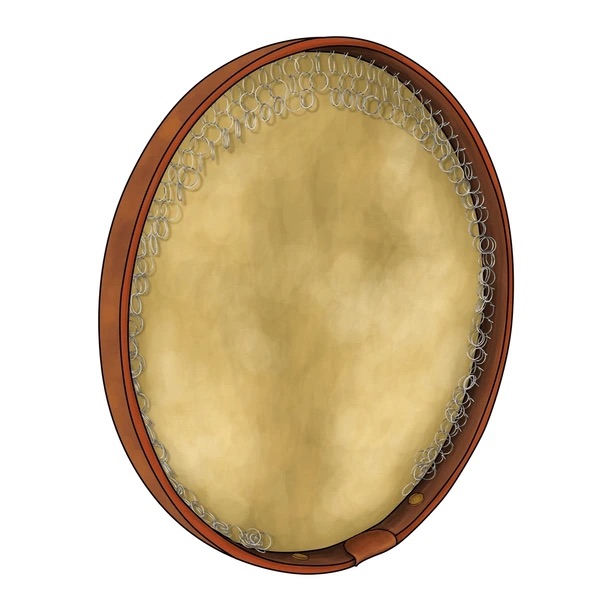
The word in Hebrew for tabret is toph. Here are the Hebrew words in the text for Ezekiel 18:13: MLKA TP (translated as workmanship settings).
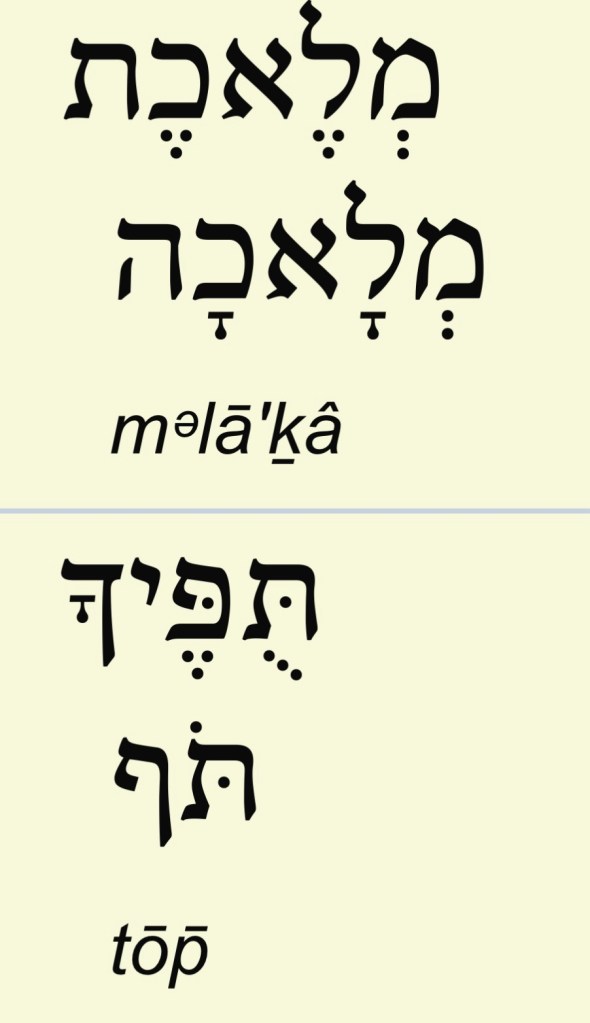
That’s Mem, Lamed, Aleph, Kaf, Hey
Compare the above to this Hebrew word used to describe the setting of the stones in the breastplate of the high priest:
Mem, Lamed, Aleph, Hey
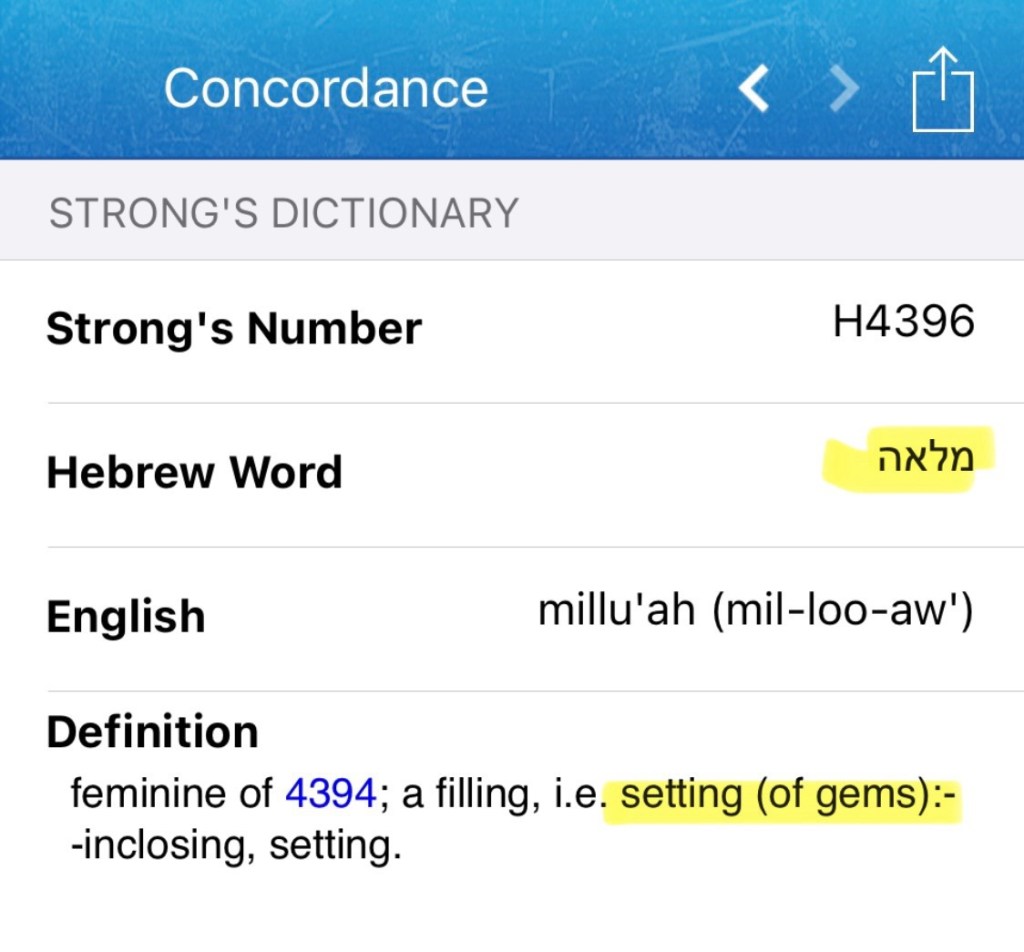
It’s the feminine form of this word:
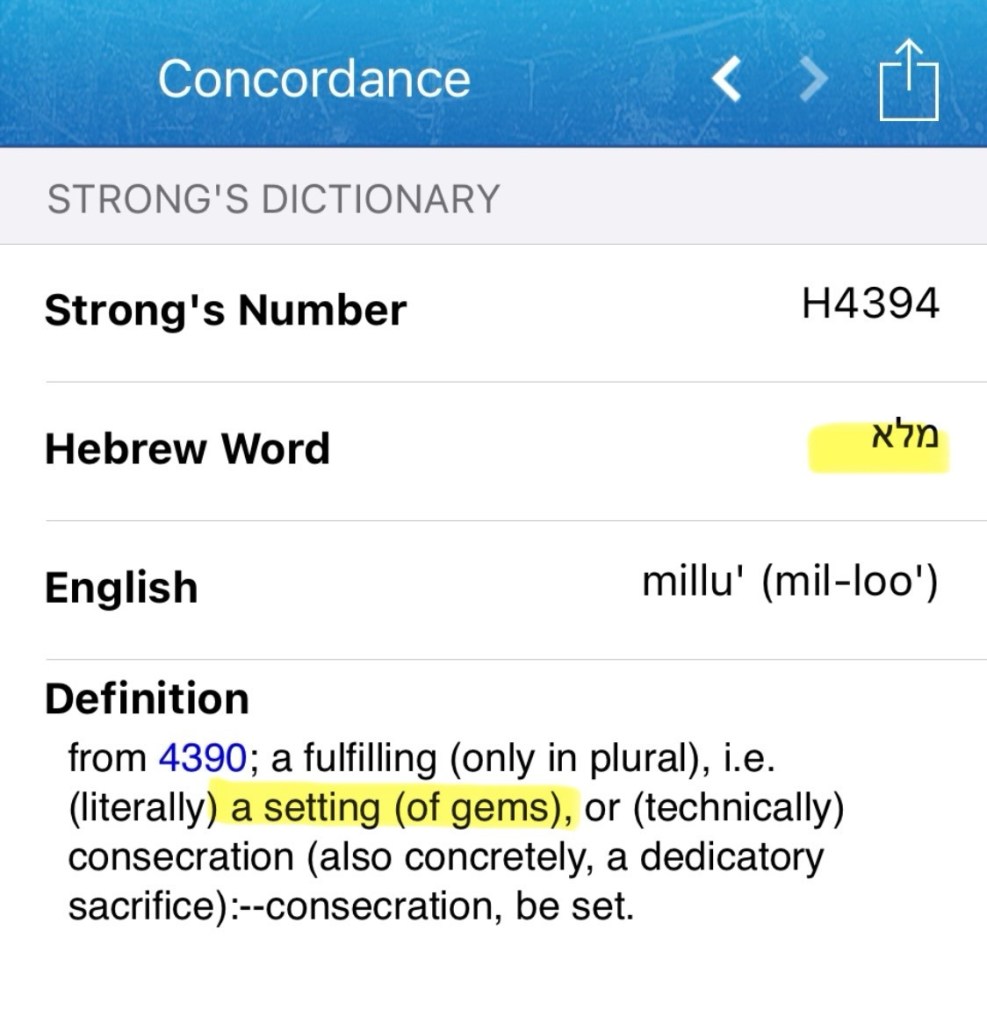
The vowel pointings (which didn’t exist until way after the time of Jesus) differ but the fundamental 3-letter “lemma” is the same for both workmanship and setting of gems.
Here’s the word toph:
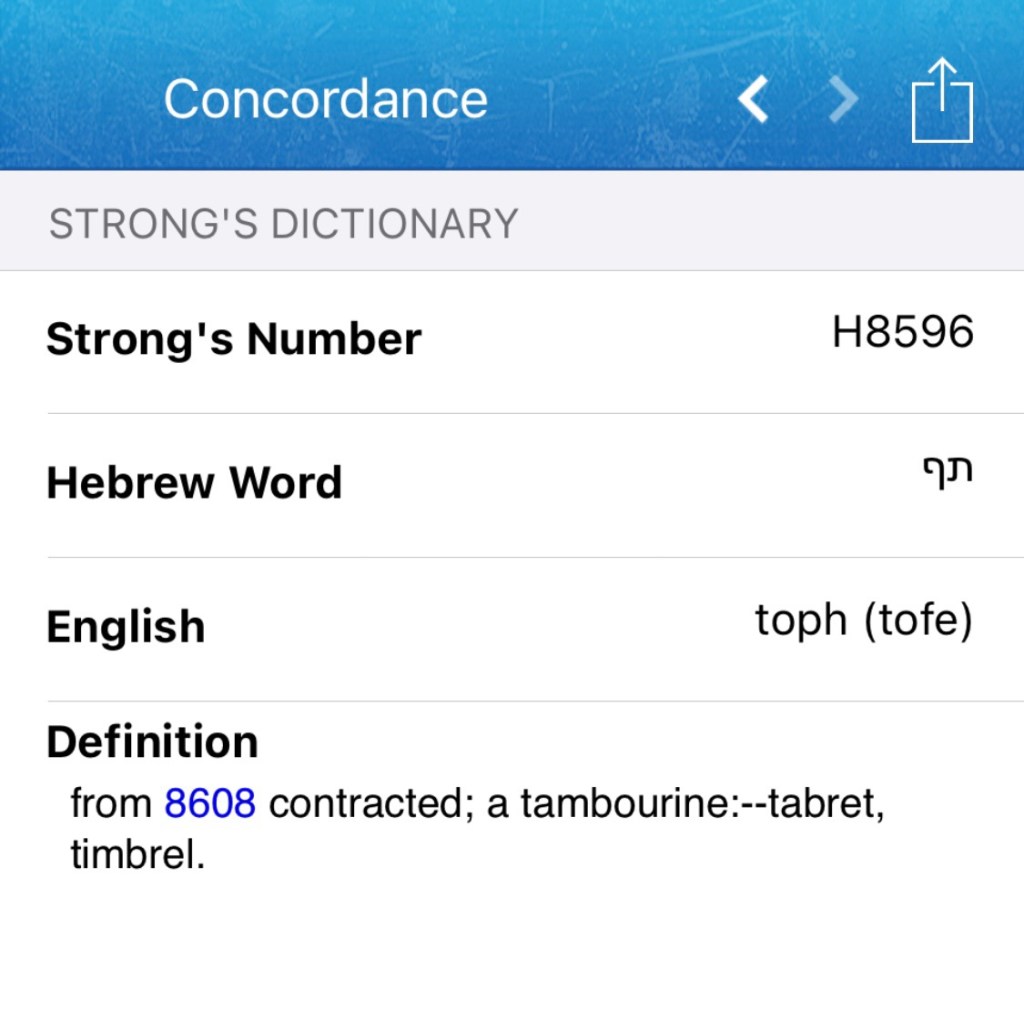
Two letters: tav and peh.
Tav is the mark, strong indicator: This. That.
Peh is the picture of a mouth and means edge or rim – like the edge or lip that holds the gemstone in place; the setting.
Toph means: That rim. That edge.
We could even understand it as: Edge! Rim!
That describes both a hand-drum and a socket/mounting.
And toph is qualified by meleka (workmanship) which fits the context of beveling and setting stones more than it does beating a drum.
Sometimes we hear people say things and it sounds cool and we may even hear it repeated so many times that we assume it is true. Things like, “Satan was the worship leader in heaven…” and it sounds convincing.
I have a fair question:
Why would heaven need a worship leader?
My hot take: when you come face to face with God Almighty and your Redeemer the Lord Jesus, you will not need anyone – human or angelic – to tell you, “Let’s all stand and praise the LORD.” Or “Somebody better give God some praise up in here!”
Seriously. My job will be over. No one will need me to inspire them when the Source of inspiration is before them. And I will get to join the congregation and simply worship.
We see cherubim in the text of scripture worshiping Yahweh (Rev. 4:8) but we don’t see them playing instruments or directing the heavenly choir.
Perhaps the fallen cherub in Ezekiel 28 had not been a worship leader but a worshiper; (like all the rest of the heavenly host), no built-in instruments necessary.
If heaven ever had a worship leader, and if that worship leader was a being called Lucifer, then I’m not convinced that Ezekiel 28:13 is the text that proves it.
And even if it did, since when do we build entire theologies on a single verse (in the mouth of only one witness)?
Do I think that Ezekiel 28:11-19 is about Satan? Well, I think it’s clear that a rebel cherub in Eden is in the matrix of ideas in this text. Do I think that Ezekiel 28:11-19 is addressing Satan exclusively? No. No I don’t.
Is or was Satan “the King of Tyre?” If he is or was, then perhaps this is directly aimed at him. Or could it be that the rebel cherub in Eden was a good analog for the proud and bedazzle-robed (human) king of Tyre who lived in a paradise as secure as heaven itself? And perhaps God is speaking to the human king of Tyre as if he were a rebel cherub who had everything he could wish for and still went bad. I don’t see any reason why BOTH can’t be in view here. But I think that saying this passage teaches that the Devil used to be heaven’s worship leader is a stretch. A B-I-G stretch.
It can be uncomfortable to wrestle with different views and challenge our own with thorough examination. And it can be very hard; especially if we want a certain interpretation to be true because it’s exciting.
One thing we have to guard against is having secret knowledge that makes us feel special or superior. That is dangerous. It’s the foundation of Gnosticism and it creeps into the Church more often than you’d think. Like- “I’m special because I can see the hidden meaning in this text that the commoners can’t see.” Be careful. That’s pride. None of us would see diddly-squat if not for our gracious Savior opening our blind eyes and shining light into the darkness of our thick skulls.
Most people I talk to want a definitive answer: “This verse means that and that’s the RIGHT interpretation. Period. End of discussion. I’m gonna bolt it down and set it in concrete. And anybody who comes along with a different idea is gonna get a side-eye.”
Some texts and doctrines DO work that way. The fundamentals of the Gospel that Christians have all agreed on since the apostles… those don’t change and we will die on that hill. Literally.
But some texts are less clear or have layers of meaning.
☝🏼🤓 Like my mom had “layers of meaning” when she would ask me what my shoes were doing laying in the middle of the floor. Layer 1: draw attention to the wrong location of the shoes. Layer 2: suggesting that I move them.
Exactly.
And we need to keep digging at those texts with a humble heart and an open mind; always using sound interpretive principles and submitting ourselves and our interpretations to the Body of Christ for evaluation and correction.
Ok. I hope that wasn’t nearly as exhausting for you as it was for me. 😉 Let’s wrap up.
Promise of a Future for Israel
The final two verses must have seemed like impossible promises during the 70 years of captivity. Yahweh says He is going to bring the scattered descendants of Jacob back to the Promised Land. They will build houses and plant vineyards. And all the nations currently treating them with contempt will be punished.
If we put ourselves in their shoes and looked around at the circumstances – Babylon is winning. Judah has collapsed and the capital is under siege. The properties they left behind are being looted and taken over by squatters. They have no freedom or means to retake their country. It is OVER.
But when God says something is going to happen, mark it down. No matter how impossible it seems, it’s going to happen.
In the next 4 chapters, Yahweh is going to announce the most impossible feat yet. He’s going to bring down the mightiest civilization of the ancient world: Egypt.

