Prophecy and Lament for Pharaoh & Egypt
Chapter 29 was a message that came in year 10, month 10. Chapter 30 was a couple months later. And again, a couple months after that, Ezekiel is given another message about Pharaoh and Egypt.
“In the eleventh year, in the third month, on the first day of the month, the word of the Lord came to me:”
Ezekiel 31:1 ESV
And in this message he compares Pharaoh and the Egyptians – not to a crocodile – but to the Greatest Cedar Tree on earth. 🌲
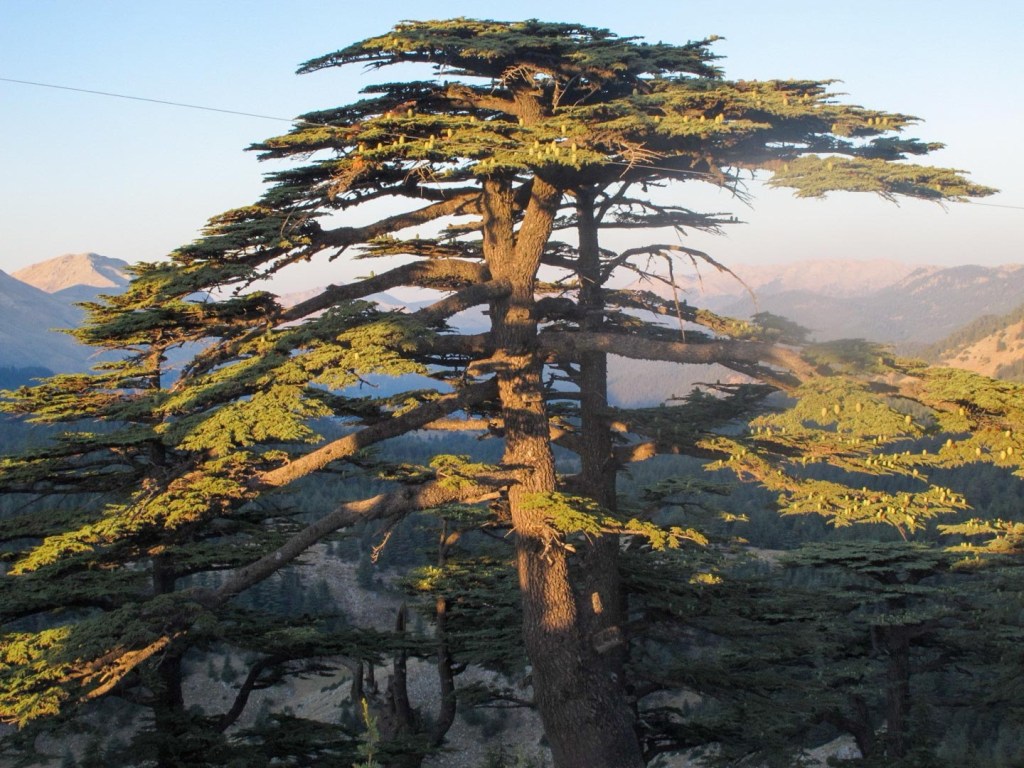
Egypt is described in glowing terms as even the envy of the trees in Eden. But it is cut down. And of all the strange poetic things, we get the imagery of a tree in the underworld and everyone is shocked and appalled.
If anyone wants to nerd-out and follow a rabbit trail I recommend looking up the passages referenced below and doing some digging on this. Because technically, the text compares Pharaoh to “Assyria” or “the Assyrian.” It’s the Assyrian who is the great tree. And Pharaoh is compared to him.
Another mention of “the Assyrian” is in Isaiah 14:25 – in the famous chapter about Lucifer. It shows up again in Isaiah 30:31 in the context of a very Revelation-like final judgment; and in Isaiah 31:8 in another end-times-vibe context where God swoops in to fight for Jerusalem. There is yet another appearance of “the Assyrian” in Micah 5:5 and the context is the Messiah from Bethlehem showing up to defend the flock of Israel from “the Assyrian.”
The Assyrian Empire was once the superpower but they are quickly fading from history. Like Assyria, Egypt (as an empire) is about to find itself dead and in the Underworld of nations.
So if Assyria is gone, what’s it doing showing up in all these end-time contexts?
This has led some to speculate that “the Assyrian” is a code-name for, or OT picture of the Antichrist.
If that is the case, then Pharaoh – who has already been called a DRAGON – is also being given a possible antichrist connotation.
We have already seen repeatedly that these OT judgement days seem to function as miniatures of the final, global Judgement Day. And the Antichrist figures hugely in that Judgement Day.
Who or what is the Antichrist (also called The Beast)? The main thing is that he is the incarnation of Satan – the Serpent of Eden.
And did you notice the Edenic language in this chapter? This great cedar tree (the Assyrian) was more beautiful and exalted above all the other trees in Eden. It’s very similar to the cherub in Ezekiel 28:7 – its heart is lifted up because of its beauty and wisdom. And it is thrown out of Eden and into the netherworld.
I feel like there could be some double-entendre here. Pharaoh (who is a man who believes himself to be divine and is worshiped as a deity) would be a fair comparison to the Beast of Revelation who is also a man that claims divinity and is worshiped as a deity.
After receiving this message, Ezekiel’s life returns to normal for a while. Then…
A year and 9 months later…
“In the twelfth year, in the twelfth month, on the first day of the month, the word of the Lord came to me:”
Ezekiel 32:1 ESV
The Lord gives Ezekiel another prophetic lament over Egypt…
And again, Pharaoh is compared to a Dragon (tanniyn) in the River (Nile). And again the monster is caught and hauled out of the water. It’s a very similar song to the one in chapter 29. Again the dragon is fed to the beasts of the field and the fowls of the heavens.
And there is again this language that feels like it came straight out of Judgement Day in Revelation:
“When I blot you out, I will cover the heavens and make their stars dark; I will cover the sun with a cloud, and the moon shall not give its light. All the bright lights of heaven will I make dark over you, and put darkness on your land, declares the Lord God.”
Ezekiel 32:7-8 ESV
God can take down Pharaoh, and He can take down the Antichrist. They each face “the Day of the Lord.”
Then, two weeks later, Ezekiel is given the final prophecy for Egypt…
“In the twelfth year, in the twelfth month, on the fifteenth day of the month, the word of the Lord came to me:”
Ezekiel 32:17 ESV
Ezekiel is told to condemn Egypt to the Grave and then he names all the other nations inhabiting the Underworld. It seems like a way to say, “all those other nations thought they were invincible too, now look at them, they’re all dead.”
- Assyria
- Elam
- Meshech-Tubal
- Edom
- Princes of the North
- Sidonians
Now, if you are a Bible nerd who geeks out over prophecy, the name Meshech-Tubal probably caught your attention because the “chief” of that place is a mysterious character called Gog from the land of Magog. We’re going to get to him soon in Ezekiel 38-29. The only other place Gog shows up is Revelation 20:8. Magog first appears in Genesis 10:2. He’s the son of Japheth, grandson of Noah. When you have names that pop up in both the beginning and the end, that gets your attention.
The point here in Ezekiel is that the terrorists of Meshech-Tubal are all in Sheol. They used to bully people around and be the big kid on the block. But now they are nothing. They aren’t even buried with military honors.
They and the other once-powerful peoples are all stuck in the realm of the dead. Egypt is headed to join them; a once-powerful civilization consigned to the dustbin of history.
It’s something to keep in mind when powerful nations today throw their weight around. Eventually, they all fall. The only people who escape the grave are the saints of the Lord Jesus Christ.

