The Fiery Furnace
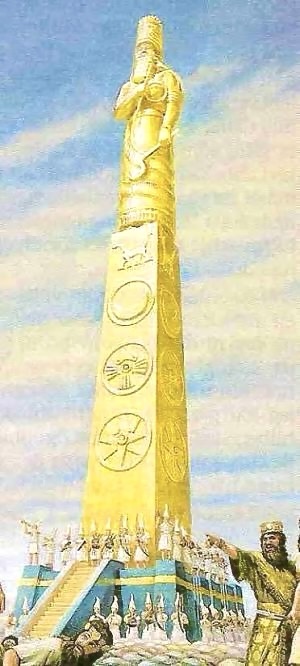
“King Nebuchadnezzar made a gold statue ninety feet tall and nine feet wide and set it up on the plain of Dura in the province of Babylon.”
Daniel 3:1 NLT
The first thing you notice is…
😐 That’s one tall skinny statue.
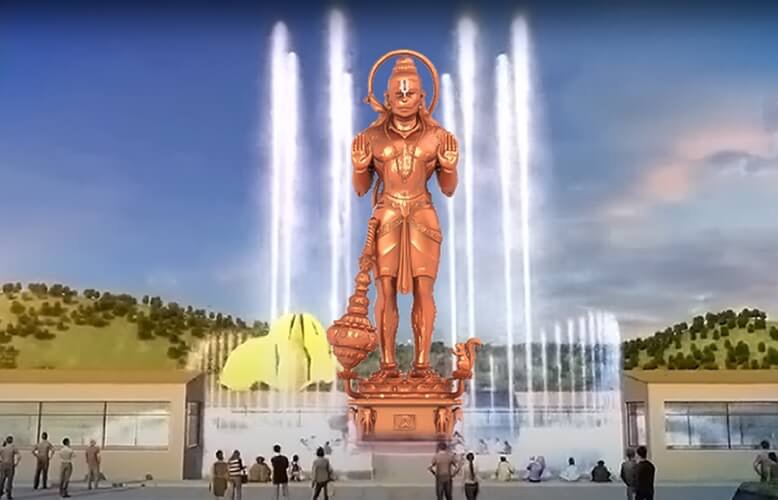
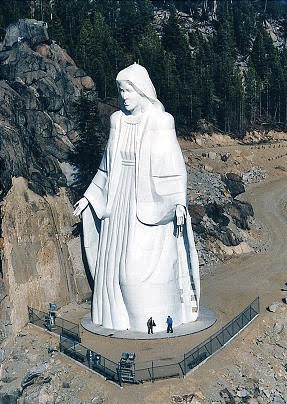
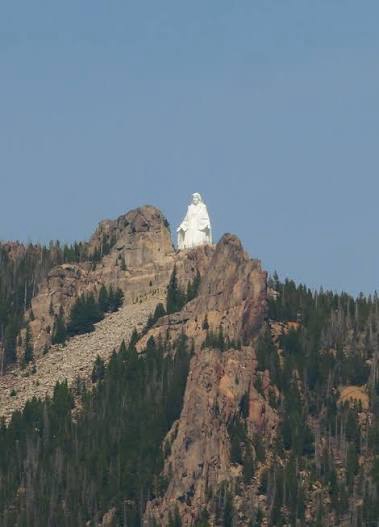
Yes. And rather than being an image of a bean-pole of a man, it may have looked more like this:
A Hindu center in Sugarland, Texas installed a statue in 2024 that is the same height as Nebuchadnezzzar’s – 90ft.
There is a 90ft Madonna statue in Butte, Montana completed in 1985 called Our Lady of the Rockies. But it is much wider at 48ft.
The Obelisk of Queen Hatshepsut in Karnak is very close to the right size and proportions at 97ft tall by 9.7ft at the base.
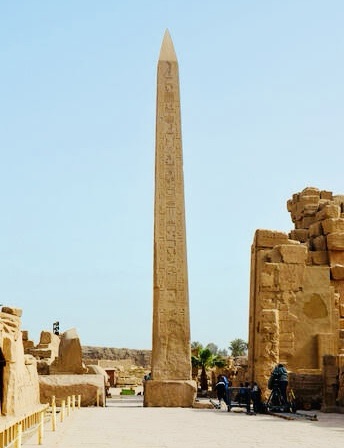
It may be that Nebuchadnezzar’s image was, in fact, an obelisk or perhaps a pillar with an image on top.
At any rate, all of the governing officials of the empire were invited to the dedication where they were directed to bow before the image when the music played.
Note that the crowd was not made up of everybody in the land. This was exclusively for upper-crust executives; a by-invitation-only event for those who were representatives of the king’s power.
“Then he sent messages to the high officers, officials, governors, advisers, treasurers, judges, magistrates, and all the provincial officials to come to the dedication of the statue he had set up. So all these officials came and stood before the statue King Nebuchadnezzar had set up.”
Daniel 3:2-3 NLT
People have often wondered, “Where was Daniel when all this was going on?” Because surely he would not have bowed down to the statue. But there is no mention of him.
One theory is that Daniel must’ve been away on royal business. While possible, I find this a rather flimsy argument. The dedication was royal business and officials came from all over the empire for it. They were given time to travel.
Daniel was “…ruler over the whole province of Babylon, as well as chief over all his wise men.” Daniel 2:48 NLT
If the top officials were to be there, I don’t see how Daniel could be absent. He was the top of the top. At the end of the last chapter, Daniel had his friends promoted to roles of provincial oversight. That’s why they were there.
I think it very likely that Daniel was there but was not expected to bow down. And I think we read the reason in the previous chapter.
“Then King Nebuchadnezzar threw himself down before Daniel and worshiped him, and he commanded his people to offer sacrifices and burn sweet incense before him. The king said to Daniel, “Truly, your God is the greatest of gods, the Lord over kings, a revealer of mysteries, for you have been able to reveal this secret.””
Daniel 2:46-47 NLT
Nebuchadnezzar regards Daniel as divine. I mean, Daniel just did what only a god can do. At the very least, Daniel is clearly a favored servant of the MOST High God.
He wouldn’t expect a divine servant of the Greatest God to by disloyal to that God and humble himself before a lesser god or an image of himself (whichever it was). That would’ve been an insult and probably risked “angering the High God” – a risk Nebuchadnezzar was not willing to take.
Shadrach, Meshach, and Anednego have done nothing to make Nebuchadnezzar regard them as divine…yet.
The ancients understood an unseen realm filled with entities of varying ranks. And Daniel’s God (and consequently Daniel himself) outranks every other god. He gets a pass from bowing to the image.
We all know how the 3 young men refuse to bow. They would’ve been quite conspicuous.
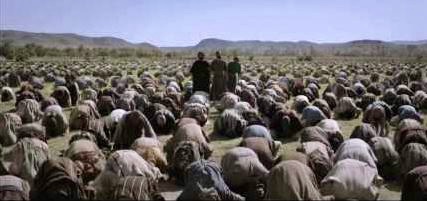
They’re hauled before the king and we know their inspirational answer…God is able to save us, but even if He doesn’t we will not bow down.
And they are tied up and thrown into “the fiery furnace.” What exactly was that?
It was this. A brick kiln.
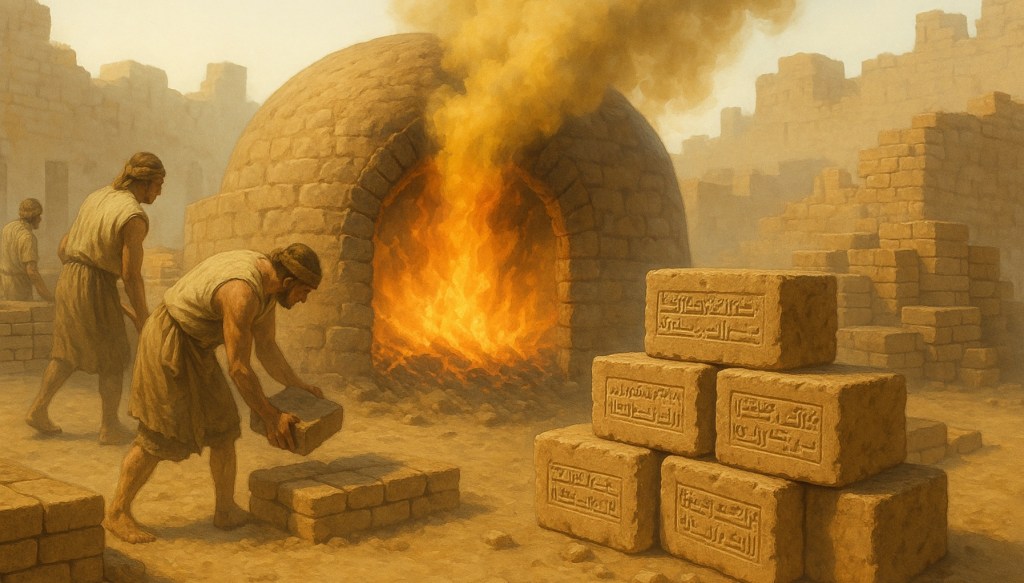
Ever since humans knew that you could improve certain materials with fire, they have built kilns for firing pottery and clay bricks and smelting ore from rocks. Nebuchadnezzar had increased the capacity of kilns to industrial scale.
He wasn’t lying in Daniel 4:30 when he boasted to have built the city. Thousands of clay bricks were used to build it and all stamped with his insignia. We know this because archeologists have found them.
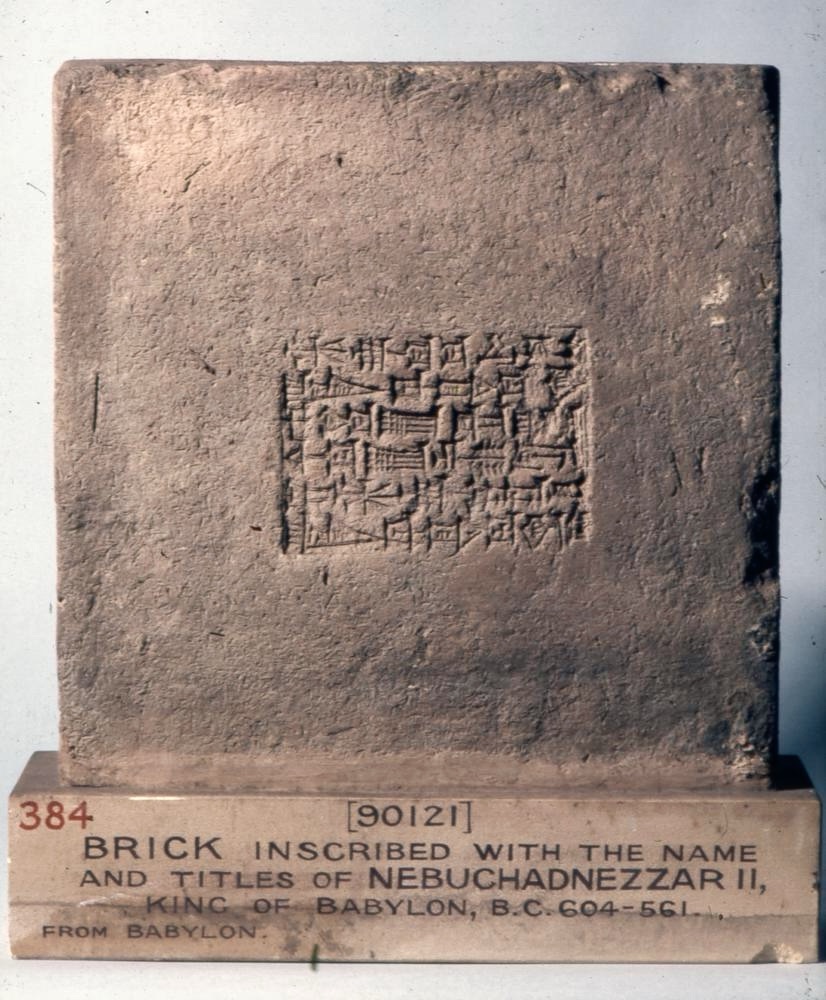
The brick industry was – if you’ll pardon the pun – very hot at the time. Bricks like the one above and thousands of other pottery items were fired in huge kilns.
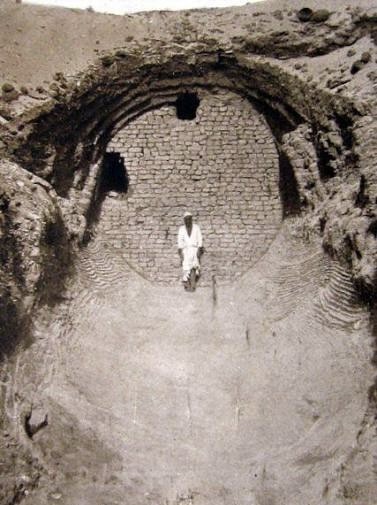
The ancient kiln above is industrial-sized. Like the ones pictured below.
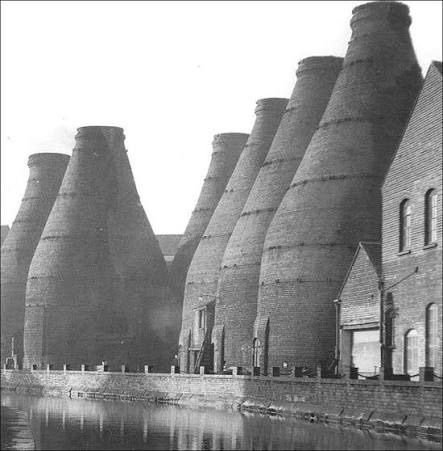
Babylon’s kilns also functioned as a special (new) form of execution for offending the gods.
This is a tablet contains the “Unpublished Letter of Samsu-iluna.”
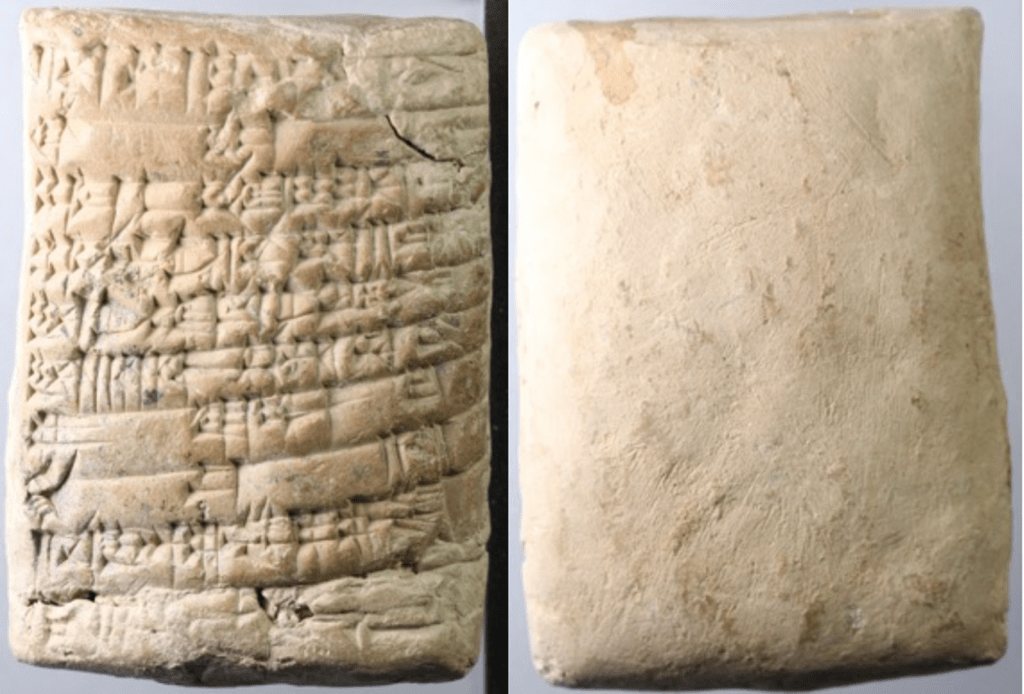
It says it’s a letter from King Samsu-iluna to the governor. If that were so, it would predate the story of Daniel by about 1150 years. But scholars believe it to be a propaganda piece, a forgery, possibly written by Nebuchadnezzar himself or at his direction. The idea was to create precedent (or the illusion of precedent) with a fake ancient document supporting what he wanted. And what Nebuchadnezzar wanted was for the temple priests to be loyal to him, follow him in his religious leanings in favor of Marduk, and do as he commanded.
🤨 Basically, he wanted a board of yes-men.
Exactly.
And in the letter, the king tells the governor that he has heard bad reports about the conduct of the temple priests. It’s eerily like some of the warnings of the prophets concerning Yahweh’s temple. Here’s a quote:
“I have heard (reports): the temple officials, collegium, néiakku-priests, paiTiu-priests, and dingirgubbu-priests of the cult-centres of the land of Akkad, as many as there are, have taken to falsehood, committed an abomination, been stained with blood, spoken untruths. Inwardly they profane and desecrate their gods, they prattle and cavort about. Things that their gods did not command they establish for their gods.”
And then the king tells the governor what must be done to the priests who will not shape up and do things Marduk’s (and Nebuchadnezzar’s) way:
“You now, in the presence of your great divinity, on account of evil behaviour and the abomination of the gods, destroy them, burn them, roast them in the kiln (Akkadian: a-na ki-ri = industrial oven, bitumen, lime, bricks) and make their smoke billow, bring about their fiery end with the fierce flame of the boxthorn!”
Here’s the name of the research paper about this tablet that includes the translation:
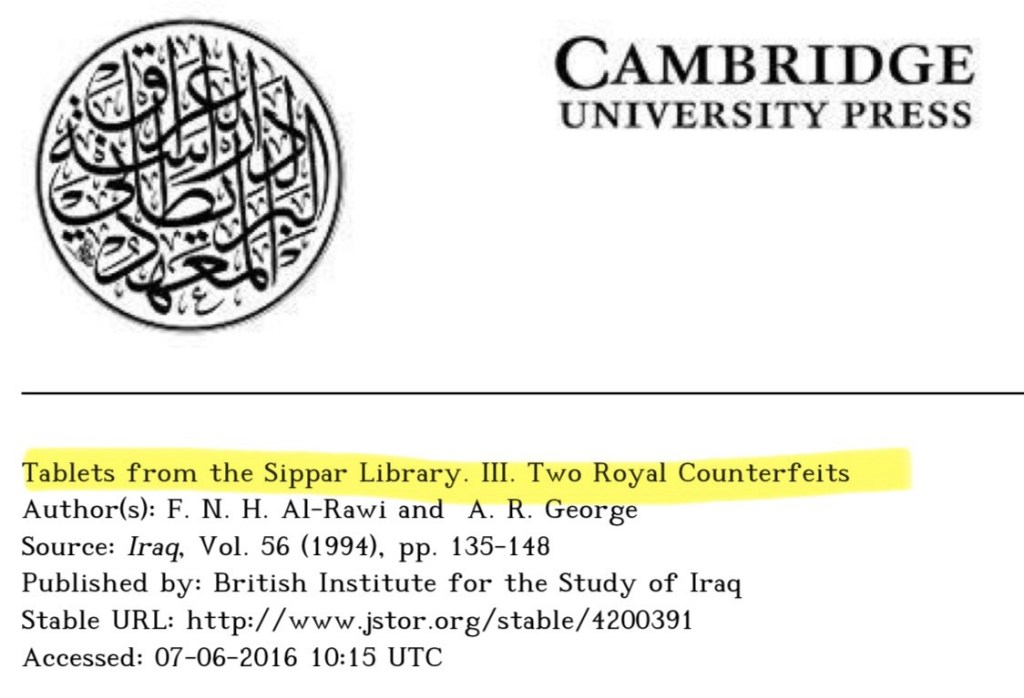
We tend to think that throwing Shadrach, Meshach, and Abednego into the fiery furnace was a spur-of-the-moment idea. It seems like perhaps it wasn’t. And they probably weren’t even the first Jews to suffer such a fate. Check this out…
“This is what the Lord of Heaven’s Armies, the God of Israel, says about your prophets—Ahab son of Kolaiah and Zedekiah son of Maaseiah—who are telling you lies in my name: “I will turn them over to Nebuchadnezzar for execution before your eyes. Their terrible fate will become proverbial, so that the Judean exiles will curse someone by saying, ‘May the Lord make you like Zedekiah and Ahab, whom the king of Babylon burned alive!’”
Jeremiah 29:21-22 NLT
Ahab and Zedekiah were two of the false prophets that Jeremiah warned the exiles in Babylon about. (If you have time, you may want to just flip back and read Jeremiah 29 again. It’ll make more sense now.) Jeremiah sent the prophecy above to the exiles after the 2nd wave of deportations which included young Ezekiel. This was about 590BC. The events of Daniel 3 happened about 10 years later in 580 BC.
🤔 Wait a second. Ten years later? You just subtracted ten from 590. You didn’t add.
That’s because in BC, you count backwards. The higher the number, the further from year 1BC it is. All of human history rightly centers around the birth of Jesus. And it flows out from His lifetime like symmetrical ripples in a pond.
Ahab and Zedekiah got on Nebuchadnezzar’s bad side and he threw them into a fiery furnace. Obviously the 3 young Hebrew men would’ve known this. The command to “bow or be thrown into the furnace” was no empty threat.
The king – who is already showing signs of the utter mental breakdown that is coming – goes into an insane rage and orders the kiln to be heated to such a temperature that the soldiers who shove the men in are killed from the intense heat.
And then, the miracle…
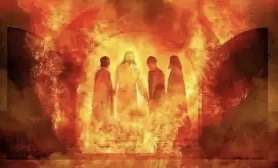
May 4th is “Star Wars Day.” And the joke is, “May the 4th be with you.” I saw somewhere online that someone had put that caption to a picture of the 3 men in the fire… “May the 4th be with you.” I like that.
The text does not say whether or not the three men saw ‘the 4th man” but Nebuchadnezzar certainly did. That’s a good reminder for us. We may or may not see the LORD standing with us in our own “fiery trial.” But even if we don’t, He is there and others will see Him. And that’s kind of the point.
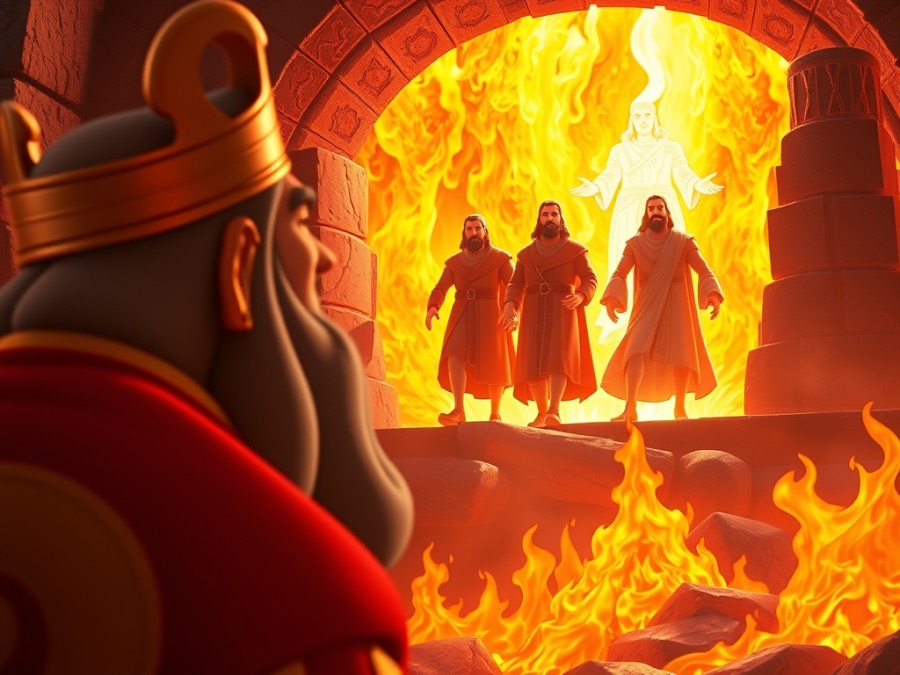
The king immediately calls them to come out. And the reaction of this violent, pagan king is incredible…
“Then Nebuchadnezzar said, “Praise to the God of Shadrach, Meshach, and Abednego! He sent his angel to rescue his servants who trusted in him. They defied the king’s command and were willing to die rather than serve or worship any god except their own God. Therefore, I make this decree: If any people, whatever their race or nation or language, speak a word against the God of Shadrach, Meshach, and Abednego, they will be torn limb from limb, and their houses will be turned into heaps of rubble. There is no other god who can rescue like this!””
Daniel 3:28-29 NLT
Nebuchadnezzar hasn’t figured out the love-thy-neighbor part or anything. He hasn’t converted. He’s imposing reverence for Yahweh on pain of… being “torn limb from limb” and having one’s house leveled. Not a very Christian thing to do. But it’s a step. This whole event has confirmed what happened earlier with Daniel- that there is NO god like Yahweh.
This has actually made the lives of all the Hebrews in the Babylonian Empire much easier. No one can now legally speak negatively about Yahweh.
The faith of these young men – and they were young – it has been an inspiration to all of God’s servant in all of the centuries since.
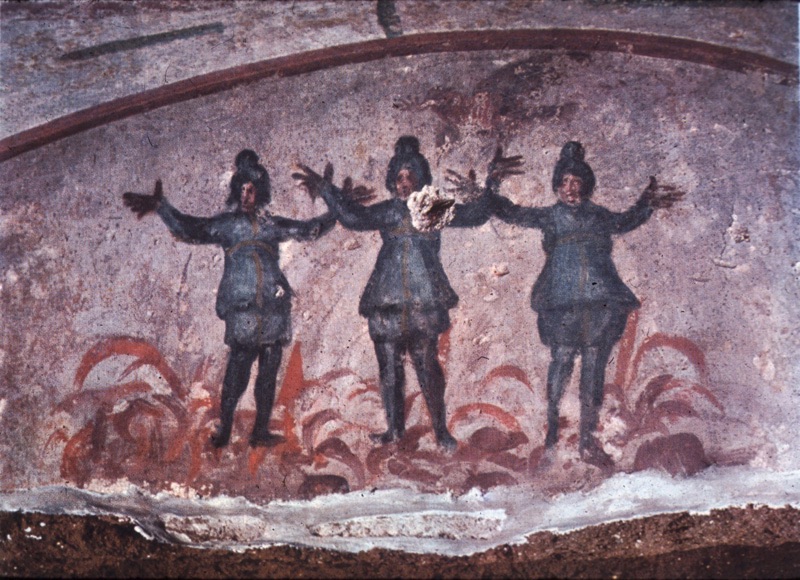
Christians facing the prospect of becoming human torches to light the garden paths of Nero’s Rome, had to have had the courage of Hananiah, Mishael, and Azariah in their minds. The 3 young men didn’t know whether or not they would survive. And yet they did not deny their LORD.
In case you’re not familiar with old southern gospel music, there’s a classic that the Speer Family sang called, He’s Still In the Fire. And here’s a video of it sung by the songwriter, Tim Hill. Now, I do not recommend watching this at work unless you work at a church. Cuz this clip is nearly 13 minutes long for a 3-minute song. And that means they HAD CHURCH as Pentecostals would say. So, grab your hanky and be blessed.
 To The Reader