THE HANDWASHING DEBATE
We have already seen the Pharisees raise a fuss about neglecting ritual hand-washing, (Lk. 11:38).
This time they open with a “gotcha” question. Notice that they do NOT ask, “Why don’t your disciples do the ritual hand-washing?” They ask, “Why do your disciples break the traditions of the elders?”
There is an assumption buried in the question that the traditions of the elders should be followed without question.
Jesus turns their attack right around with a question of His own. It’s a verbal version of this:

“Why do you also break the commandment by your tradition?”
The Pharisees choke on a gnat and swallow a camel. They get their noses bent out of shape because Jesus and the disciples skip a manmade tradition. But, them, violating an actual commandment? No biggie.
They have another tradition that is in direct opposition to the 5th commandment, “Honor thy father and mother.”
This tradition is the use of a legal loophole based on this word: Korban.

While it wasn’t written down until about 200AD, Mishna Nedarim records the 2nd Temple era teachings of the rabbis on this. Here’s the actual Mishna text:


So let’s say you had a plump investment account; maybe a retirement account. And mom and dad have fallen on hard times. They’ve declared bankruptcy, the bank has foreclosed on the house and they’re living on the street. Part of honoring one’s father and mother would involve making sure they had a roof and a square meal. But, according to the legal loophole, if you made a vow and said, “All the money in this account is korban – to be regarded as an offering to the LORD,” then you can let your parents starve in the gutter with a clear conscience because as far as you and God are concerned, you didn’t have a penny to spare. It was all given to God; even though every dollar is still sitting in that account drawing you interest and contributing to your net worth.
🤔 Wait. You mean they could just SAY the money or whatever was God’s without actually having to give it?
Yes.
😐 They just keep it? And let their folks die?
Yep.
😠 That’s… absurd! That’s…. That’s… worse than an infidel! Even cold-blooded mafia dons love their mamas more than that! Let their parents starve to death, indeed. If I was Jesus I woulda knocked their blocks off!
🤨 So it’s bascially saying, “I identify as a generous giver” and my pronouns are me/I.
Yup. But identifying don’t make it so.
Now you understand why their holier-than-thou fussing about hand-washing is so ridiculous. They’d let their own parent die of neglect but you better be sure to wash those hands.
😠 Hypocrites.
Jesus explains to the disciples (again) the distinction between the spiritual and the physical. Just because moral behavior is demonstrated in tangible, physical, visible ways, doesn’t mean that it begins and ends there. Morality comes from the spiritual, the heart. Both Kosher and Non-kosher food and dirt from hands goes through the body’s digestive system. It doesn’t touch the soul, therefore, it cannot of itself contaminate a person’s morality. To the contrary, a person could eat strictly Kosher with ritually pure hands, and have an evil heart. The Pharisees are Exhibit A.
THE TRIP TO TYRE & SIDON

🤓 So… Jesus went to the beach? 🏖️🏝️
It would appear so. And I think we should strive to be like Jesus.
🤔 Was Jesus on vacation?
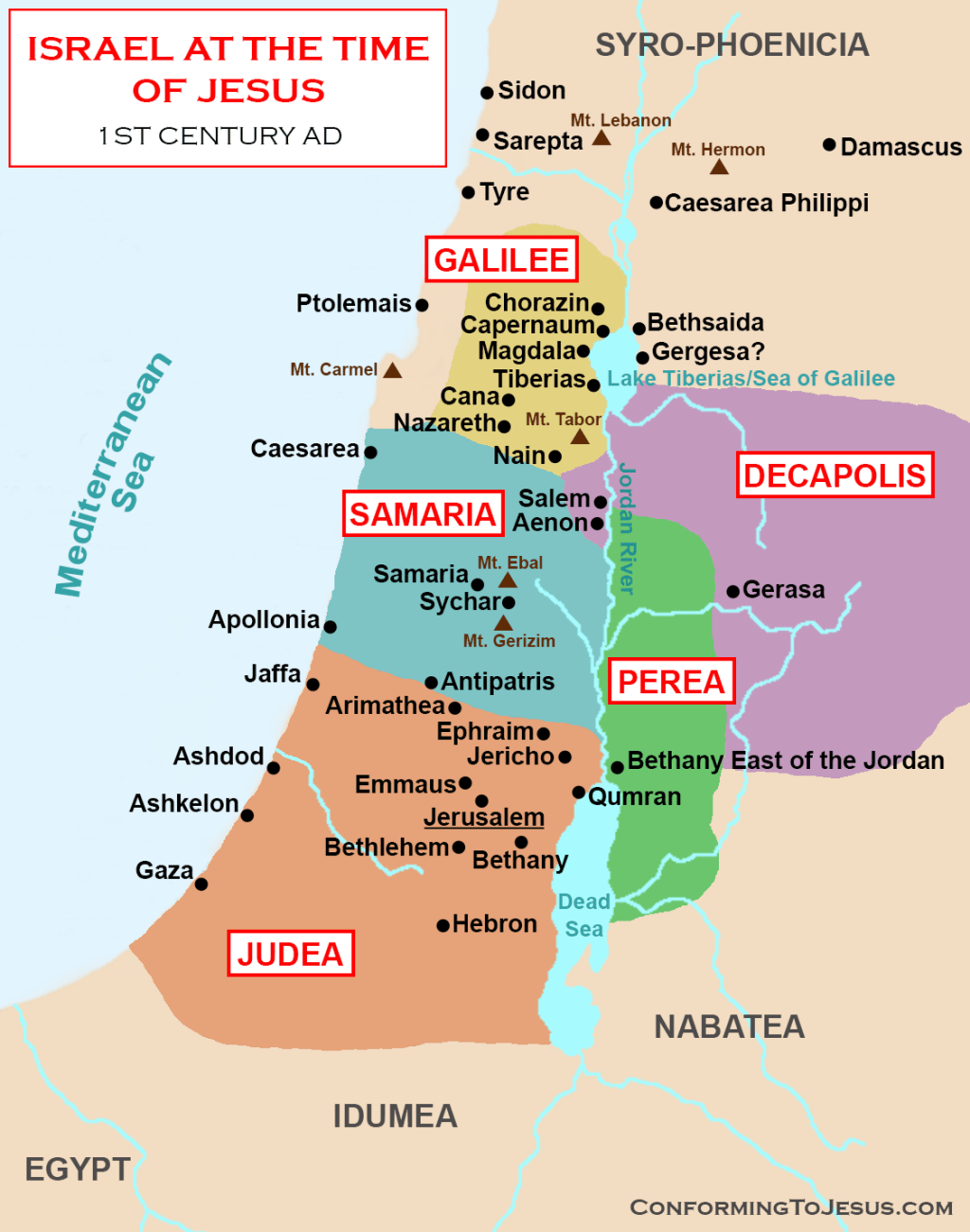
Well, apart from the Gentile woman who insisted on His help, we don’t read that He taught anything or healed anyone. Mark 7:24 says that Jesus didn’t want anyone to know he was there. So, yeah. It looks very much like He was taking a late summer vacation. In only a few weeks Jesus will go to Jerusalem for the Feast of Tabernacles which is usually in October. Next Spring He will go to the cross. This is His last summer on earth. Imagine knowing that.
When you’re as famous as Jesus, word tends to get out and a Gentile woman comes to Him for help with her demonized daughter.
Matthew calls her a “woman of Canaan,” while Mark says she was ethnically Greek though a resident of Syro-Phoenecia. Since that whole region had once been Canaanite, Matthew is referring to her residence, not her ethnicity. It would be like a native New Yorker who moves to Texas. She is still a New Yorker but she is also now a Texan.
Many people find Jesus’ response to her shocking and abrasive.
😐 Well, I mean, in a round about way, doesn’t Jesus basically call her a “dog?”
🤓 Ouch.
Not precisely. The Greek word for dog is…

😎 Hmm… “Ya ain’t nuthin but a koo-ohn… cryin’ all the time… Ya ain’t nuthing but a koo-ohn…cryin’ all the time…
🙄 Ho boy…
In most places in the NT – like when Jesus says “Don’t give what is holy to the dogs,” (Mt. 7:6), or when Paul warns the Philippians (3:2) to “beware of dogs,” and when we’re told in Revelation 22:15 that outside of the holy city are “dogs,” THIS is the word used.
It’s used figuratively to describe base, immoral people and since that described nearly every Gentile on earth in the first century, it was sometimes used as slang for Gentiles.
Here’s the word used in this conversation with this Greek woman:


Or maybe this adorable baby…

I mean… look at those adorable little faces! They’re SO CUTE! 💖
Jesus’ mission wasn’t to go around to all the Gentile nations and perform healings and demonic deliverance. He could’ve done that for centuries and still not accomplished what the cross would do.
The Gospel and its freeing power would come to the Gentiles in time with the Apostles. Jesus has to stay on-mission. And that mission was to “the lost sheep of the house of Israel.” They must be given every opportunity to receive their Messiah and Jesus has an appointment with Bible prophecy to keep on Palm Sunday.
Jesus has already said in the sermon on the mount that it wasn’t appropriate to “give what is holy to the dogs.” The power and authority Jesus carries is holy. And this woman is a Gentile. The Gentiles (at this point) are not holy people. They are outside of the Covenant God made with Israel. She descends from a people group that rejected Yahweh at Babel and has spent centuries steeped in idolatry. She lives in among a nation with the same past.
How she knows to call Jesus “Son of David” we’re not told. She must’ve had some kind of information about the Jewish Messiah. Somehow she knows about Jesus’ power over demonic spirits, like the one that torments her daughter.
The disciples try to turn her away but she will not be deterred.
Jesus tells her that it isn’t right to take food away from hungry children to feed puppies begging under the table.
And she agrees. But she points out another truth that all humans know. Puppies happily eat up any crumbs that fall from the master’s table.
She’s not asking to take any food away from the children. She’s only asking for a crumb because she recognizes that a crumb of Jesus’ power is greater than every bit of human effort to help her daughter.
“Jesus answered, “Dear woman, you really do have a lot of faith, and you will be given what you want.” At that moment her daughter was healed.”
Matthew 15:28 CEV
Jesus (perhaps with some souvenir seashells in His pockets) heads back to Galilee and then across the Jordan into the area called Decapolis. He is right back to the usual- surrounded by throngs of sick and disabled people desperate for healing. He ministers to them all, giving the hungry children their food at the master’s table.

