The Temple Vision – Part 1

Here ya go. Brought ya a pair of swim floaties. We’re gonna need them. This is the deep end of the pool. 😅
Ready? Here we go… 💦
Think back to what you were doing 13 years ago. Now, if you’re old enough… What were you doing 25 years ago?
The exiles deported with Ezekiel have been in Babylon for 25 years now. It’s been 13 years since the temple was destroyed. We know this from the specific date in verse 1.
Now, before we go any further, this is one of those portions of the Bible where the context is extensive – 9 full chapters. And the big-picture context is necessary to inform how we should understand the small details.
What I mean is, it helps to read the whole 9 chapters together before you attempt to interpret a single verse. But since that may not be doable for everyone, let me see if I can sketch the big picture.
- The scale is staggering. The entire temple/city/land allotment area described by Ezekiel is roughly 70 square MILES! The temple area alone is over 8 square miles. It dwarfs Solomon’s Temple. (For perspective, the entire Old City of Jerusalem including the Temple Mount is about 0.35 square miles (0.9 sq kilometers). One Gateway of Ezekiel’s Temple is as large as the entire Temple of Solomon.
- The usual sacred furniture (all but an altar for burnt offerings) is missing, so none of the Levitical ordinances that involve them could be carried out.
- Only 3 of the 7 annual feasts are mentioned. An unnamed Prince provides the sacrifices and they are not the usual sacrifices commanded in the Law. They are quite different.
- The Priesthood is changed. Being a descendant of Aaron or Levi does not qualify you. It is now limited to the descendants of Zadok, whose name means “just” or “justified” i.e. righteous.
- The temple produces a river that defies all the earthly conditions of natural formation. It starts as a trickle from within, and grows into a huge river without any tributaries. It also has supernatural healing powers.
Whatever this temple is, though there are some similarities to previous sacred spaces, it’s utterly unlike Solomon’s temple or the tabernacle of Moses.
The purpose of all of this information is given in the text. And it’s not: “So Israel will have the blueprints to build a Millennial temple.” That’s not what God says is the purpose for this vision. Here’s a key passage:
“As for you, son of man, describe to the house of Israel the temple, that they may be ashamed of their iniquities; and they shall measure the plan. And if they are ashamed of all that they have done, make known to them the design of the temple, its arrangement, its exits and its entrances, that is, its whole design; and make known to them as well all its statutes and its whole design and all its laws, and write it down in their sight, so that they may observe all its laws and all its statutes and carry them out. This is the law of the temple: the whole territory on the top of the mountain all around shall be most holy. Behold, this is the law of the temple.”
Ezekiel 43:10-12 ESV
This temple and all its measurements has an immediate, historic application for Ezekiel’s audience. It is supposed to convict them of their sins; to make them “ashamed of their iniquities.” It’s supposed to convict them concerning holiness. The reason Solomon’s Temple was destroyed is because Israel had no shame and did not regard the holiness of God’s presence in His Temple. (Remember the pagan idols and open prostitution?) This vision is meant to accomplish externally what Jesus said the Holy Spirit would accomplish internally in John 16:7-11.
🤔 So why a building? 🕍 If they need to learn how to be ashamed of their sins, why not a vision of fire and brimstone? 🔥☄️
You read the previous prophets, right? Been there, done that. Did all the other fire and brimstone visions make them repent?
😐 No.
Exactly.
There’s a phrase I heard once about observing the interior of a church building.
“Exegete the architecture.”
Architecture is art. Art has meaning. Look at these buildings. What do they mean?

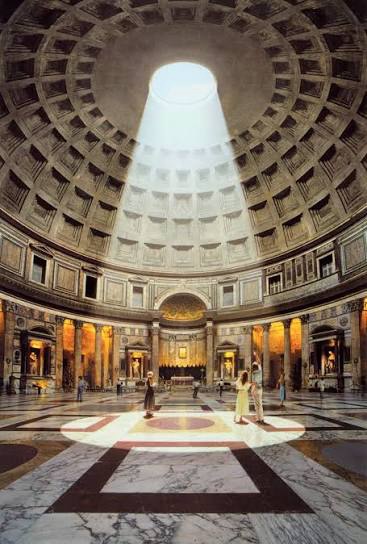
The knowledge and technology used to make such a vast unsupported dome was lost for centuries and boggled the minds of Medieval visitors. It seemed supernatural.
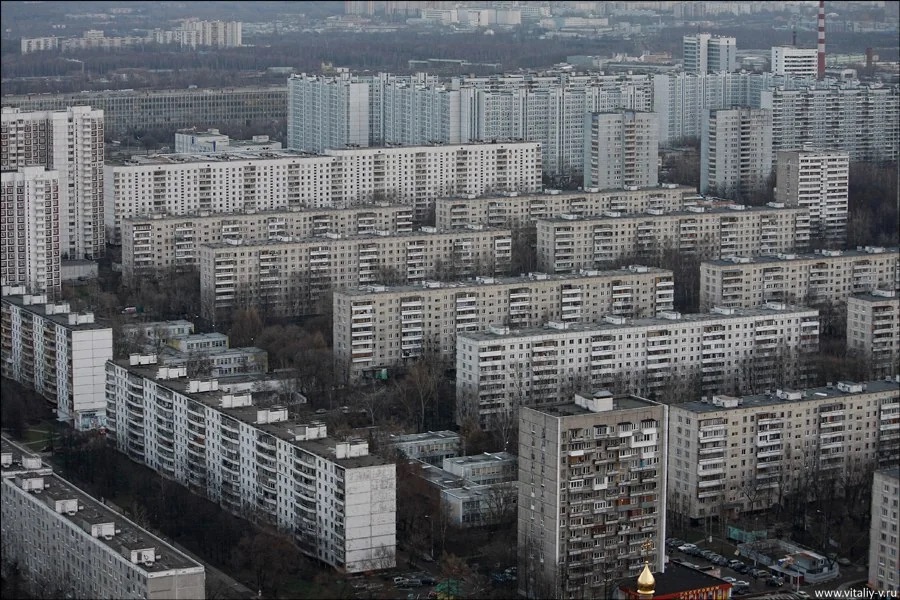

To “exegete the architecture” is to interpret what a structure means. You can detect what is important to the designer of a building. The structure is conveying ideas- about the people who enter it and the world they live in. It has meaning. It can tell you what the designer believes- even if that meaning is nothing more than, “I need some place to keep my lawnmower out of the rain.” The people who engage with the space must conform to the architect’s ideas whether they realize they are doing so or not.
Let’s think about this in terms of basic church design. In a Catholic Church, the central feature is the altar where the Eucharist sits. In most Protestant churches, a pulpit is central. While in a cutting-edge nondenominational church, the main focus is the stage/band/media screens.
What does each convey? 🪑
And think about where the chairs are. What is everyone looking at? In old Quaker Churches and NT synagogues the seats were arranged in a square with everyone facing each other. House-churches are similar with participants sitting face to face. The Medieval cathedral design was cruciform- with worshipers sitting in rows facing the altar at the central intersection. Modern churches are typically designed like a theater with seats arranged so that most are passive spectators with a few active participants on a stage.
Exegete the architecture. 🏛️
The preacher might say “Participate!” But the architecture is saying “Just sit and watch.” Perhaps the problem with getting Christians involved in ministry is not that they need more classes or motivation. Maybe it’s the way the chairs are arranged.
🫳🏼🎤
God is communicating something about Himself in the architecture of this temple. He is also communicating something about the people who enter it.
It’s not about the cubits and how it would look if someone actually built it. It’s about how HOLY Yahweh is and the sanctity of the people there. In this temple the restricted access area is vastly larger, the gates are higher, and the priesthood more limited. Ezekiel’s Temple raises the bar.
It reminds me of how Jesus taught. He quoted the Law, but then raised the bar.
“You have heard that it was said to those of old, ‘You shall not murder; and whoever murders will be liable to judgment.’ But I say to you that everyone who is angry with his brother will be liable to judgment; whoever insults his brother will be liable to the council; and whoever says, ‘You fool!’ will be liable to the hell of fire.”
“You have heard that it was said, ‘You shall not commit adultery.’ But I say to you that everyone who looks at a woman with lustful intent has already committed adultery with her in his heart.”
Matthew 5:21-22, 27-28 ESV
Jesus quotes the Law written on stone but then deals with the heart as promised in Jer. 31:33 with the New Covenant.
But if Israel couldn’t keep the Law on stone, there is no way anyone can keep this newer “but I say to you” version. Never lose your temper? Never look with lust? Impossible.
Ezekiel’s Temple is meant to be impossible. Impossibly huge. Impossibly holy.
Because until we really get it, that we as sinful humans cannot attain the holy perfection God requires, we will not stop trying to achieve perfection by our own efforts. We have to become utterly disillusioned with our efforts and realize that if righteousness depends on me, I’m done. Finished. I can’t make it. I’m doomed. Condemned. Destined for “the Hell of fire.”
That is the starting point. Like exiled Israel, we must become “ashamed of our iniquities” before we truly grasp our need for a Savior.
That’s what it means to be “poor (destitute) in spirit. I’m broke. Utterly penniless.
“In my hand no price I bring, simply to Thy cross I cling.” That’s how English clergyman Augustus Toplady put it in his hymn Rock Of Ages. “Blessed are the poor in spirit for theirs is the Kingdom of Heaven,” Mat. 5:3. It’s Good News for the poor… because everything is free.
“Come, everyone who thirsts, come to the waters; and he who has no money, come, buy and eat! Come, buy wine and milk without money and without price.”
Isaiah 55:1 ESV
We depend wholly on the perfect provision of Jesus Christ our Savior. And when we come to Christ and are joined to Him in faith and the rebirth of the Spirit, something MIRACULOUS happens. Our hearts are transformed. Our desires change. We don’t want to lose our cool or entertain lustful thoughts. Sin makes us uncomfortable now.
Believers in tribes who don’t yet have the OT in their own language and have never read the Torah, find themselves loving their neighbor and not taking advantage of him or his goods. Why? How?
I once heard the testimony of a woman who was raised on the streets of New York; never stepped foot in a church. She was thoroughly heathen. Knew nothing of what was “appropriate.” When she trusted Christ and received salvation, she told her boyfriend- “We need to quit sleeping together. We need to get married.” She suddenly felt the need to cover more of her body than she ever had and stop using drugs and colorful language. No one told her to do this. There wasn’t a team of catty old church ladies telling her to put on a longer skirt. The Holy Spirit genuinely moved inside and He brought His law with Him and wrote it on her heart just as He promised. That couple eventually became pastors of a solid church.
THAT is what this is all about.
Just in case anyone is still adamant that Ezekiel’s Temple can only be a physical building…
An important thing to keep in mind as we read these final 9 chapters is that this is a VISION.
Just like John in Revelation, Ezekiel is carried away in the Spirit to a “great high mountain,” (Eze. 40:2, Rev. 21:10) in order to view this amazing city.
In case you’ve not been to Israel or seen a topographical map of it, there are no “great high mountains” near Jerusalem. Here are some maps that show the terrain.
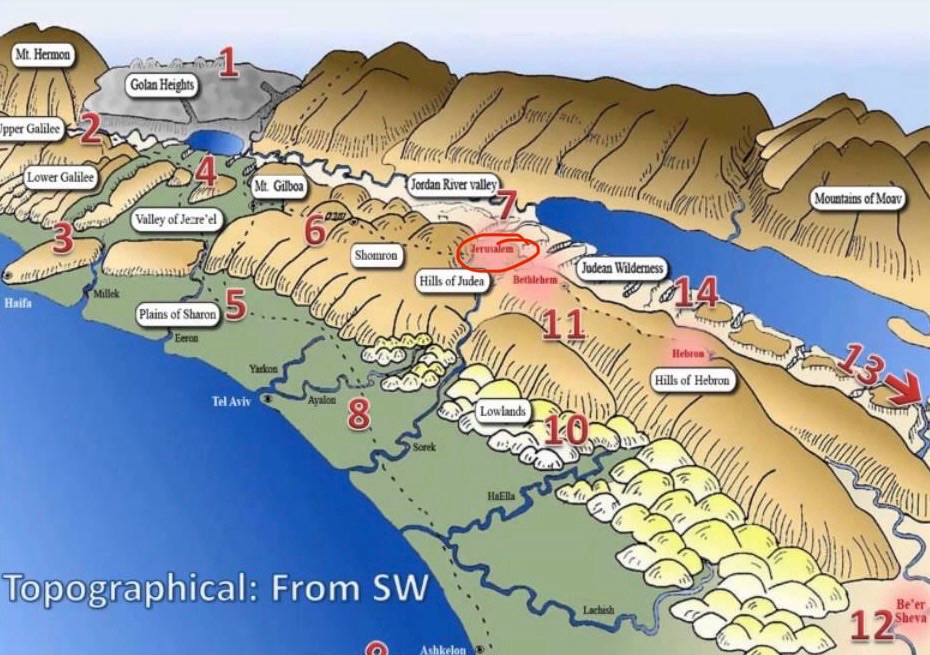
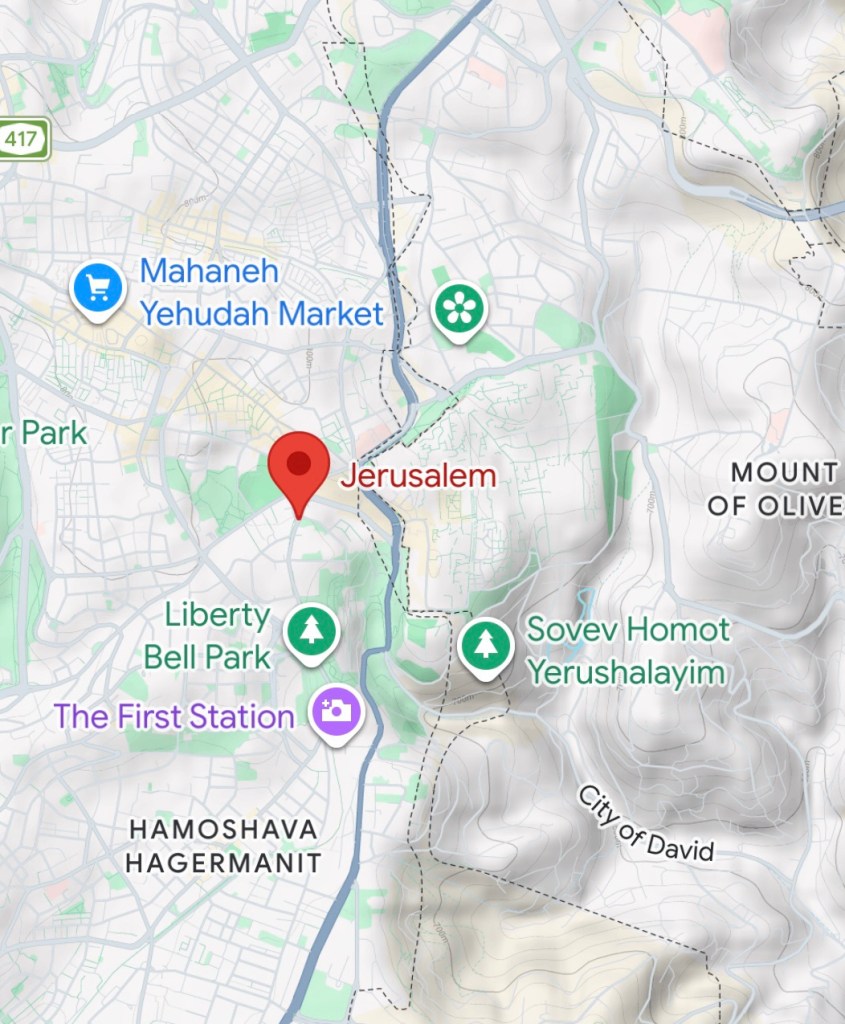
Jerusalem’s elevation is about 2,500 ft above sea level.
“In the visions of God He brought me into the land of Israel and set me on a very high mountain, and on it to the south there was something like a structure of a city.”
Ezekiel 40:2 NASB2020
Jerusalem does not sit on the southern part of a very high mountain. It just doesn’t.
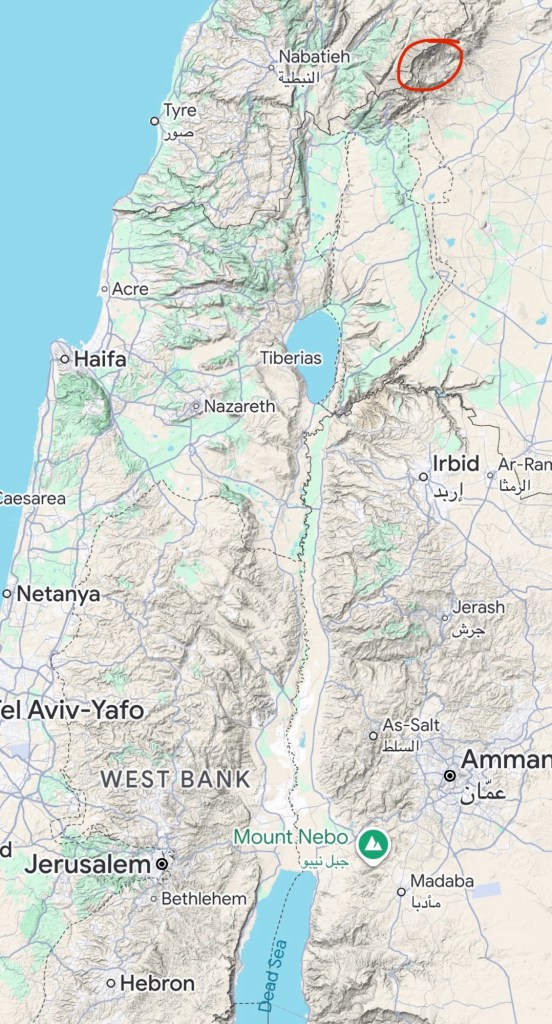
So right out of the gate, we’re dealing with something that doesn’t quite match physical reality.
I’m not suggesting that “Ezekiel’s Temple” isn’t real. A thing can be real without being physically literal.
For example, we who follow Jesus are called to “take up our cross” and “crucify the flesh.” Those are not meant to be physically and literally done. That would be literal suicide. It is figurative but it’s still REAL. Those who do it can attest that it can be deeply painful but not always in an exactly physical way.
There is a REAL Kingdom of God but there are no borders, no flag, no passport, no seat at the U.N., and you can’t book a vacation to tour the castle. The Kingdom of God, Jesus said, “is within you” but that doesn’t make it any less real.
So, even though this temple is described in highly detailed physical terms, (just like the vision of dry bones) it doesn’t necessarily mean that this has to be an earthly, physical structure.
Might Jesus have some kind of supernatural temple from which to reign in Jerusalem in the future? Sure. And maybe it will even have a river that runs out of the door. Indoor water features are amazing! But I’m not 100% convinced that Ezekiel’s Temple vision is exclusively about that. It’s way too loaded with symbolism that maps to the Church to be a coincidence.
And here’s the thing, even if Ezekiel’s Temple turns out to be a strictly physical structure on earth somehow, it’s not permanent.
Which is a huge problem because the very name of the city where the temple is located is “The Lord is there.” He’s either there permanently or He isn’t. And the only place Jesus indicated would be His permanent residence was within His Church.
“In my Father’s house are many rooms. If it were not so, would I have told you that I go to prepare a place for you? And if I go and prepare a place for you, I will come again and will take you to myself, that where I am you may be also.”
“Jesus answered him, “If anyone loves me, he will keep my word, and my Father will love him, and we will come to him and make our home with him.”
John 14:2-3, 23 ESV
By the time we get to Rev. 21 and the New Jerusalem, there is no temple. So where did Ezekiel’s Temple go? And the text is crystal clear on WHY there is no temple: “I saw no temple in it, for the Lord God the Almighty and the Lamb are its temple.” Revelation 21:22 NASB2020
Who else is called “the temple?”
The Church (because the Church is ONE with Christ as a wife is one with her husband).
“What agreement has the temple of God with idols? For we are the temple of the living God; as God said, “I will make my dwelling among them and walk among them, and I will be their God, and they shall be my people.”
2 Corinthians 6:16 ESV
Paul is quoting none other than our good friend Ezekiel here.
“My dwelling place shall be with them, and I will be their God, and they shall be my people.” Ezekiel 37:27 ESV
I suspect that if you had asked Paul about Ezekiel’s temple, he may very well have pointed his finger at your chest and said, “It’s you.” And then swept his arms out to include your whole congregation and said, “It’s all of you.”
Many people with computer animation skills have made models of Ezekiel’s Temple. One guy on Reddit spent several months making a scale model in Minecraft. (He shared access via a group called DQbuilders. If you’re on Reddit and you do Minecraft you might see if you can find it). Pretty cool.
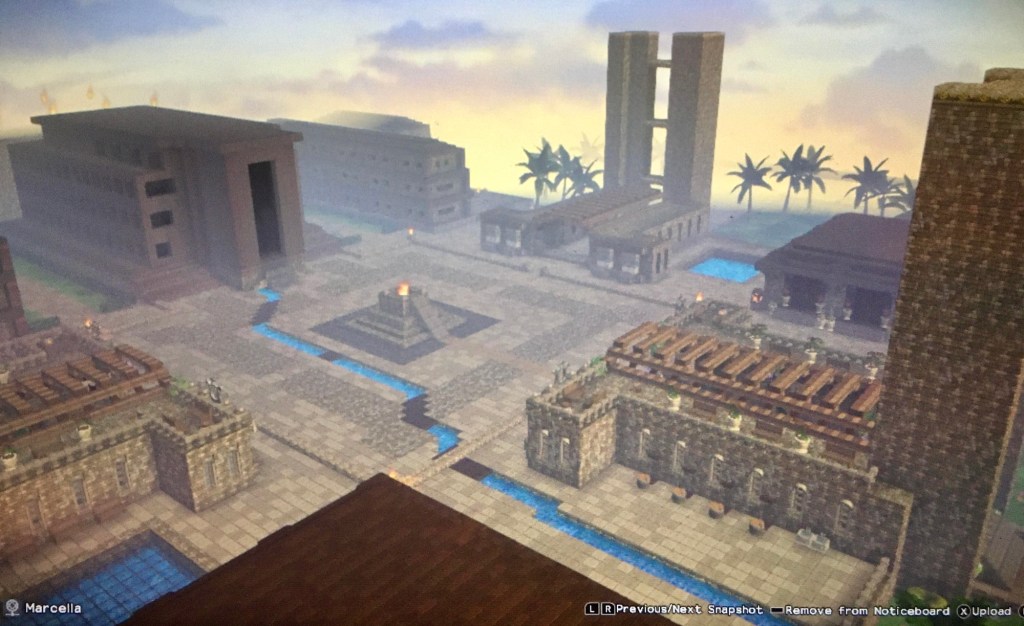
Here’s a video that I thought was pretty good if you don’t get too persnickety about some of the A.I. generated imagery. I think it does a decent job of communicating scale and the overall message. It’s about 25 minutes long.
As I sat here reading about the dimensions of this and that, I felt like I was looking at something but not seeing what was actually there.
“Lord, what am I looking at?! I don’t get it. What is this about?” And I felt that little nudge from the Holy Spirit to reread the verse.
It had math. 🧮 And math makes my brain freeze.
“Lord, if You’ll help me, I’ll try my best.”
And I started math-ing. And asking Google lots of questions about ratios.
I still wasn’t seeing anything. So I started looking up the numbers and then all the words in Hebrew.
And that’s when I saw it.
See you in the next post. I can’t wait to tell you about a table that might just be carrying an encrypted message.

