The Temple Vision – Part 4 – The Priests
Who is “the Prince?”
In this chapter and the ones coming up, the LORD speaks of “the prince” doing various things in and around the temple.
The Hebrew word for prince, (nasiy) shows up a lot in Ezekiel. It doesn’t strictly mean “king’s son” as we use it today.
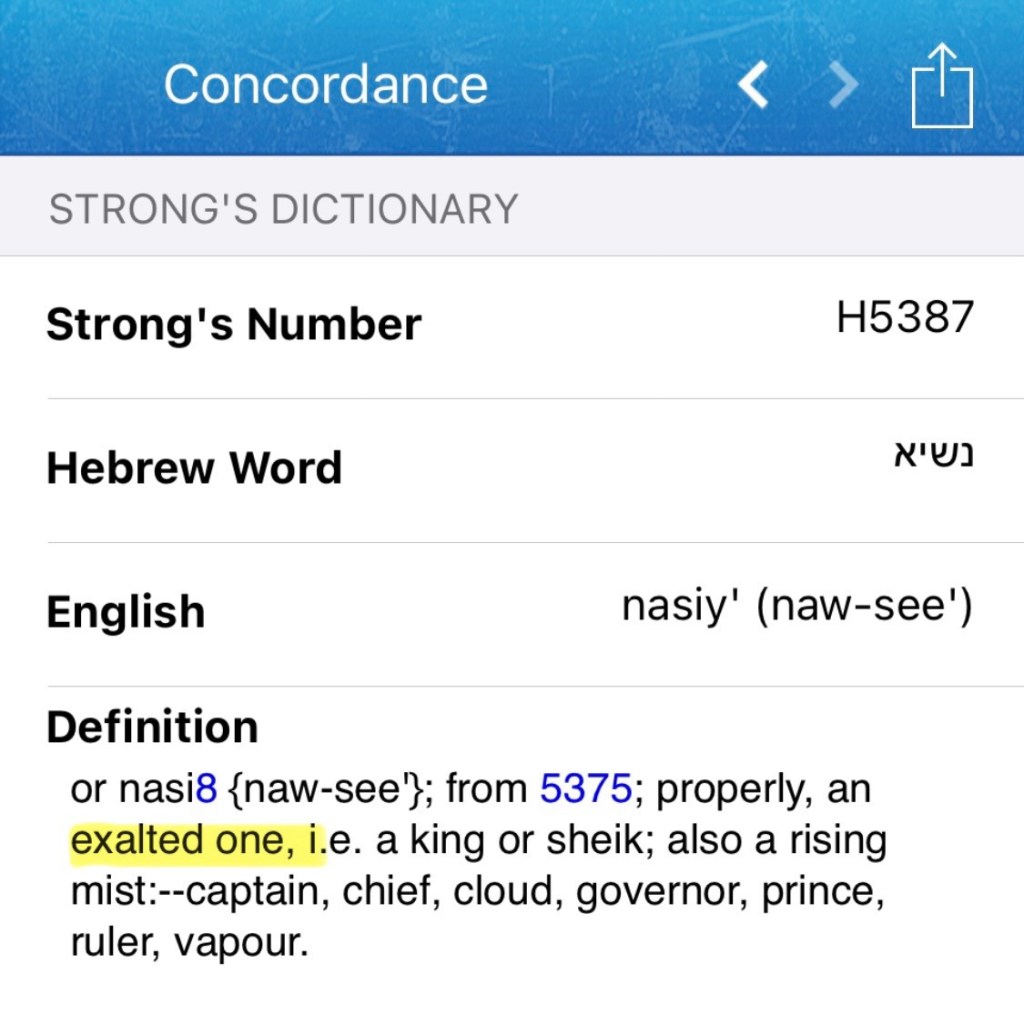
🤔 A rising mist? A cloud? ☁️ Vapor? What does that have to do with royalty?
Well, those are things that rise up as well. The root word is nasa [naw-saw] and it means to lift.
😏 NASA. Lift off. 🚀 🌒 Got it.
Ezekiel has written about 3 different princes.
- The profane, wicked princes of Israel, 21:25. Remember that the princes (rulers) were leading the people in sin.
- Gog is called “the chief prince of Meshech and Tubal,” 38:2,3; 39:1.
- David is called prince, king, and shepherd. Yahweh has already said that David would be “prince forever,” 34:23-24, 37:24-25.
This unnamed prince in chapters 44 and beyond may refer to David. It seems to suggest either a resurrected David leading the future community of the saints, or, it may be a prophetic reference to Christ, the Son of David, or perhaps the sons of God (which is what the redeemed in Christ are called).
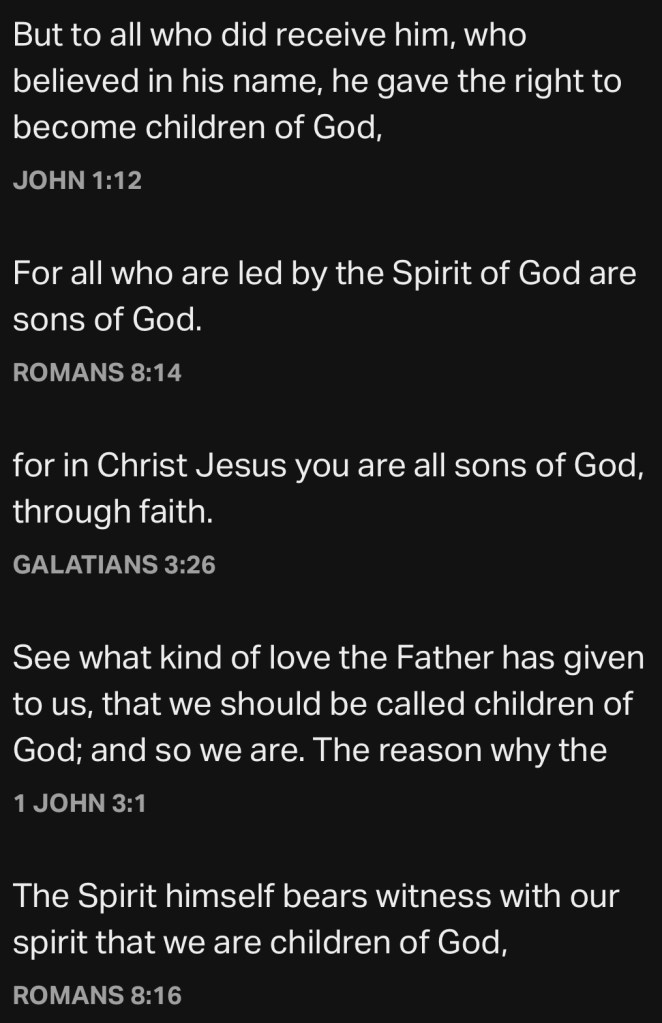
If we assume that the prophecies of Ezekiel’s temple are yet future, then a resurrected David is a strong candidate. But Christ is already reigning in His temple, the Church. And through the indwelling Holy Spirit, the Lord Jesus rules closer to His people – indeed within them – than David ever could.
I find the idea compelling that David or, “the prince,” is prophetically indicative of the Church who will “reign with Him” forever.
Let’s unpack that for a second…
Have you pondered the magnitude of exaltation (nasa) to which the saints are called? If not, you should. It’ll give you strength even on the darkest of days.
We all know that our Savior, Jesus, is seated at the right hand of the Father.
And some might picture two (or three) thrones in heaven. But the Bible only ever speaks of a single throne of God. And Jesus said…
“The one who conquers, I will grant him to sit with me on my throne, as I also conquered and sat down with my Father on his throne.”
Revelation 3:21 ESV
Jesus isn’t sitting on a separate throne as the artwork usually suggests. His throne is the Father’s throne.
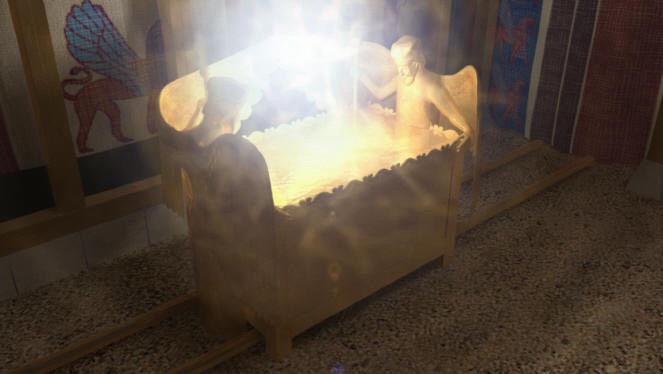
The Ark of the Covenant was God’s throne on earth. It was a bench. Big enough for 2. Jesus, the incarnate God-man, sits with the Father on His throne.
And did you catch the staggering promise in the text above? The one who conquers gets to sit there too. The born-again child of God is IN Christ. We cannot be separated from Him. And Christ is ON the throne with the Father. Right now. That’s what Paul is gushing about in Ephesians 1, particularly verses 3 and 20. If Christ is on the throne of the Father, far above all principality and power, then guess where the Church is? We are there too! That’s what this is saying:
“and raised us up with Him, and seated us with Him in the heavenly places in Christ Jesus,” Ephesians 2:6 NASB2020
And notice, it’s PAST tense. Already done.
Oh – and guess what, the OT saints, including David, are part of this enthroned Church who will reign with Christ forever, (see Rev. 20:6, 22:5).
To Ezekiel’s audience, David was probably the closest example of a Christian they could’ve known about. Remember how he had the Ark of God in a tent near his own house? Remember how he would go to the tent with his harp and worship and sing songs of praise? David wasn’t a priest, but it’s as if he reached forward into the NT and experienced the access and priesthood of all believers that was to come. David had both Jewish and Gentile blood in his veins. He was not a perfect man but he was completely loyal to Yahweh, trusted in His salvation, and knew what it was to be forgiven. That’s about as close to a picture of the Church as we get in the OT.
And… speaking of people functioning in the priesthood…
The bulk of this chapter is actually about the rules for the priests. Most of the commands are parallel to Leviticus 21, but there was at least one difference that stood out to me. It’s a minor thing, but I’d like to point it out.
“Also they shall not shave their heads, yet they shall not let their locks grow long; they shall only trim the hair of their heads.”
Ezekiel 44:20 NASB2020
I could be wrong, but as far as I can tell, this is a new rule. The part about not shaving the head is found in Lev. 21:5. That’s not new. But I can find no prior text in the Law that forbade priests from letting their hair grow long.
Keep in mind that a Nazarite vow involved letting the “locks” grow long. The only other time this word pera (locks) is used is in Numbers 6:5 in the instructions for Nazarite vows.
In the Law, the shaving of the head is associated with the end of a Nazarite vow and ritual cleansing of the body after a skin disease (Lev. 13-14).
The priests Ezekiel describes do not have “extreme” hair. It is neither shaved off, nor long and wild. It’s just in the middle. Modest. And keeping hair neither short nor long requires regular maintenance. These priests have to give regular attention to a natural part of them that has a tendency to grow must be kept in check. 🪑☕️
And do we not have to give regular attention to ourselves lest the natural man grow wild and unruly?
I’m just spit-balling here. But I wonder if Paul had Ezekiel in mind when he wrote…
“Does even nature itself not teach you that if a man has long hair, it is a dishonor to him,”
1 Corinthians 11:14 NASB2020
Another slight change is the clear prohibition on woolen garments. In the Law, the priest’s garments are clearly described as being made only of linen. So that’s not new. The prohibitions regarding wool are related to non-temple attire and focus on if there is “leprosy” (mold) in a woolen garment and not wearing garments of mixed fibers, like wool and flax.
Here in Ezekiel there is a new detail on why wool is forbidden.
“When they enter the gates of the inner court, they shall wear linen garments. They shall have nothing of wool on them, while they minister at the gates of the inner court, and within. They shall have linen turbans on their heads, and linen undergarments around their waists. They shall not bind themselves with anything that causes sweat.” Ezekiel 44:17-18 ESV
Think about the work that priests in the Tabernacle and Temple would do. They were outside in the sun in a desert climate with no shade. They were doing heavy manual labor next to a roaring fire on the brazen altar. They were baking bread and boiling meat in great cauldrons over hot coals and hauling hot ashes out of the sacred space.
I feel warmer just thinking about it.
Ezekiel’s prophetic temple is different. The Lord doesn’t want them to sweat. This verse is the only place in the whole Bible where this particular word for sweat is used. In fact, the word “sweat” only appears 3 times in the Bible:
- The curse of Adam, “the sweat of thy brow” (a different Hebrew word to the one in Ezekiel but nearly the same letters)
- Here in Ezekiel – no garments that cause sweat
- Jesus sweating drops of blood in Gethsemane.
And I think those three are connected.
The second Adam’s sweat in the Garden of Gethsemane before facing death triumphs over the judgment in the Garden of Eden where the first Adam was condemned to sweat to stay alive. The first Adam’s sweat came from futile work that only delayed death but did not conquer it. The second Adam’s sweat came from the fruitful work of redemption. It did not delay death but conquered it.
Jesus was the High Priest who had to sweat. He bore the heat and the laborious work of redemption.
The priesthood of believers is not to “bind themselves with anything that causes sweat.” The word translated as “bind” or “gird” or “dress” is:
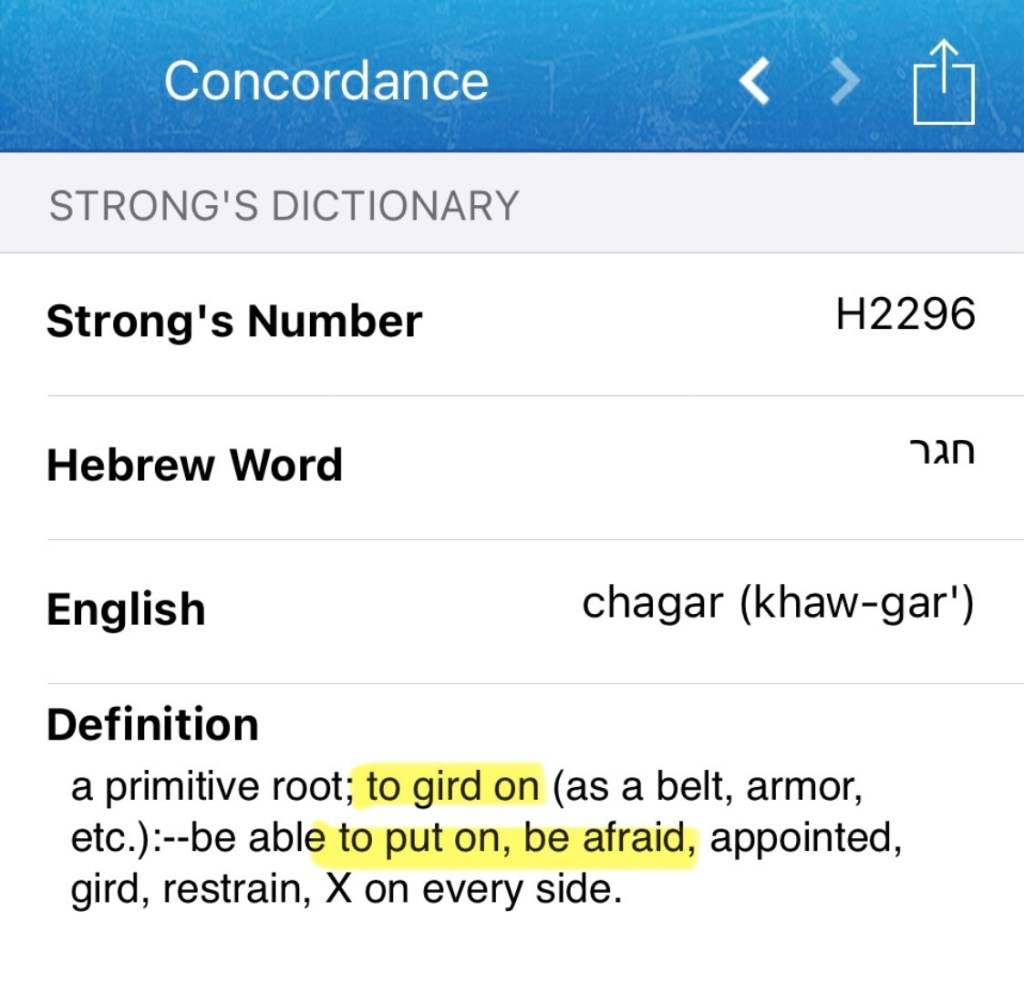
The New Covenant priesthood is told to have our loins “girt about” with Truth (Eph. 6:4).
Paul tells the Ephesians to basically change clothes. They are to “put off the old self” and “put on the new self,” (Eph. 4:22-24). We are no longer bound in garments of fear and sinful selfishness or the sweaty garments of a works-based salvation, (see Galatians 5). The holy saints are clothed in the spotless white Righteousness of Christ.
I invite you to consider…
The royal priesthood does not wear garments that cause sweat. Sweat is a result of effort. Work.
The work of redemption has already been done.
“For by grace you have been saved through faith. And this is not your own doing; it is the gift of God, not a result of works, so that no one may boast.”
Ephesians 2:8-9 ESV
“yet we know that a person is not justified by works of the law but through faith in Jesus Christ, so we also have believed in Christ Jesus, in order to be justified by faith in Christ and not by works of the law, because by works of the law no one will be justified.”
Galatians 2:16 ESV
(see also Rom. 3:20-28, and the whole letter to the Galatians)
Wool is not an “evil” fiber. It’s just not appropriate for priestly service. Wool comes from sheep. New Covenant saints are royal priests but we are also sheep. We can’t be clothed in something we produce ourselves.
Linen is the correct material for ministry. It requires a living plant to die. The flax must be harvested, submerged and soaked in water, then beaten crushed, and the fibers separated out. Would you believe that this was first accomplished with thorns?
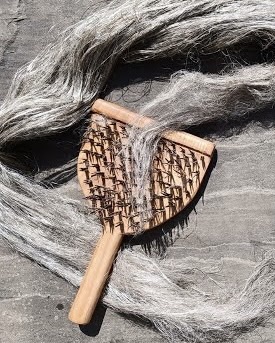
Sounds an awful lot like Jesus to me.

