Now that (the very wealthy) Haman was dead, the king gave his entire estate and portfolio over to Esther.
It reminds me of this verse:
“A good man leaves an inheritance to his children’s children, but the sinner’s wealth is laid up for the righteous.”
Proverbs 13:22 ESV
And this one…
“Blessed are the meek, for they shall inherit the earth.”
Matthew 5:5 ESV
Esther’s story is a reminder that it’s not the wealthy wicked who win in the end. And, as wild as it is to consider, Jesus seems to suggest that one day, the meek (the gentle, those who have submitted their strength to Christ) – they will inherit the earth.
As in, own it. Every square inch. 🌎🌍🌏
✋😎 I call dibs on the Italian Riviera. 🏖️
☝️🤓 I call the Lake District in England. 🌳
Uh…I don’t think it’s gonna work that way.
😐 Aww man.
🤓 Shucks.
Trust me, you won’t be disappointed.
I suspect that since the kingdoms of the world will belong to “our Lord and His Christ,” that the Bride of Christ (collectively) will co-own and co-reign with Him. That’s what the term “joint-heirs” means in Romans 8:17.
Xerxes offered Esther “up to half of the kingdom.” I don’t think this is necessarily what he meant, but you could look at it like-
He was offering his half. She already had the other half.
If Christ is the King and the Church is His Bride, that makes her His Queen. As the first Adam had a co-regent made for him from his own body, so also the Second Adam.
“Fear not, little flock, for it is your Father’s good pleasure to give you the kingdom.”
Luke 12:32 ESV
I don’t suspect any one will privately own the Italian Riviera (and if they do, they better be prepared to let me visit), but hey, if the Lord wants to hand out pieces of paradise, I’m all for that too. I fully expect to finally get in all the traveling I’d like to do. Apart from that, I’ve put in a request for a little stream where I can putter around all day rearranging rocks to make the most pleasing sound. And maybe someone to occasionally bring me a picnic basket.
Let’s get back to Esther.
Esther assigns Mordecai to manage the estate for her. He is brought in and introduced to the king as Esther’s guardian and family member.
The king finally comes face to face with the man who saved his life and hands him the royal signet ring.
Then this part of the story often gets overlooked:
“Then Esther went again before the king, falling down at his feet and begging him with tears to stop the evil plot devised by Haman the Agagite against the Jews. Again the king held out the gold scepter to Esther. So she rose and stood before him.”
Esther 8:3-4 NLT
It’s a second golden scepter moment.
But there is a problem. The Medes & Persians have this rule.
Rule #1 – Never break a rule.
Rule #2 – See rule #1.
Haman had made the decree for the March 7th extermination of the Jews and sealed it with the king’s seal. It was now a rule. And they can NEVER break a rule.
It’s kind of like how in Sleeping Beauty, the good fairies cannot undo the evil wish of Maleficent that Princess Aurora will prick her finger on the spindle of a spinning wheel and die. BUT, they can add a good wish that edits the effect of the evil wish.

Not even the king can undo the rule that gives the entire Persian population a license to kill Jews on March 7. But, a new decree can be issued that also gives the Jews a license to kill their attackers.
And that’s what they do. On June 25th the decree is sent out – to go into effect the following year. Again, this takes months to unfold though it transpires quickly in the text.
When March 7 finally arrives, there are 2 royal decrees that will go into effect:
- Jews are horrible people. Non-Jewish citizens are hereby authorized to kill them and take everything they possess.
- Jews are hereby authorized to gather in groups to defend themselves against anyone who attacks any Jewish man, woman, or child; even to the point of killing their attackers. Jews may collect any spoils from the people they kill.
It’s a government-authorized day of war.
But ancient people weren’t uninformed. They had heard all the stories. The children of Abraham are that bunch with a God who has split the sea and thrown down fire and brimstone from heaven. They are legendary for defeating armies many times larger because their God fights for them. Never a good idea to bet against them.
“In every province and city, wherever the king’s decree arrived, the Jews rejoiced and had a great celebration and declared a public festival and holiday. And many of the people of the land became Jews themselves, for they feared what the Jews might do to them.”
Esther 8:17 NLT
😏 If ya can’t beat ‘em, join ‘em.
Notably, when March 7 arrives, the Jews do not take any spoils from their attackers, even though they were legally allowed to. This is evidence on their part that they didn’t kill anyone out of greed.
What a far cry this is from the latter days of the southern kingdom when murder and theft were common in Judah and Jerusalem.
The Jews of Susa are granted an extra day to fight. Note that there was no royal decree that allowed citizens to kill Jews on March 8. This additional fighting may have been a combination of both defensive and offensive. The 10 sons of Haman were killed and their bodies impaled.
😒 Those Persians and their impaling people. Good grief.
By the close of the second day, the whole empire is basically free of anti-semitism. Everyone that tried to attack the Jews is dead. The rest fear them too much to say anything negative. And the 2nd most powerful man in the kingdom is now Mordecai. A Jew.
He and Esther established the annual observance of Purim, still celebrated by Jews to this day.
PURIM TRADITIONS
The book of Esther is read in the synagogue. Every time Haman is mentioned, the congregation boos, stomps their feet, and uses noisemakers to drown out his name.
I am totally open to Christians adopting this practice.

Dressing in costume is popular on Purim as a nod to the hidden identity of Hadassah. While dressing up as Esther or Mordecai (or a king and queen) is traditional, among many Jewish communities, Purim costumes are like the wholesome alternative to Halloween.
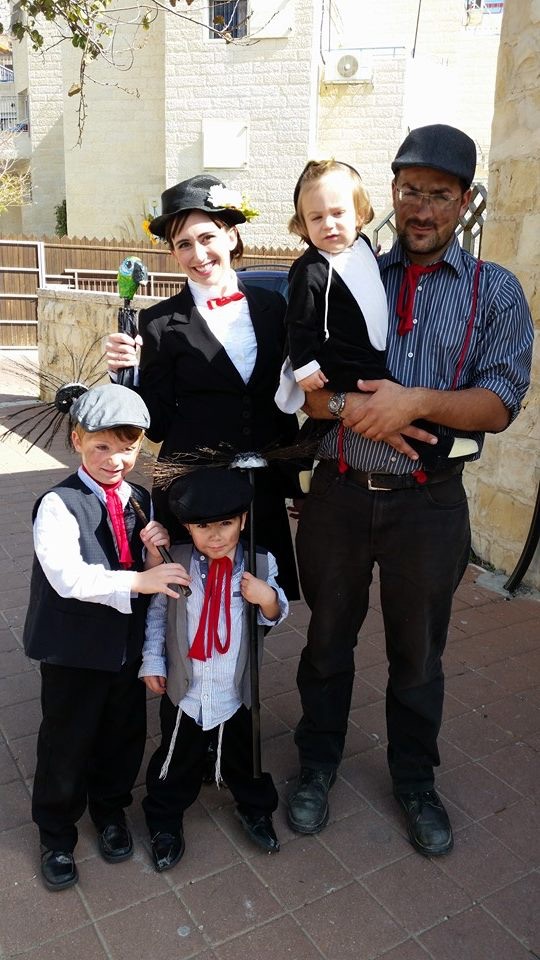
Charitable giving is a key part of observing Purim and families also exchange food baskets and treats. There is also a big celebratory feast with family and friends.
The most well-known treat eaten at Purim is a filled pastry called Hamantaschen, which means “Haman’s Ears.”

Some traditions say that Haman’s ears were cut off before he was executed. And while that type of thing was certainly done back then, there are other stories about the origin of this pastry, (click the link to read all about Hamantaschen).
My favorite explanation from the article linked above is that during this time in Israel’s history, God wasn’t doing open miracles. But that didn’t mean He had abandoned His people. Rather, His sweet presence and work was hidden like the sweet filling is hidden inside the dough.
If you’re feeling like you’re not seeing God do big miraculous things in your life, whip up a batch of Hamantaschen and know that sometimes He is hidden but He is always there.
🙂 I’ll toast to that. 🍻 L’chaim.
🤓 🎊 Mazel tov!

