In the margin of my Bible I have a note in Esther about moral courage:
Three components of moral courage:
- To know something (head) 🧠
- To feel something (heart) ❤️
- To do something (hand) 🫲🏼
It takes all 3.
Knowing that something needs to be done, and even feeling strongly about it, without actually doing anything is flaky and potentially cowardly.
Feeling strongly and jumping in a doing something without actually thinking it through is called being rash or reactionary.
Doing something based on knowledge without any feeling is rote obligation.
Mordecai and Esther demonstrate all three.
Esther knows she may be walking into her death, but she dresses in her finest and enters the inner court uninvited.
It probably wasn’t nearly as dramatic as film adaptations reenact it. I mean, look at this movie poster from 1960.

And though I admire much about the 2006 film One Night With The King, they have Esther running through the rain and shoving open the massive doors of the throne room. Very dramatic.
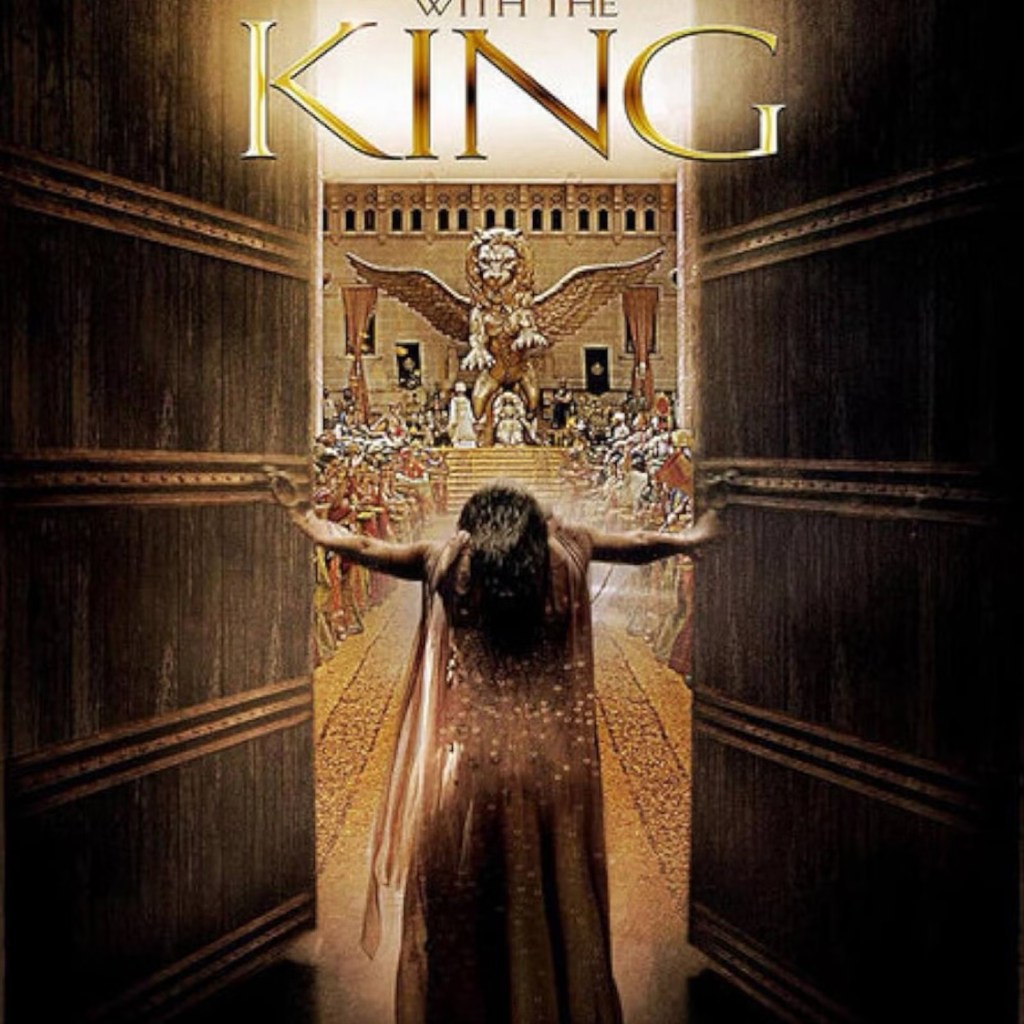
I doubt the biblical Esther did any of the above. BUT – she and the king knew she hadn’t been summoned. He knows that she knows she is risking her life to appear before him. She must have a VERY good reason. So he extends the golden scepter.
And the king shows that he understands the significance of her coming to him uninvited. He offers her anything she requests up to half of the kingdom.
That’s it. That is the absolute maximum he can give her and still retain the throne.
We don’t know why he hadn’t summoned her for 30 days, but it’s not because he didn’t care. He obviously values her higher than anyone else.
And he must’ve expected her to need something HUGE – vast treasures? Perhaps an army at her disposal? What was worthy of risking death for?
An invitation to dinner – for him and a plus one: Haman.
Now, even if you are a highly valuable emperor, if your wife knowingly defies death to invite you to dinner, you understand that there HAS to be more going on that she isn’t telling. Yet.
And so the king and Haman attend the banquet. And again the king wants to know what she needs so badly that she would risk death to seek his help. He again offers everything in his power to give.
“If I have found favor in the sight of the king, and if it please the king to grant my wish and fulfill my request, let the king and Haman come to the feast that I will prepare for them, and tomorrow I will do as the king has said.”
Esther 5:8 ESV
The invitation to another feast is not Esther using up her 1 wish. It’s a delay.
Now, when you are in an urgent crisis, time is of the essence. Imagine how puzzled the king must be that his queen has risked her life to approach him but then won’t state what she needs from him.
No wonder the man couldn’t sleep.
Haman couldn’t sleep either. He was thrilled to be the only official invited to dine privately with the king and queen. There was also the matter of Mordecai the Jew who still won’t bow to him. Haman’s wife and friends are the ones who suggest how to kill Mordecai. The Hebrew text says to make a “tree” 75 feet tall and “suspend” Mordecai on it.
It could refer to hanging with a rope. There are records of people being hung in ancient Persia, although they did not do the sudden drop. That was invented by a couple of British doctors to make death by hanging more humane. The ancients just strung people up and let them slowly die of strangulation.
But, by FAR, the more notorious method of “suspending” someone on a “tree” in ancient Persia was impalement.
And y’all, if the blog just suddenly goes quiet it might be because the FBI has seen my internet search history and showed up at my door to arrest me. I’m sure it makes me look positively psycho.
Search: How did the ancient Persians impale people?
Search: Who invented hanging as a form of execution?
Search: How tall were the poles used in the ancient Achaemenid Empire to impale people?
And in all those searches (and many more I assure you) I discovered this:
Introducing, The Behistun Inscription.

The inscription is approximately 15m (49 ft) high by 25m (82 ft) wide and 100m (330 ft) up a limestone cliff above an ancient road connecting Babylon and Media. It’s in modern Iran.
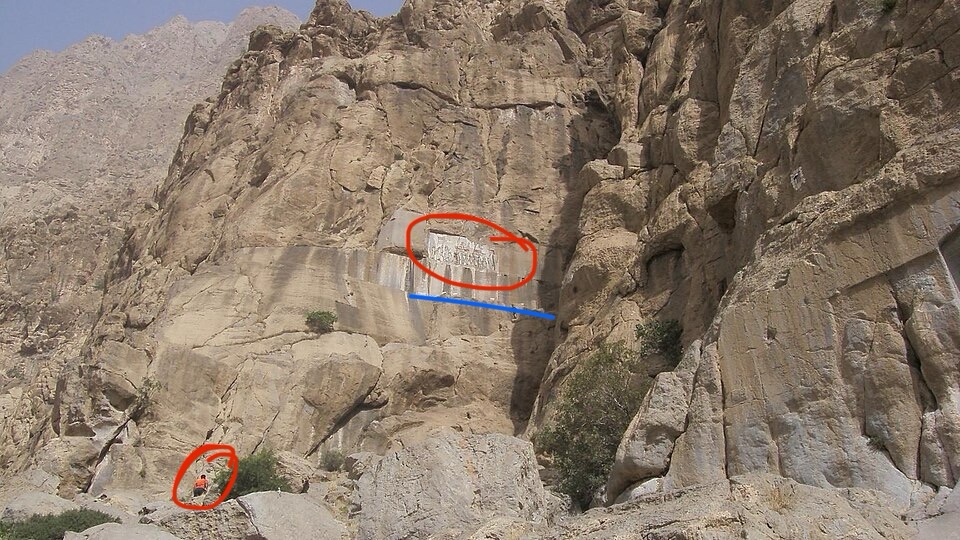

The text was commissioned by Darius the Great, father of Xerxes I (probably identity of Ahasueras). It was done to commemorate how Darius had put down a great rebellion in the empire. Darius is shown in the image with his foot on the ringleader. The string of men in front of him were other conspirators. Their crimes are inscribed in stone over their heads. Of interest to us is the part of the inscription where Darius boasts of having executed 3000 people who participated in this attempted coup. They were all impaled.
I asked Google how the ancient Persians went about impaling people. Sometimes you find out things you wish you didn’t know. So here is your warning to skip the black screenshots below if these sorts of descriptions bother you. The first one concerns a particular man that Darius impaled for treason. They both contain gruesome details. Read at your own risk.
😧
😳
🫣
⬇️


😑
😑
😑 Is it over yet? Can I open my eyes?
Yes.
🫣
🤓 Hi guys. What’d I miss?
😐 I have no wish to know.
I also found that the standard height of poles for impalement in ancient Persia was 70-75 feet; exactly the height of Haman’s “tree” set up to “suspend” Mordecai.
🤓 So he would basically look like a marshmallow on a long stick.
😳🤢 excuse me… ➡️🚪🚽
🤓 What? What’d I say?
🤦🏻♀️
😞 I will never eat another marshmallow again as long as I live.
🤓 Suit yourself.
😑🙏
🤓 NOW what are you doing?
😑🙏 Thanking God we don’t live in ancient Persia.
🤓 I don’t think they had smartphones.
Well, the king couldn’t sleep. He commanded someone to bring the court records to read to him. We usually take this as he wanted to hear something tedious that would bore him to sleep. But the course of the narrative goes through the entire night.
What if the king wasn’t in bed trying to doze off? What if by “he could not sleep” it means that he decided to just get up and try to get to the bottom of Esther’s life-and-death problem that she won’t tell him? If his wife had a problem THAT big, surely there would be evidence; something in a recent royal record.
He hears the account about Mordecai foiling the assassination attempt and that Mordecai had never been thanked. The next thing we know, Haman has entered the court and the king assigns him to go immediately and parade Mordecai around the city on the king’s horse and in the royal robes. Somewhere along there, dawn has broken. They aren’t proclaiming up and down the streets of Susa in the dead of night.
It’s a delicious irony- Haman is commanded to honor Mordecai whom he hated for not honoring him. Haman acts as if his best friend has just died. He goes home after the parade “mourning with his head covered.”
And then this incredible statement:
“And Haman told his wife Zeresh and all his friends everything that had happened to him. Then his wise men and his wife Zeresh said to him, “If Mordecai, before whom you have begun to fall, is of the Jewish people, you will not overcome him but will surely fall before him.””
Esther 6:13 ESV
I find it telling that the wise men (Magi) and Zeresh didn’t say something before when Haman was asking them to cast lots every day for nearly a year to determine the right time kill the Jewish people. Perhaps he was cagey and didn’t tell them what people he had in mind to exterminate. That’s how he handled the king. He never told him which people he wished to destroy.
“Then Haman said to King Ahasuerus, “There is a certain people scattered abroad and dispersed among the peoples in all the provinces of your kingdom. Their laws are different from those of every other people, and they do not keep the king’s laws, so that it is not to the king’s profit to tolerate them.”
Esther 3:8 ESV
Hadassah concealed her Jewish identity behind the name Esther. Haman concealed the identity of the people he wished to exterminate- the Jews.
Both are about to be revealed at Esther’s second feast.
King Ahasueras again offers up to half the kingdom to Esther. Finally she makes her request. All she asks for is for her life and the lives of her people to be spared.
She doesn’t throw her husband under the chariot and remind him that he was the one who gave Haman the authority to commit genocide without even asking for particulars. She pins the blame squarely where it belongs: on Haman.
Haman turns as white as a sheet when he realizes that the queen is a Jew.
It’s as if God moved one final piece and said, ♟️ “Checkmate.”
The king storms out in fury; no doubt to call for security. Haman knows he is as good as dead. He also knows what that death is probably going to involve.
✊🏼🤓 Skewered like a marshmallow!
So he “fell on the couch” where the queen was reclining to beg for his life. Not a good look when a furious husband comes back in and finds the man on top of his wife. It’s a wonder the king didn’t kill Haman with his bare hands on the spot.
The king was judge and jury.
Haman was instantly sentenced to be impaled on the 75ft tall pole that he had anticipated for Mordecai.
✊🏼🤓 🎉 Woo hoo! Poetic justice.
😒 I’m glad Haman got his comeuppance, but this story has ruined all future campfires for me.
🤓 Cheer up. You don’t have to eat a marshmallow. You can just roast a hot dog.🌭
😳🫤😑🤢➡️🚪
 To The Reader